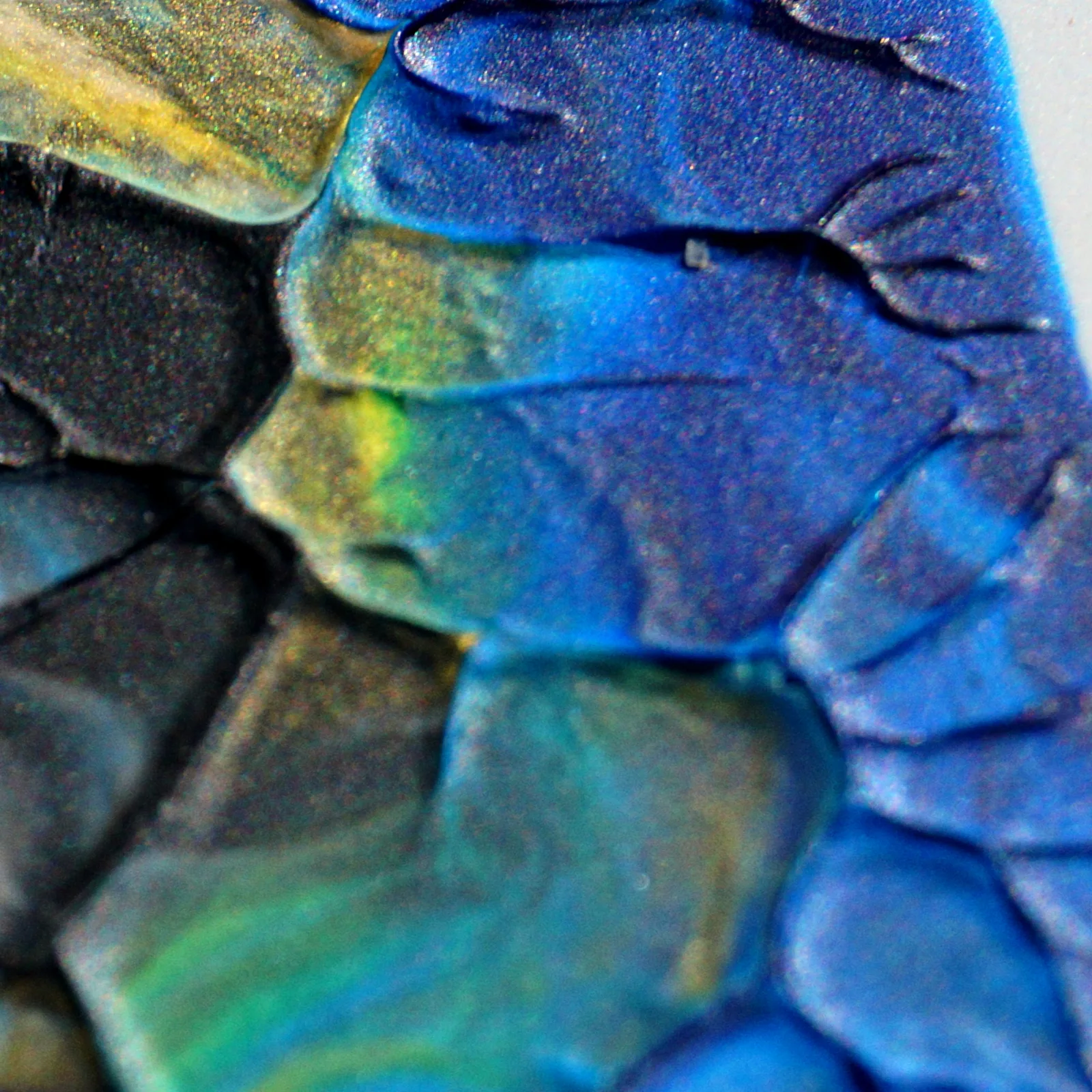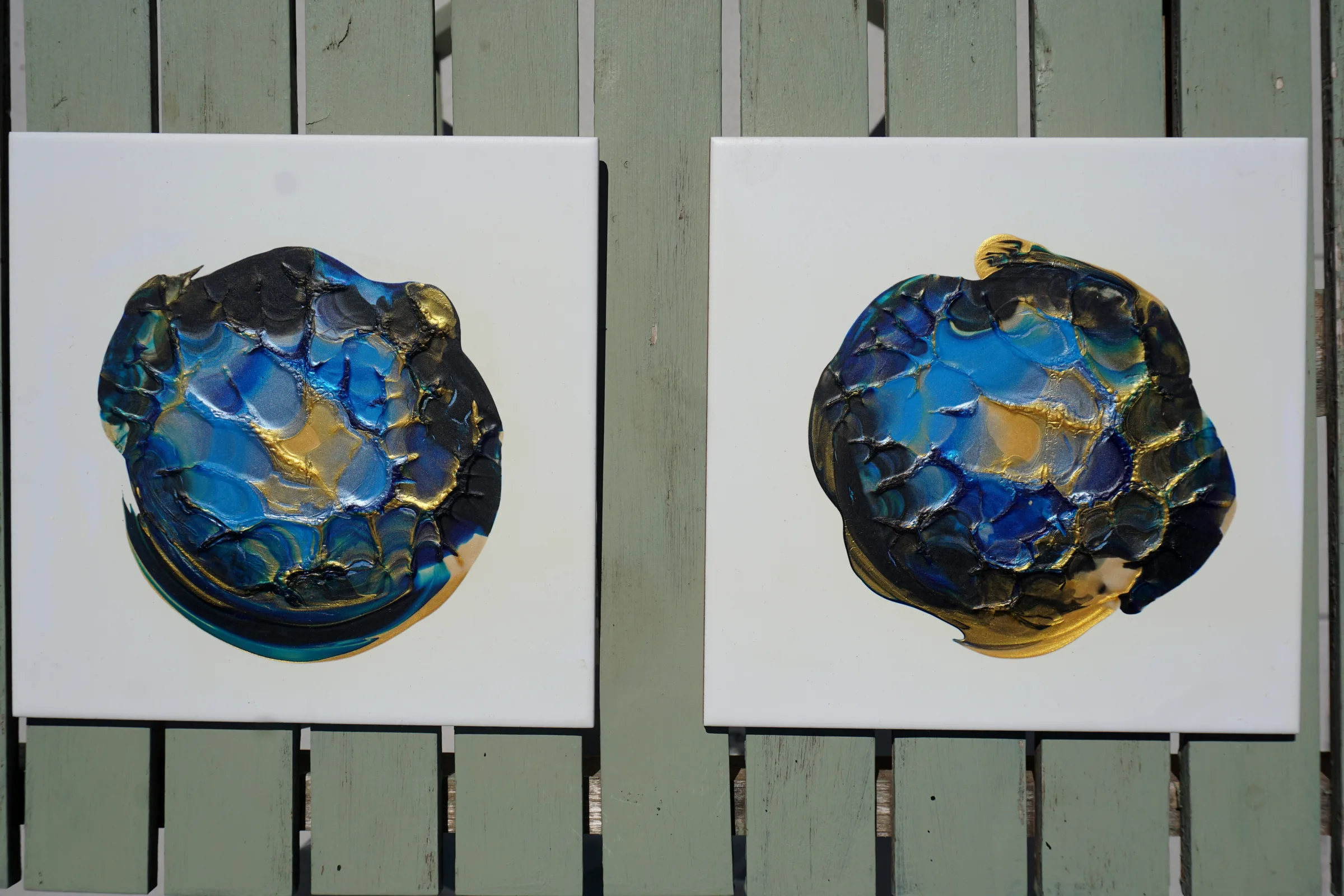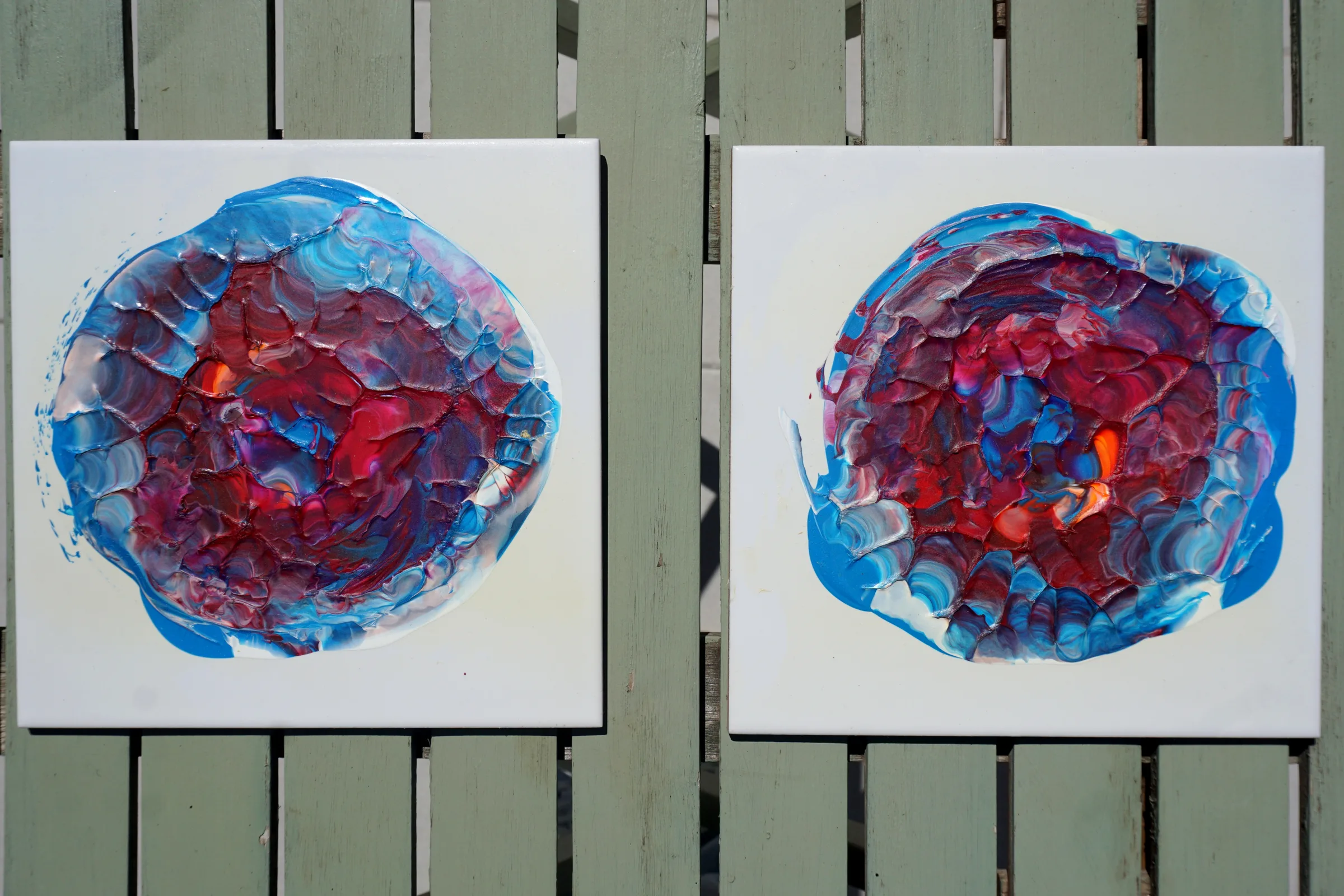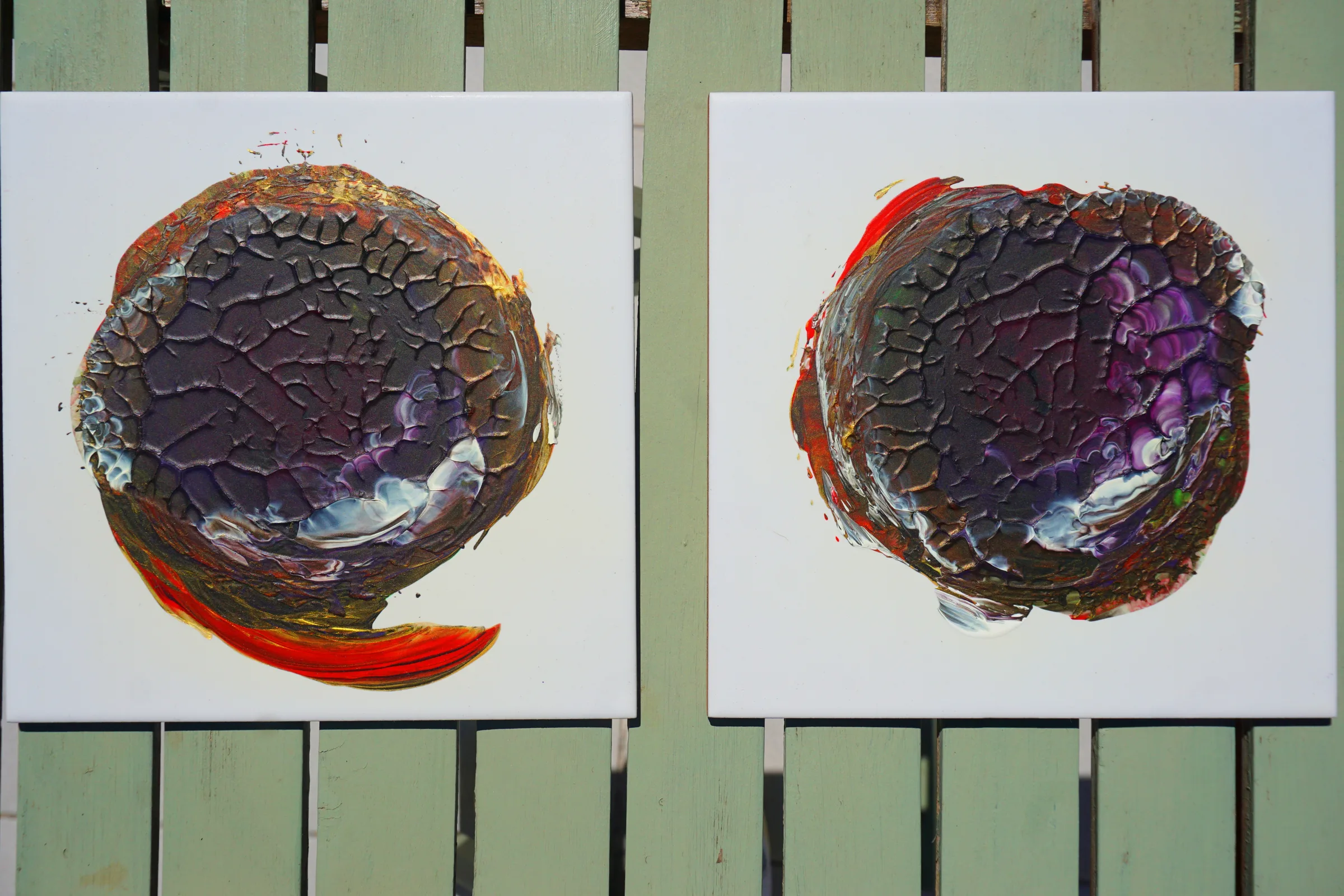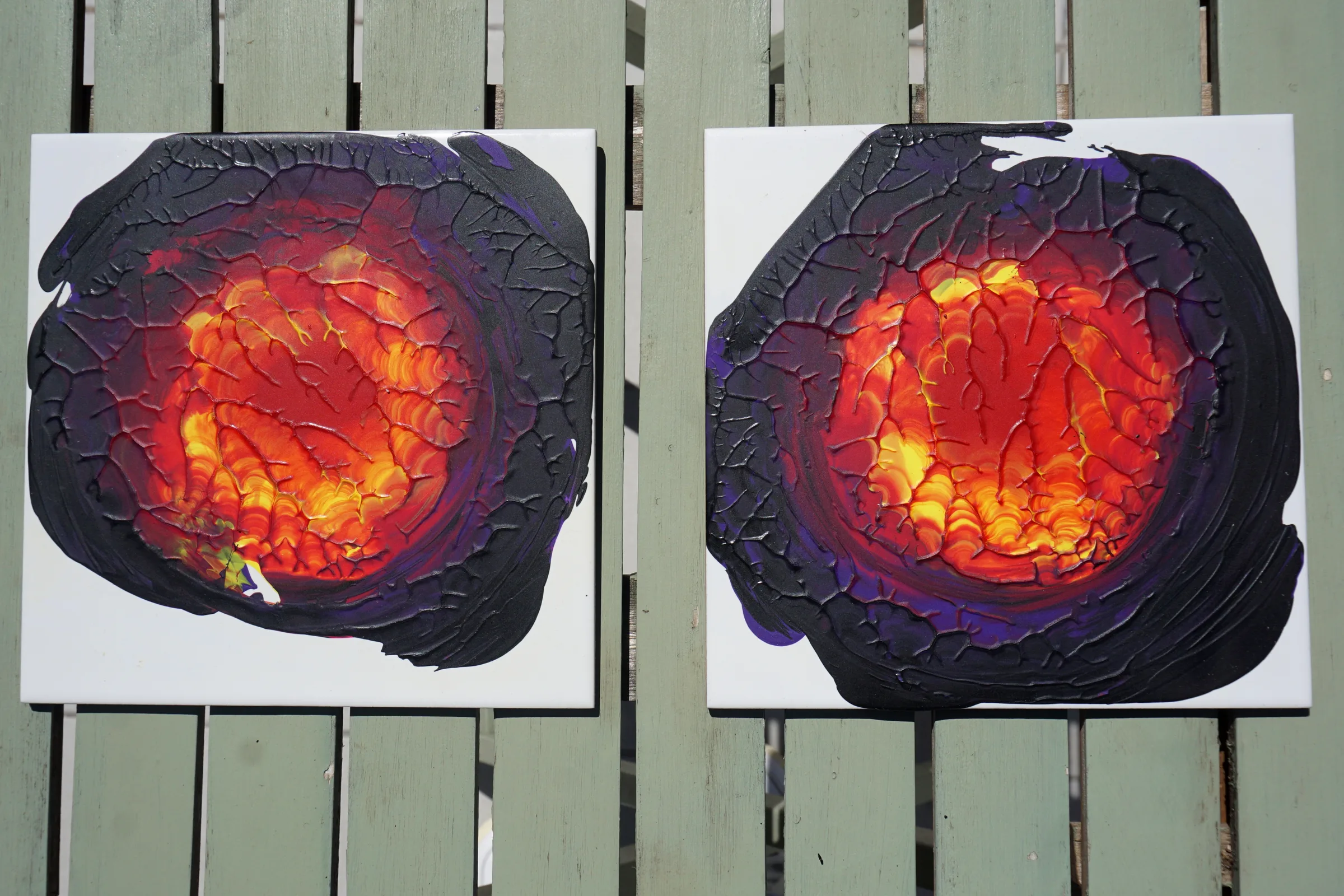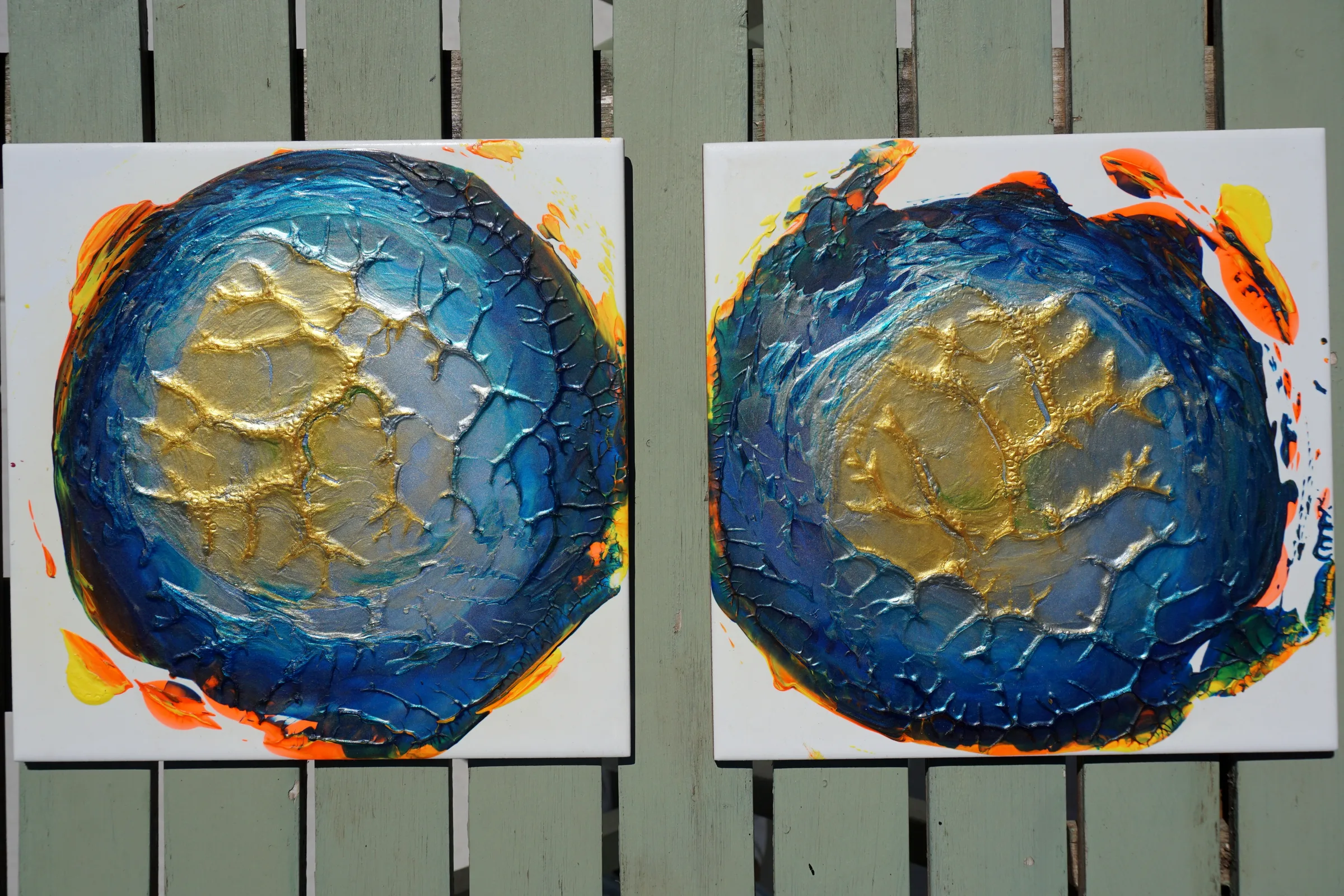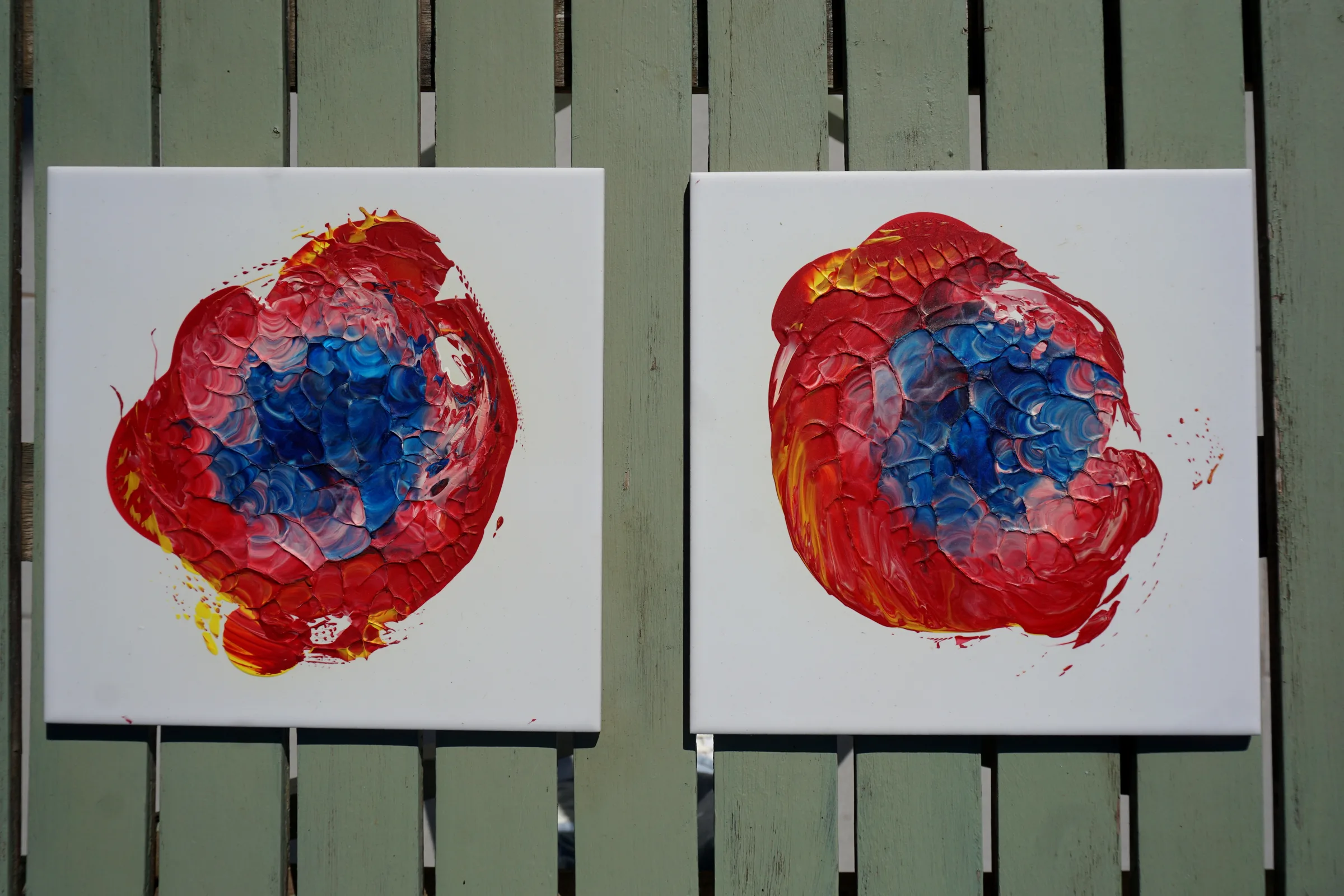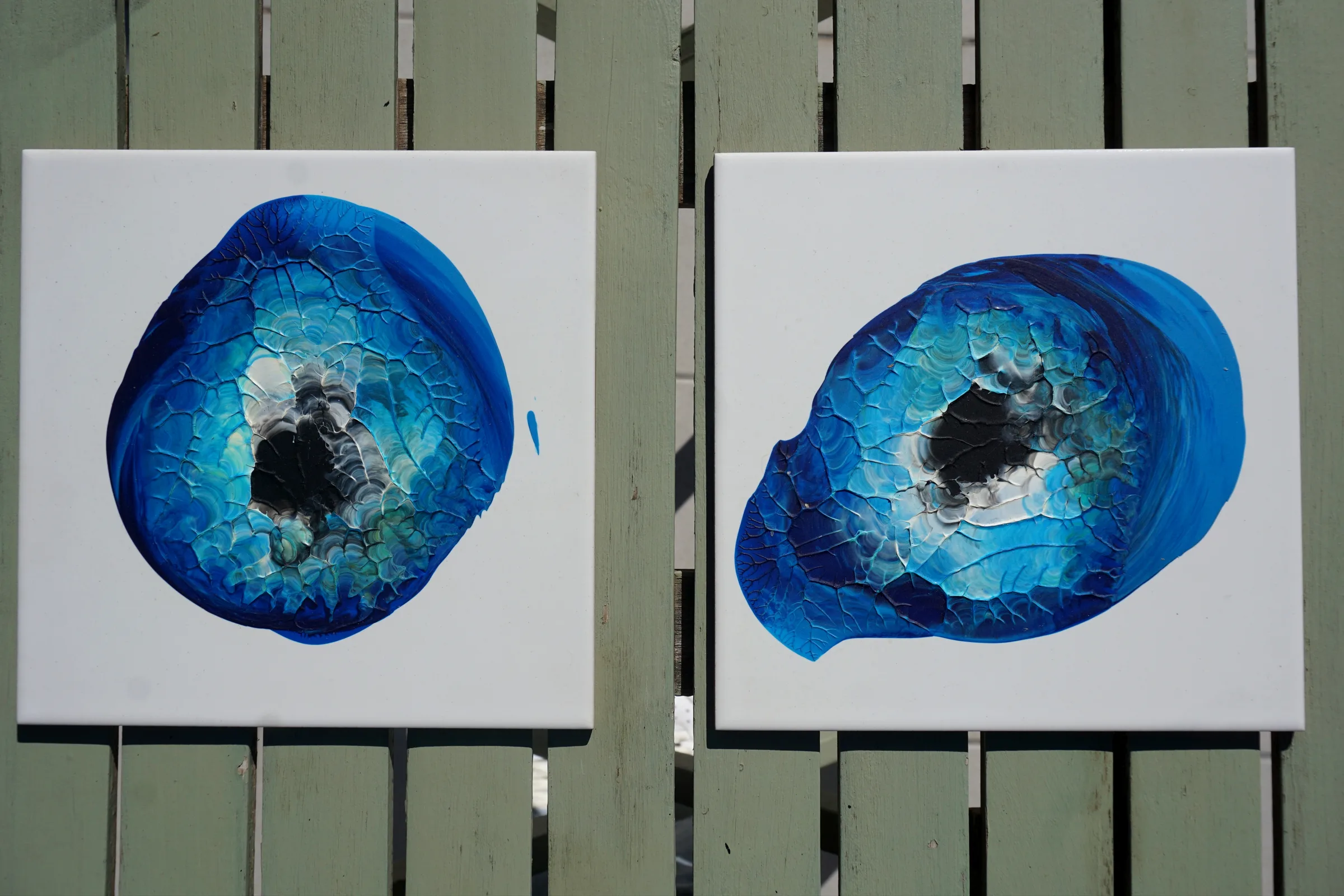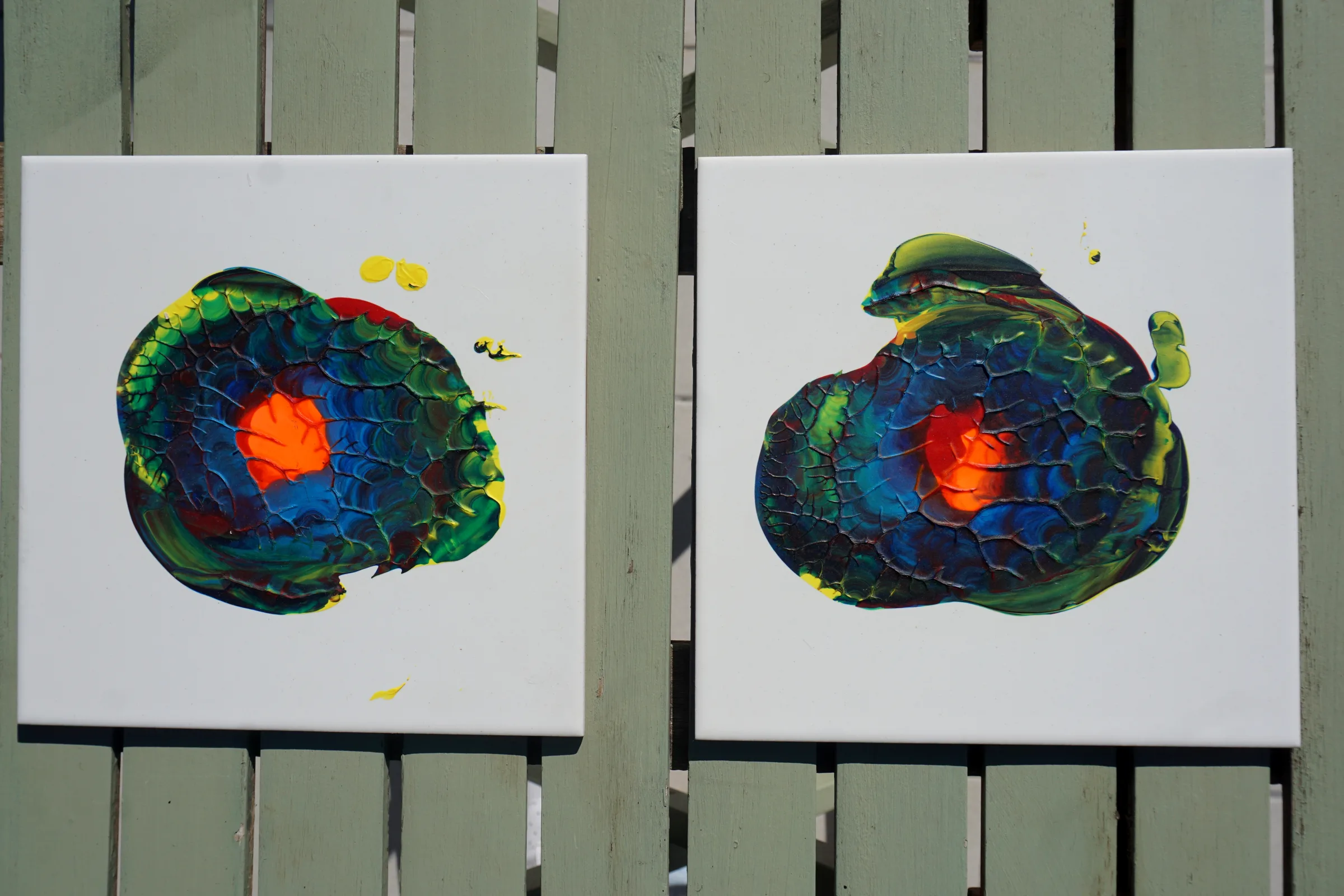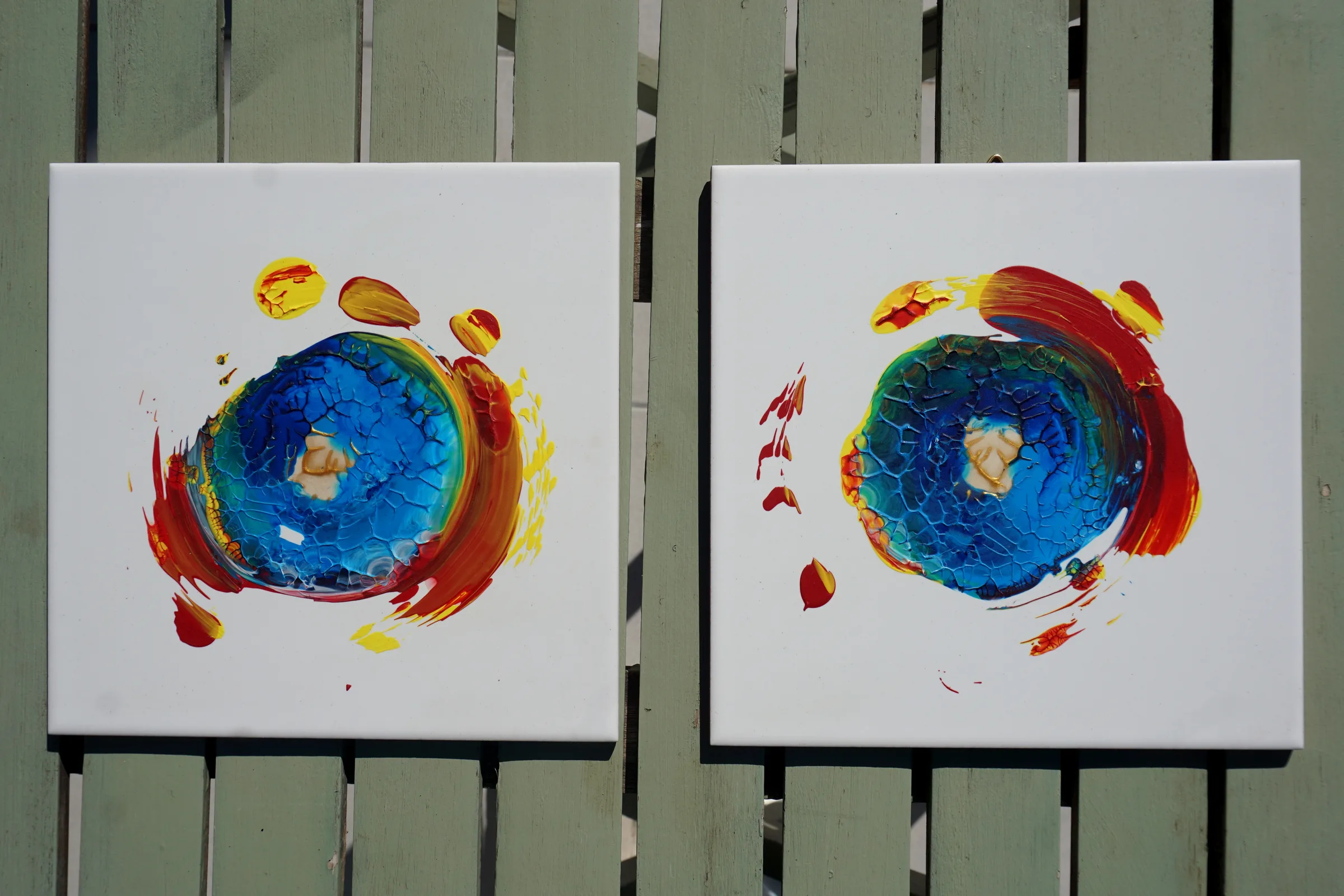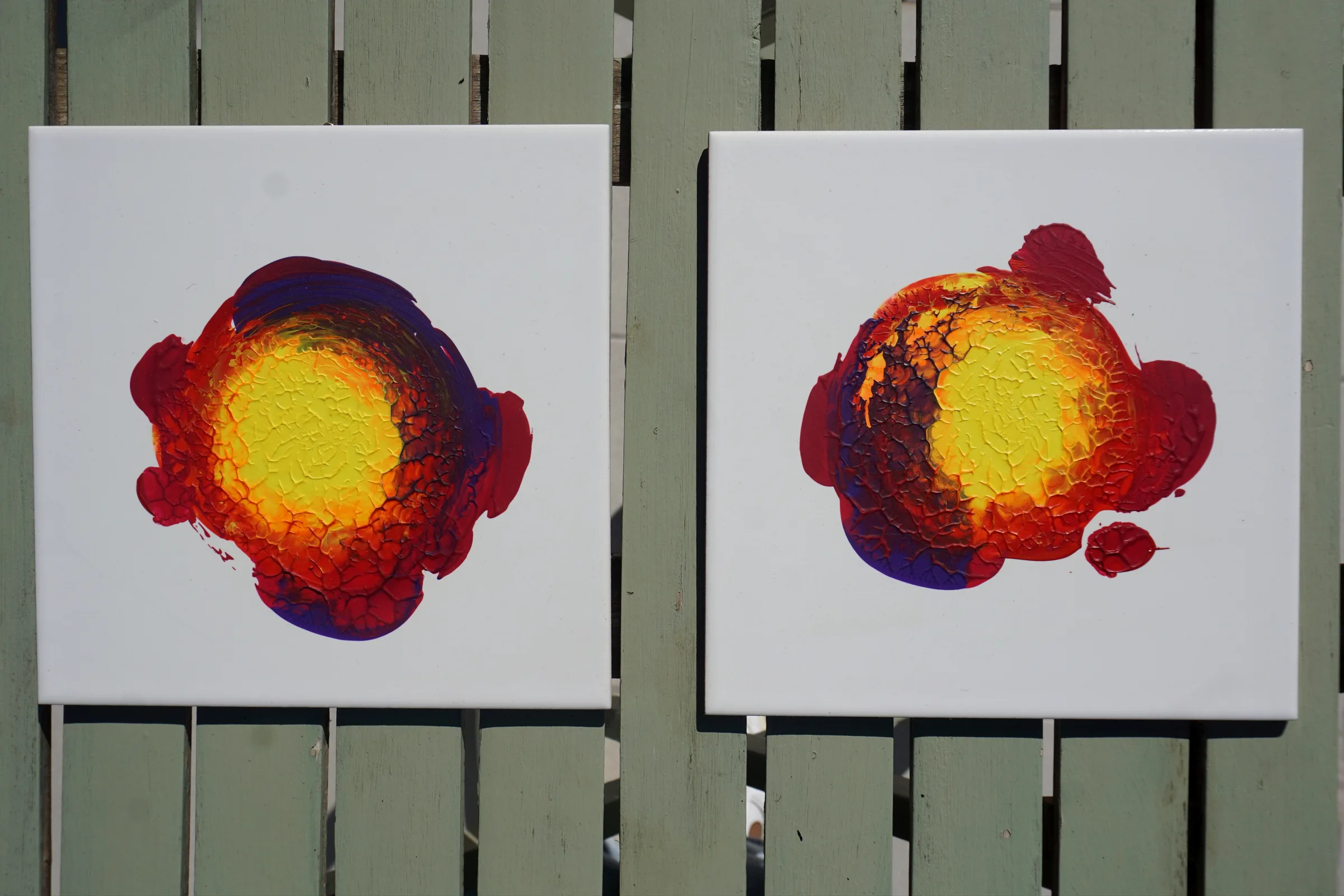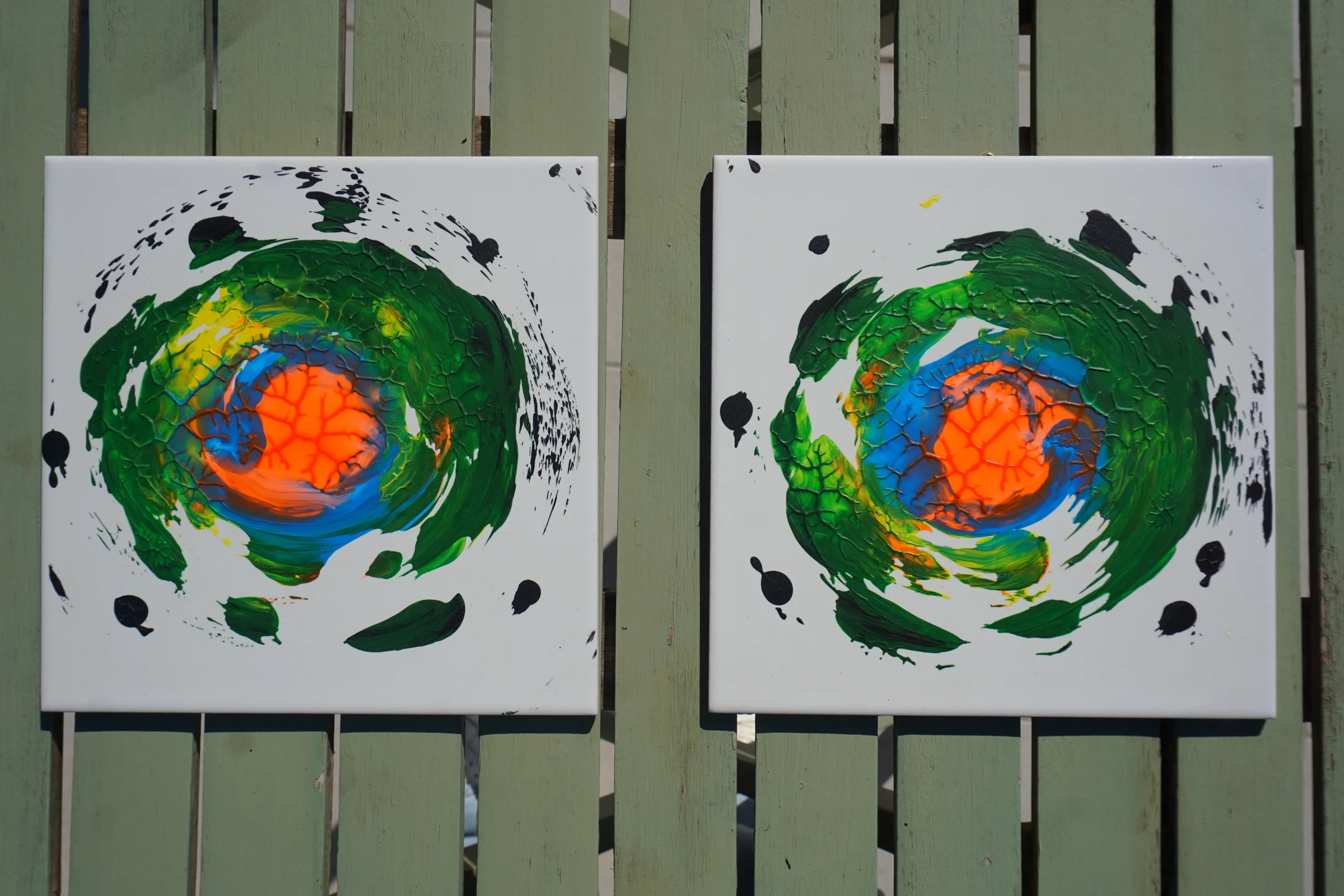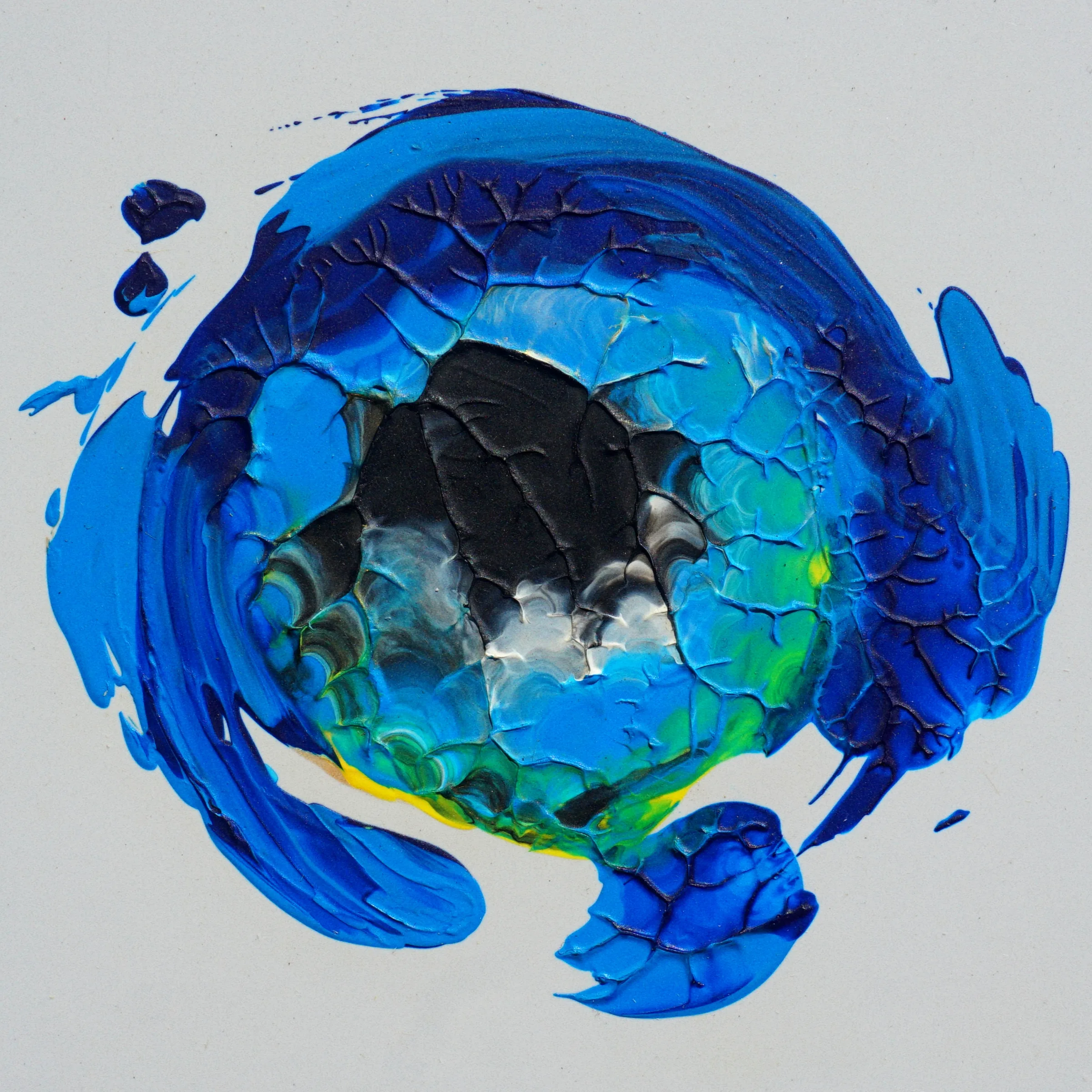
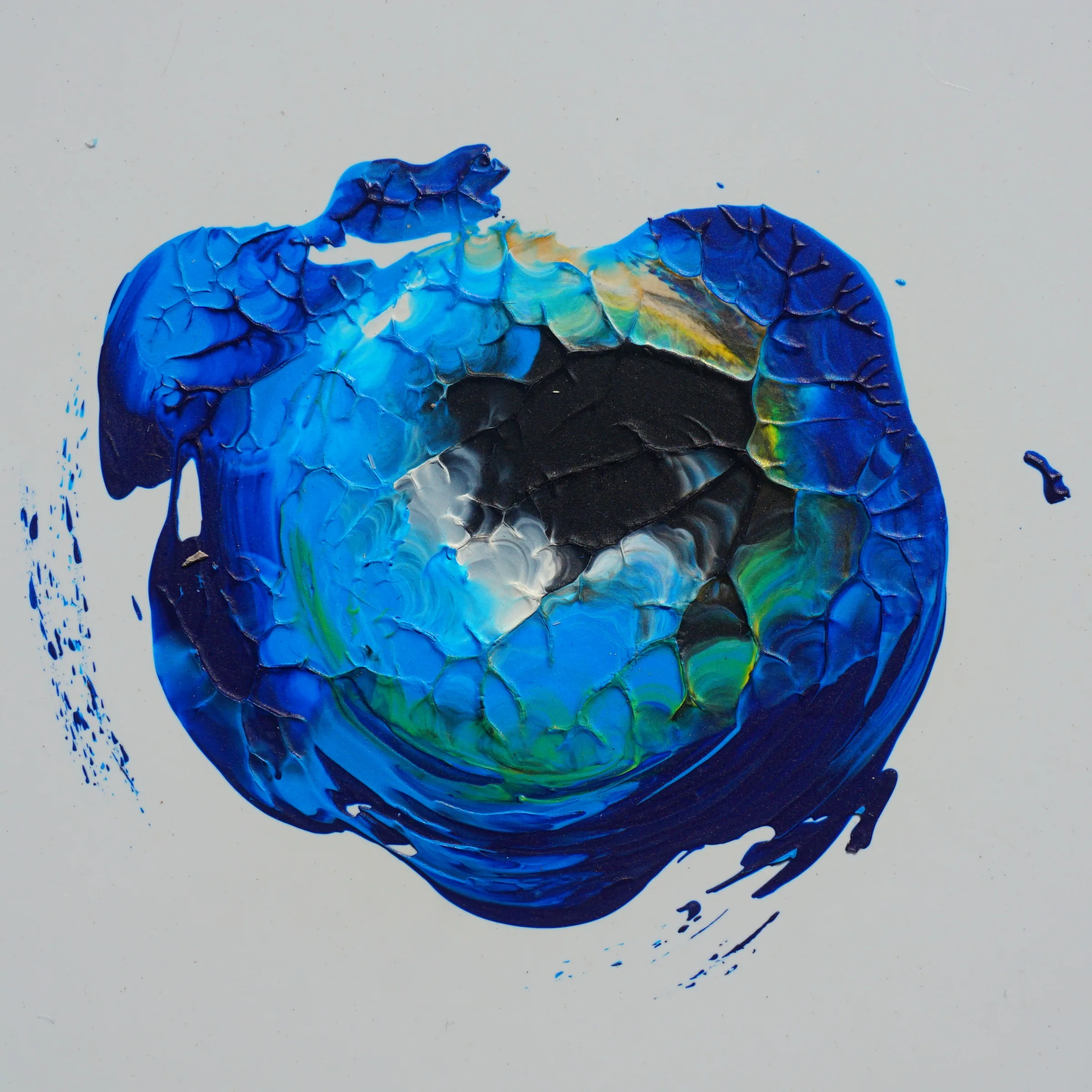
You stand in front of two shores that remember being one lagoon. Caribbean water, cool and watchful. The white of the ceramic bisque is sand. At the centre of each tile the same dark remains — a depth that would not choose a side when the faces came apart. Around it the relief is plated and torn, raised like coral flats after the tide, blue still circling as if the current had not yet decided to stop.
One sister kept the weather moving. Cobalt still looks as if it could run; a small blue drop sits apart, green and a little sun gathering at the lower shore. The other held the hour after: a tighter ring of electric blue, ice pooling at the void, a thin gold flash that did not travel. Green settles at the bottom of both, the beach that was always there.
They are sister tiles, a single surface until the instant of separation. The ridges and basins are that instant, kept. Nothing else in the world matches either of them. They are sold only together.
Two shores
of water that was one
The dark did not travel
it remained in both
Blue still circles
plated like coral after the tide
One sister kept the current
a drop that broke free
green opening toward sand
The other kept the stillness
ice at the void
gold that would not cross
The bisque is the beach
They came apart once
the relief kept the hour
that could not happen twice
Two Shores — Listen