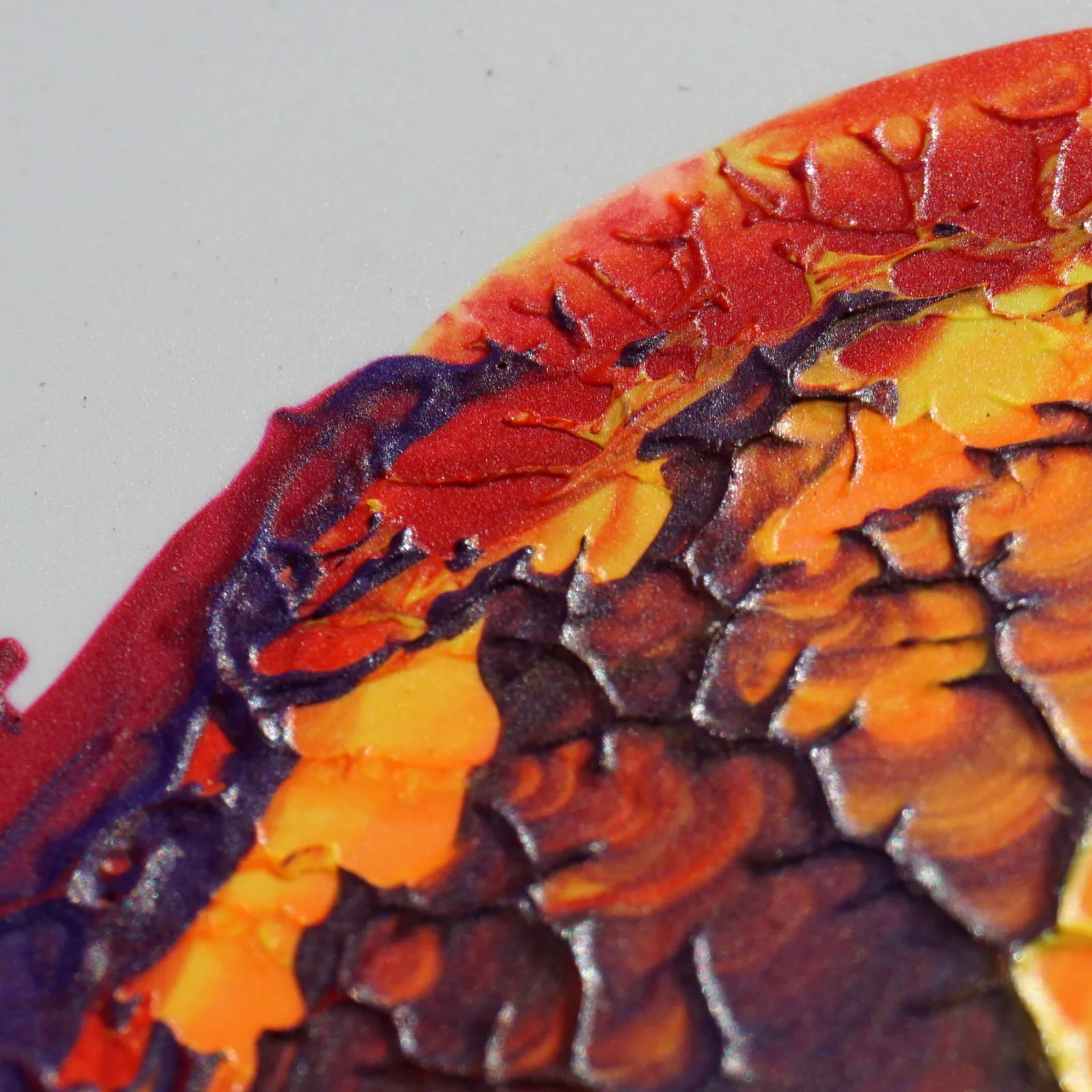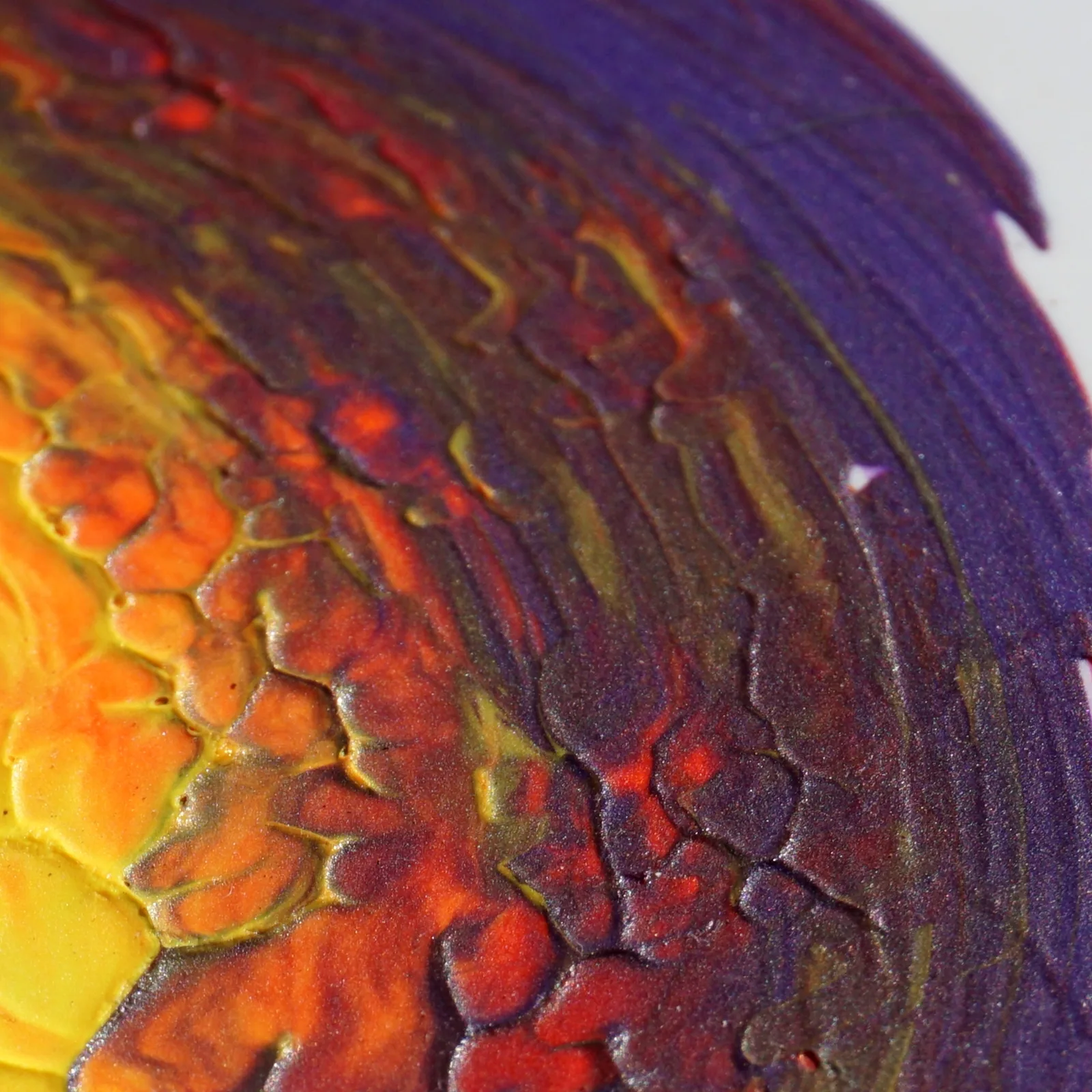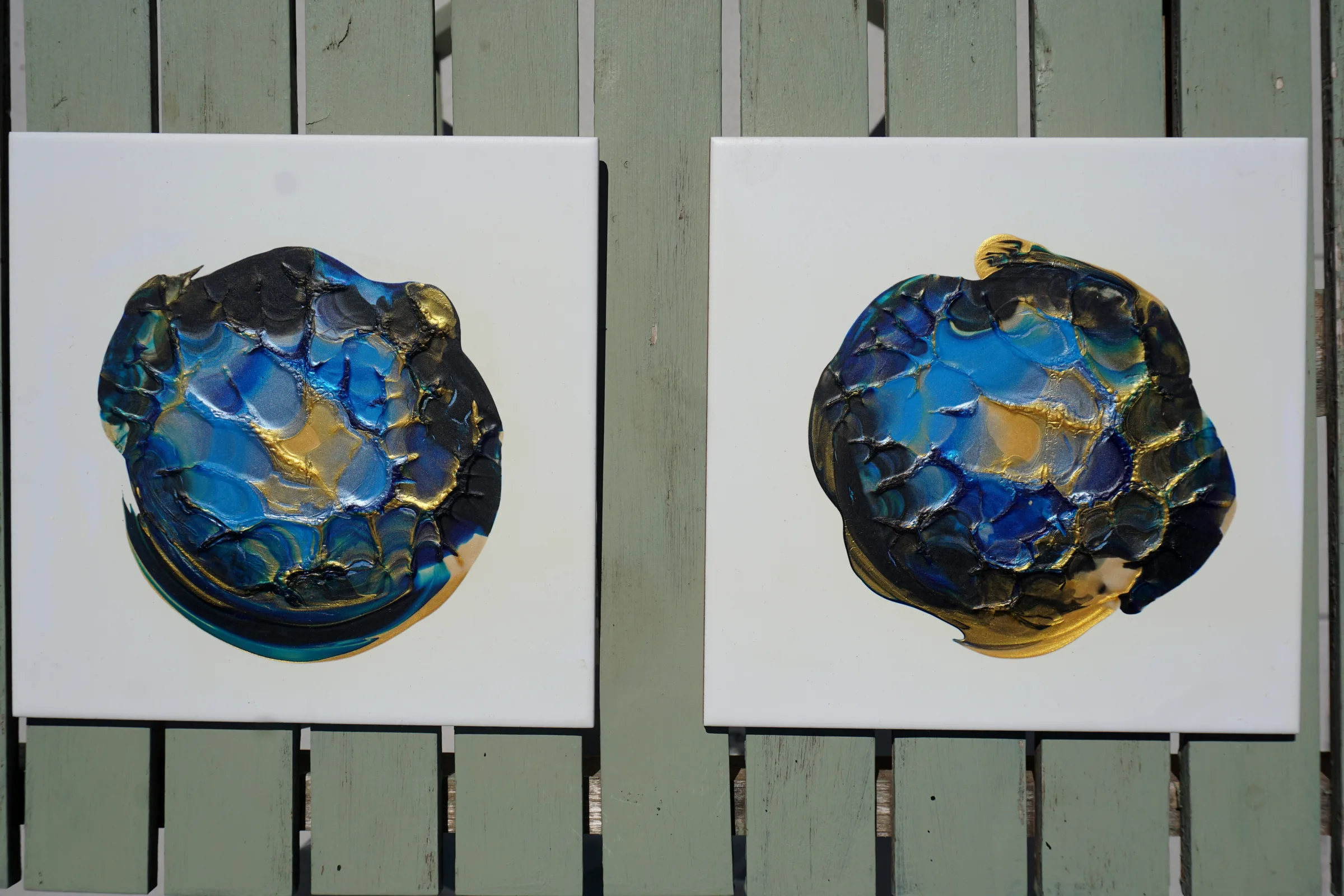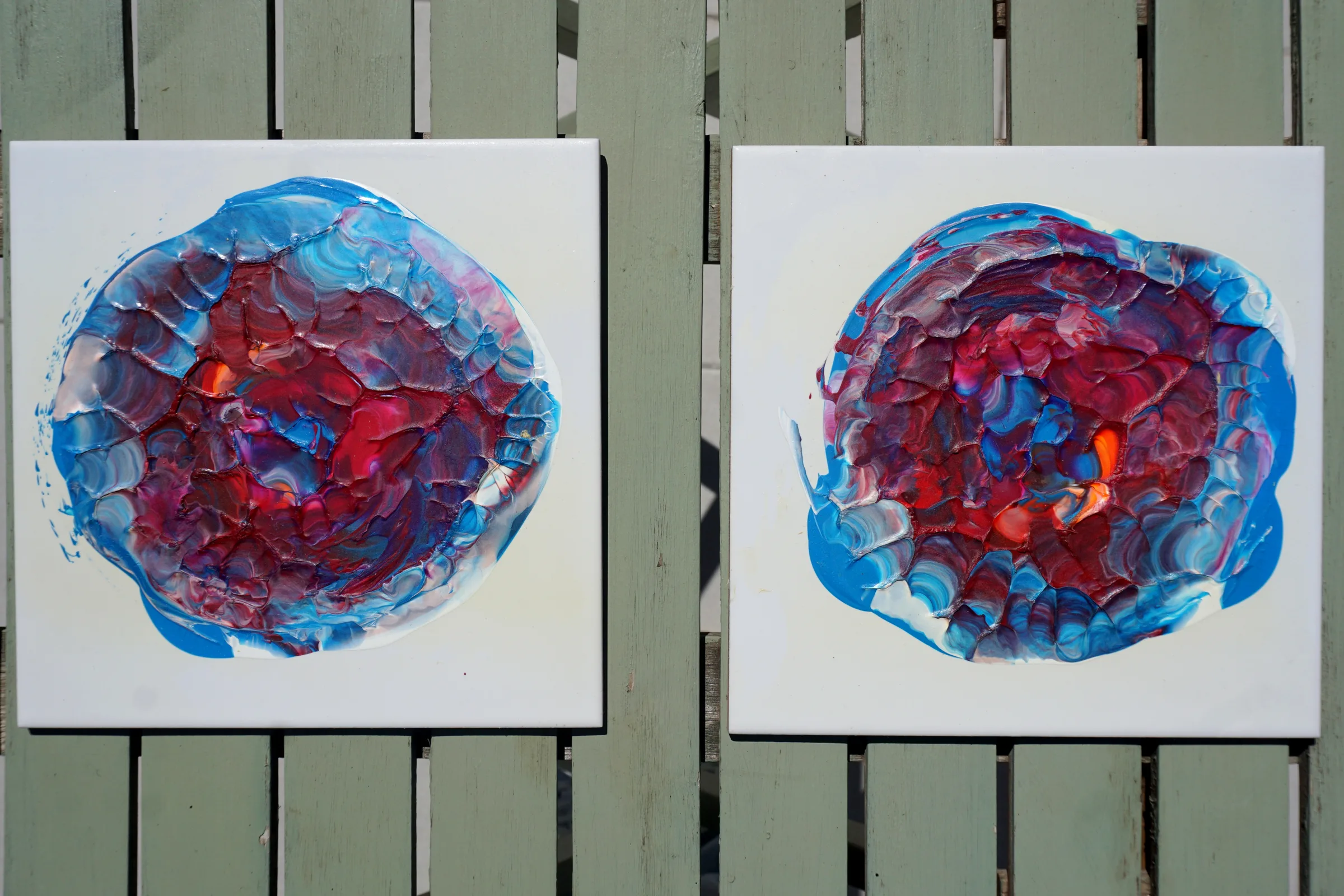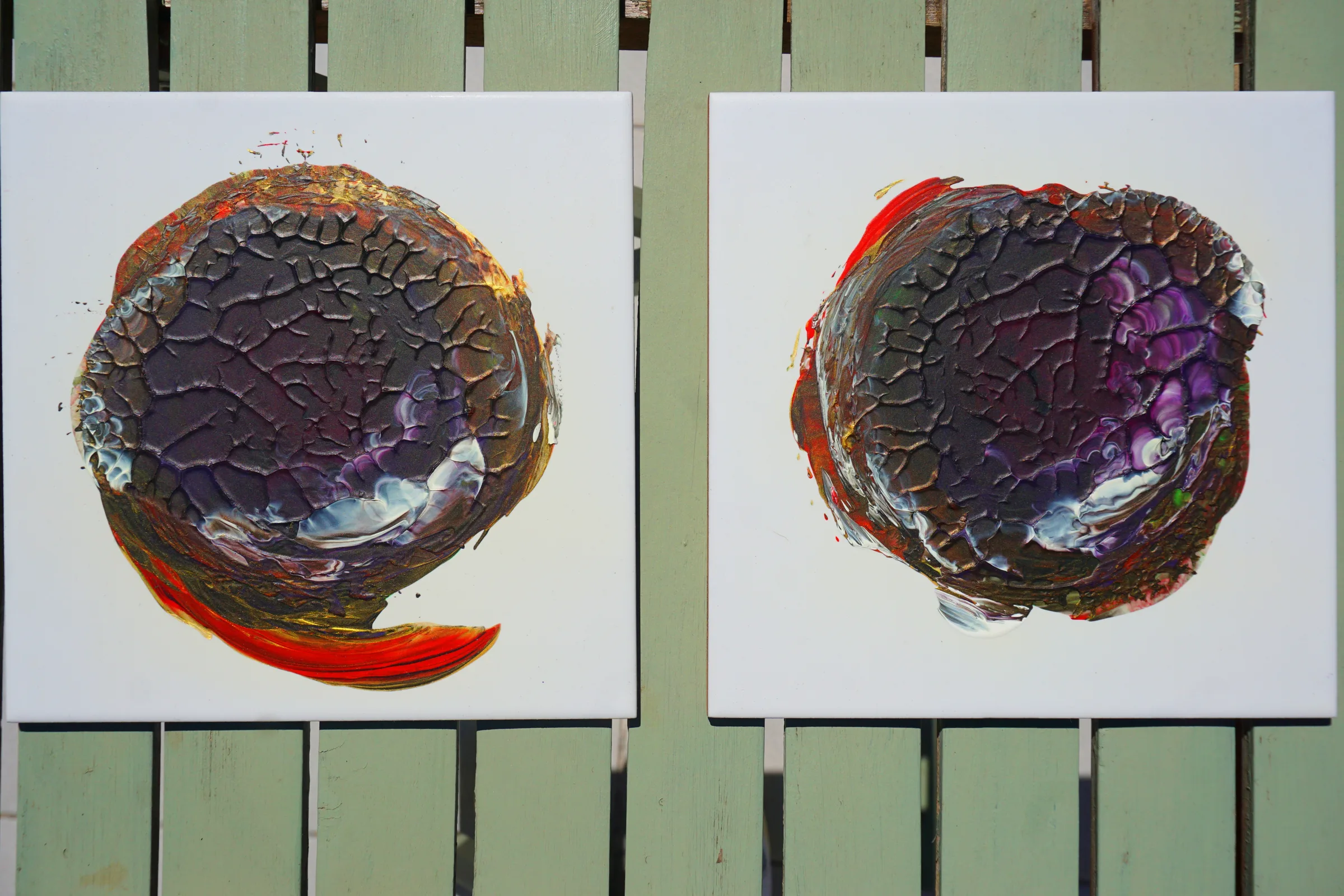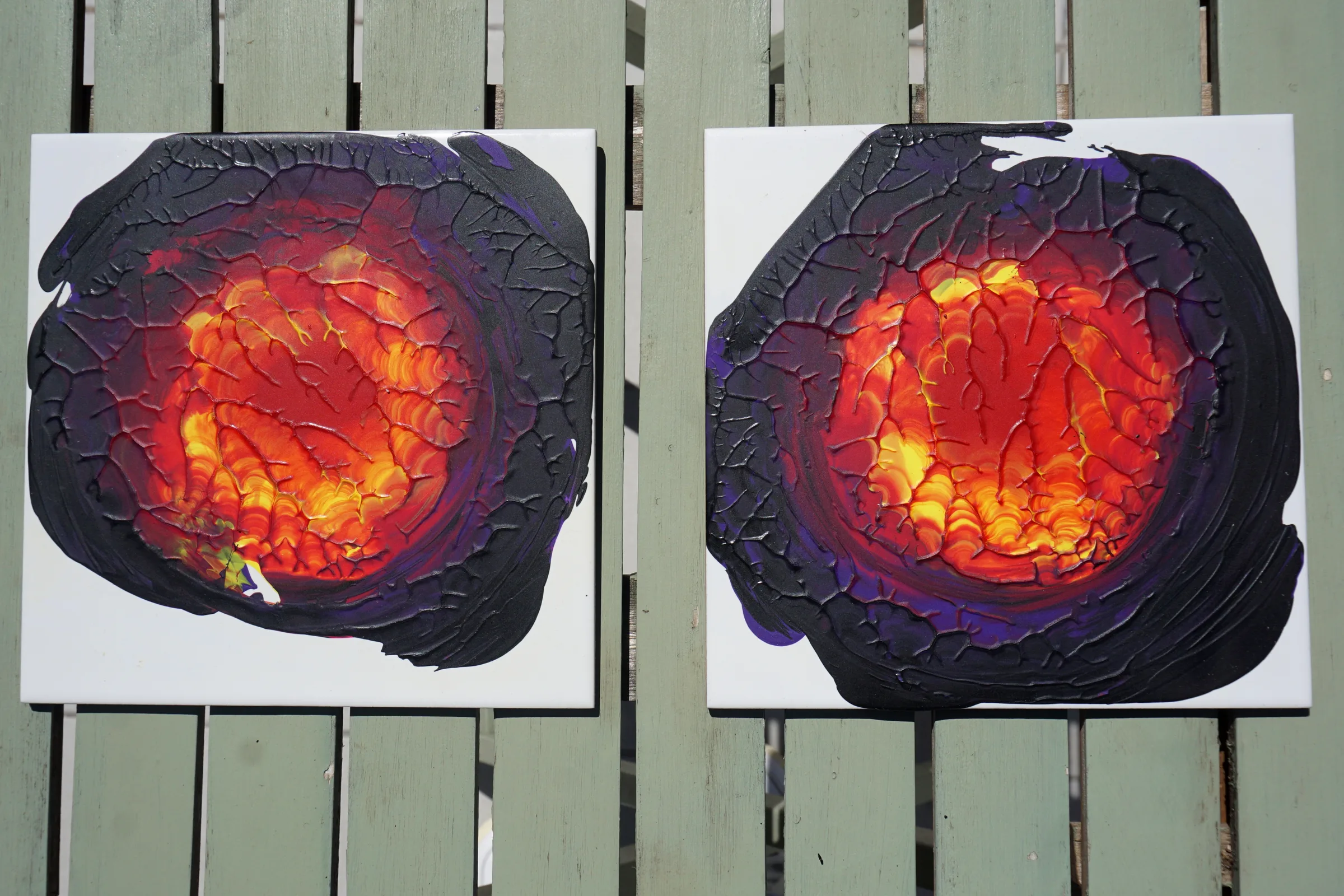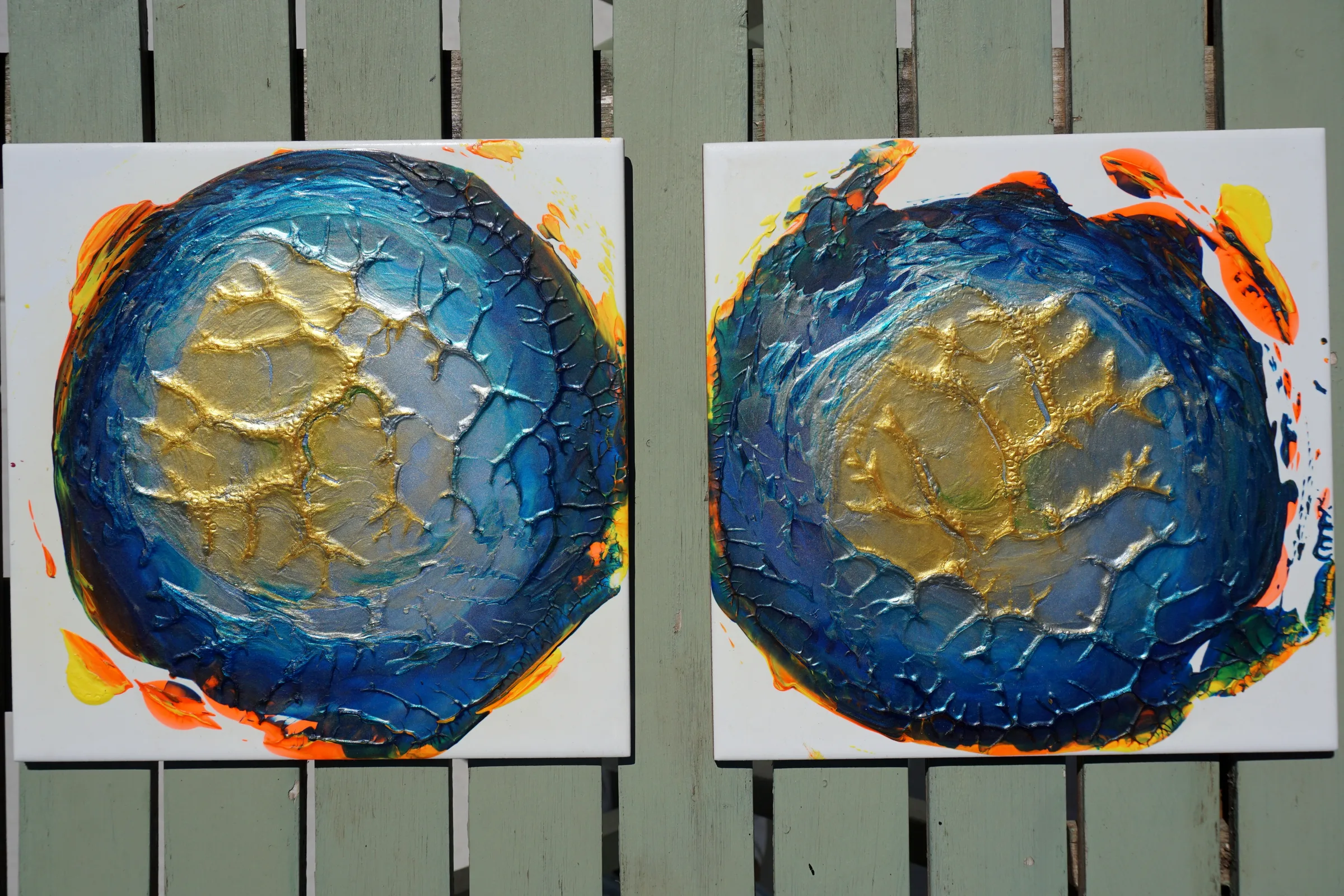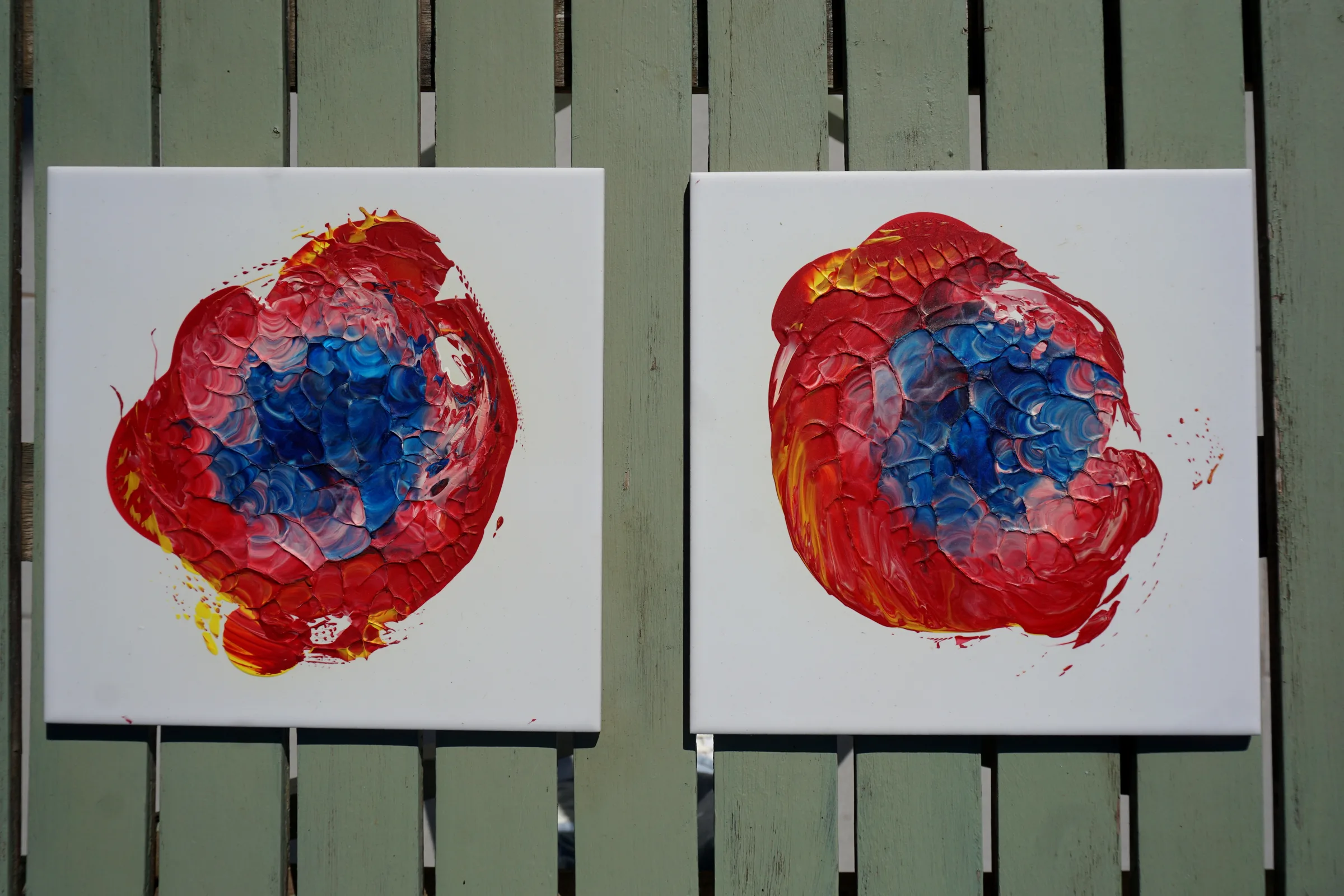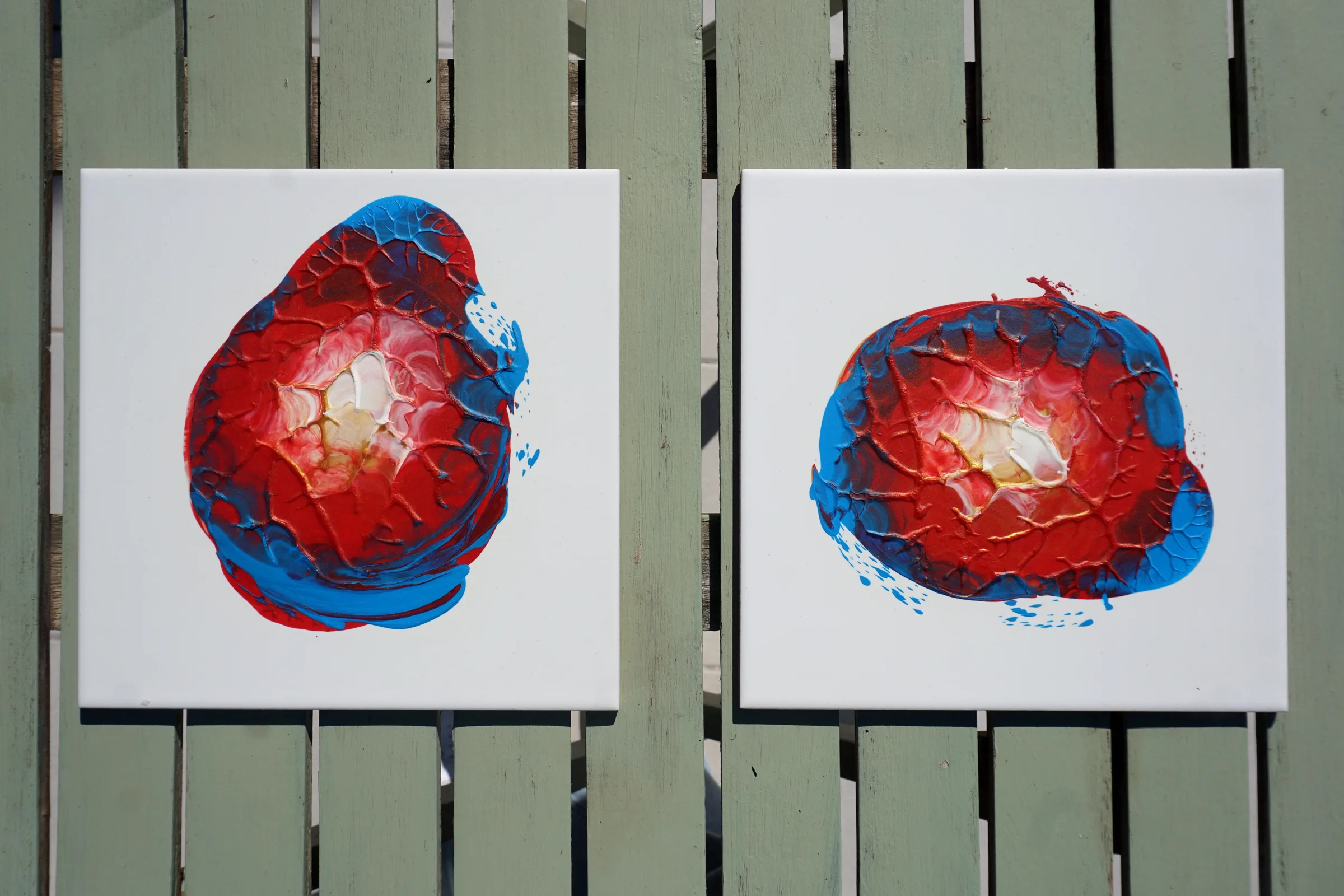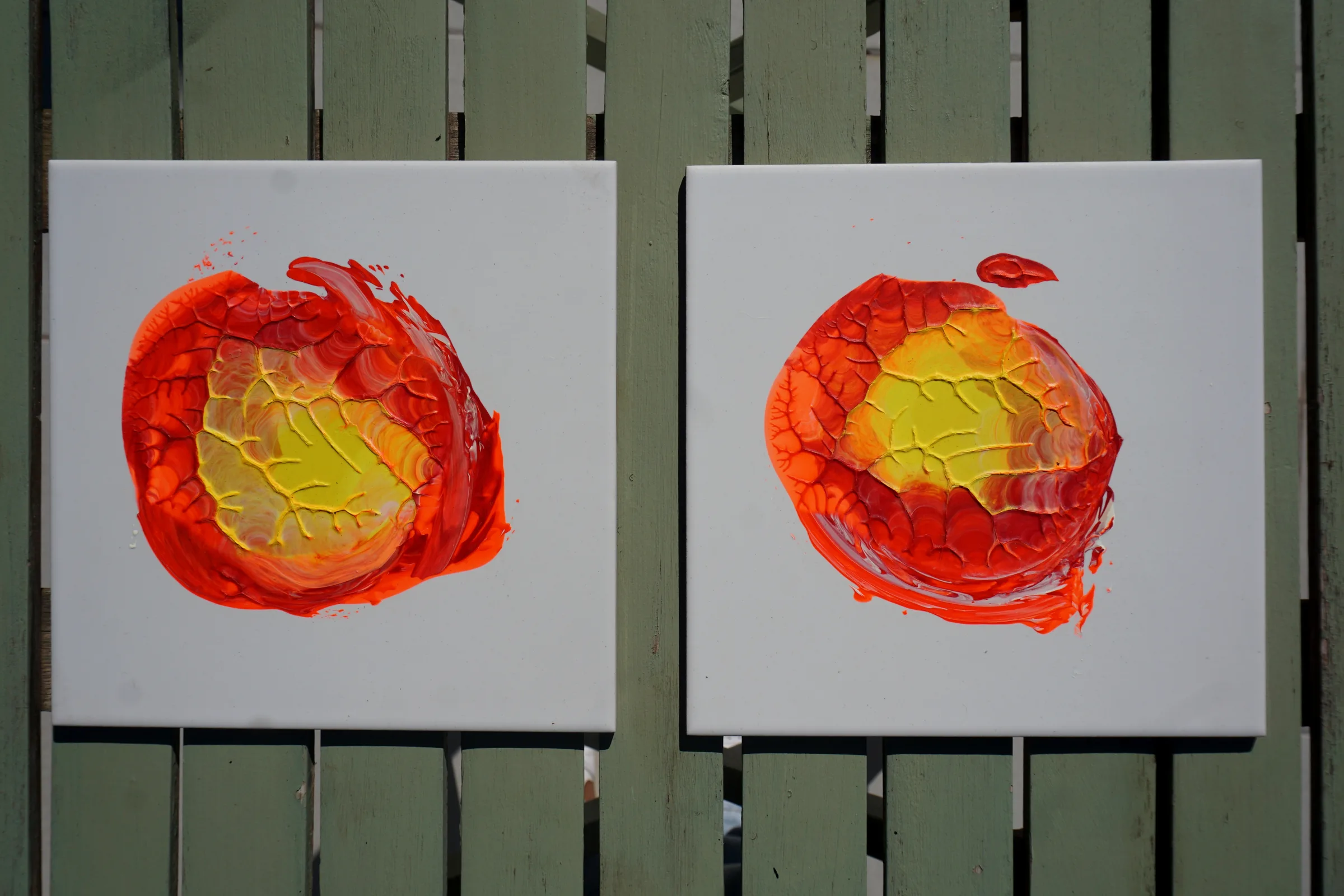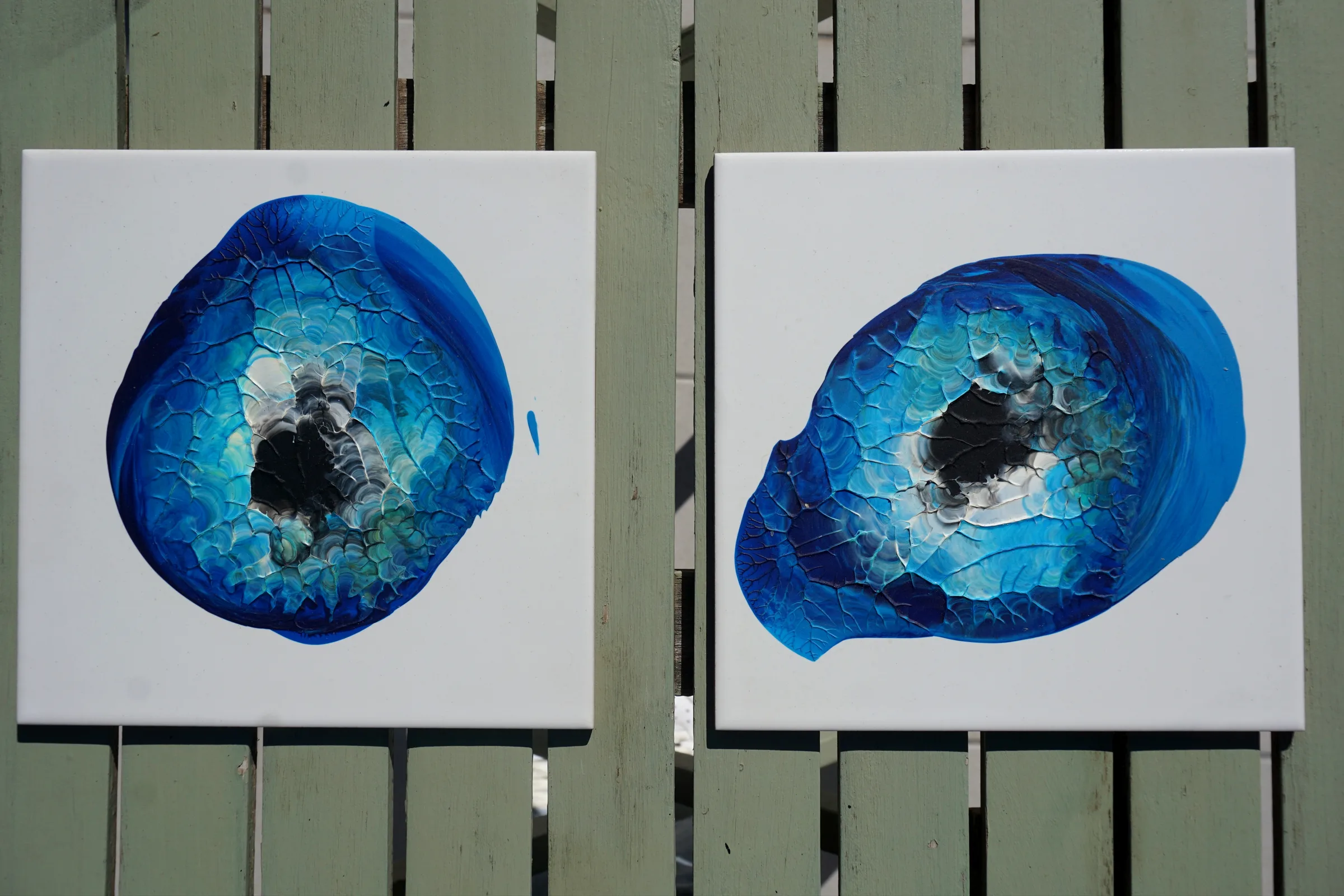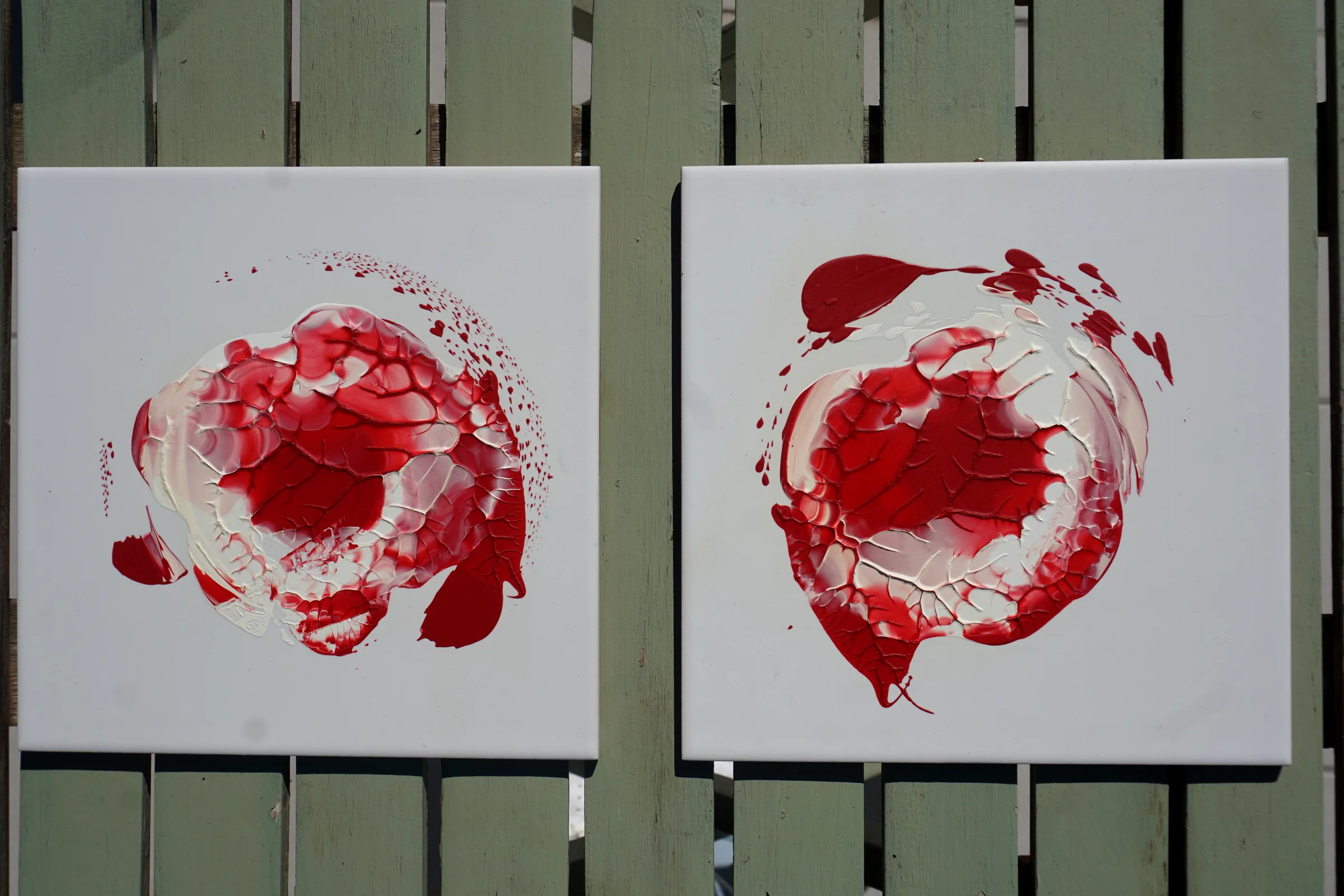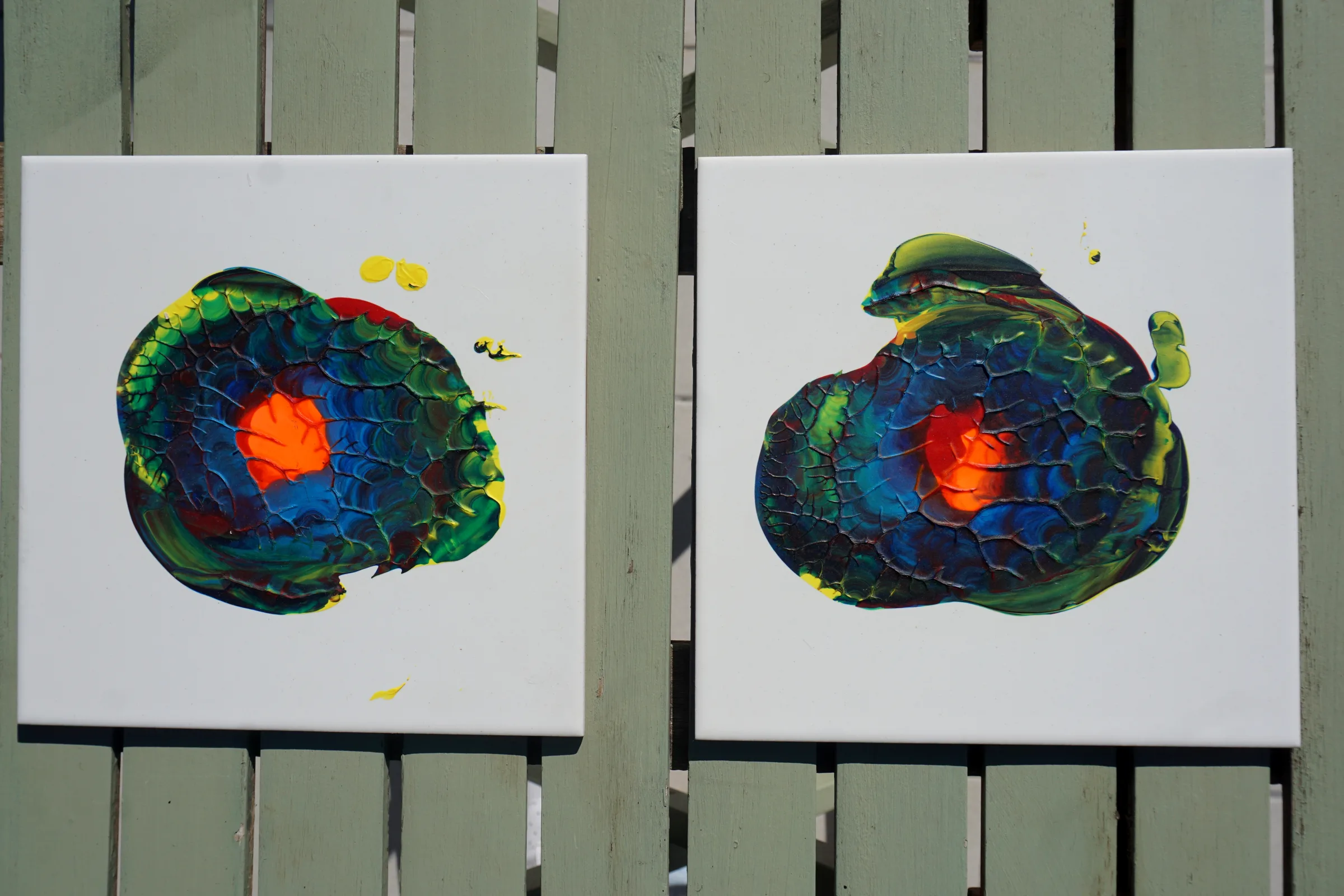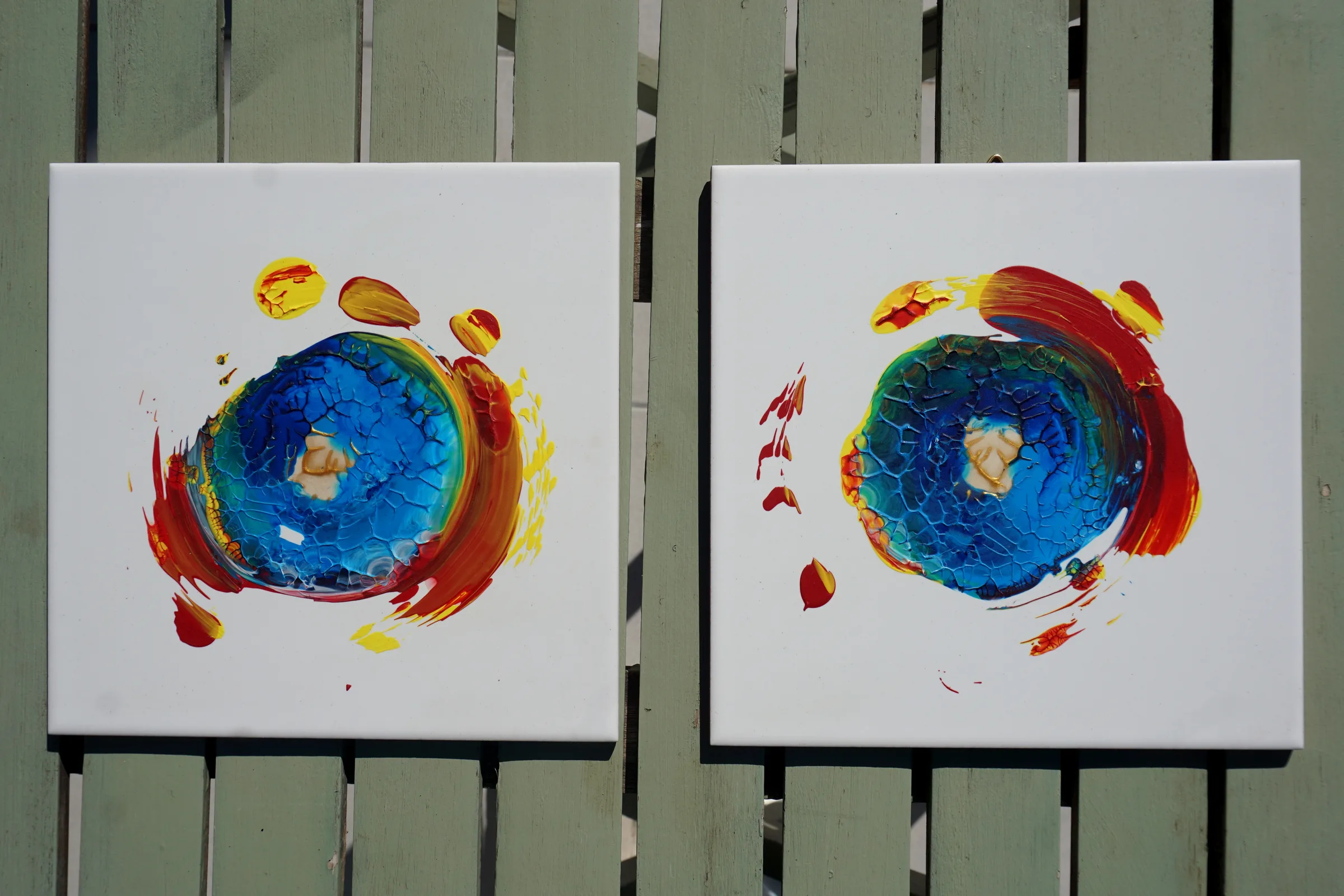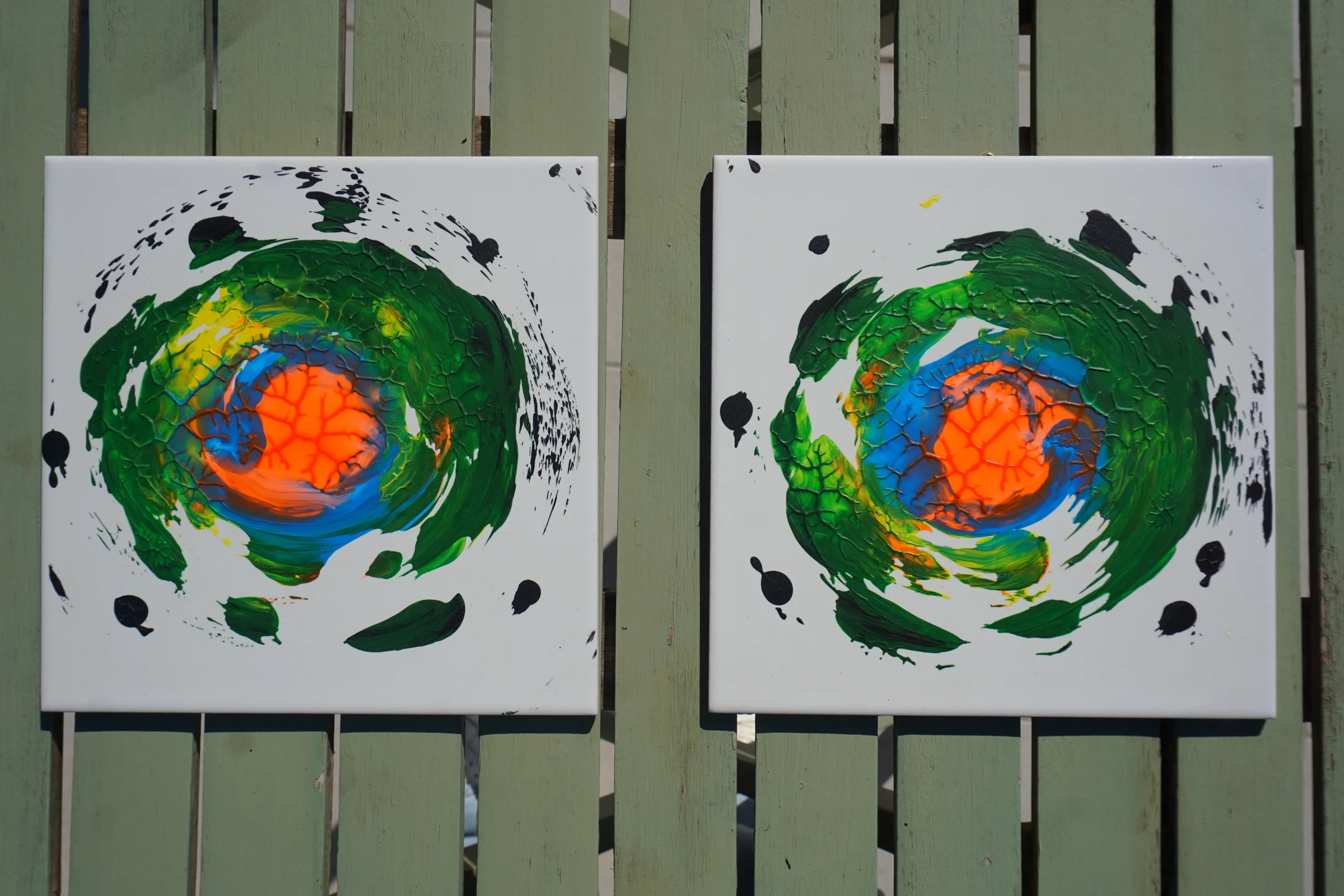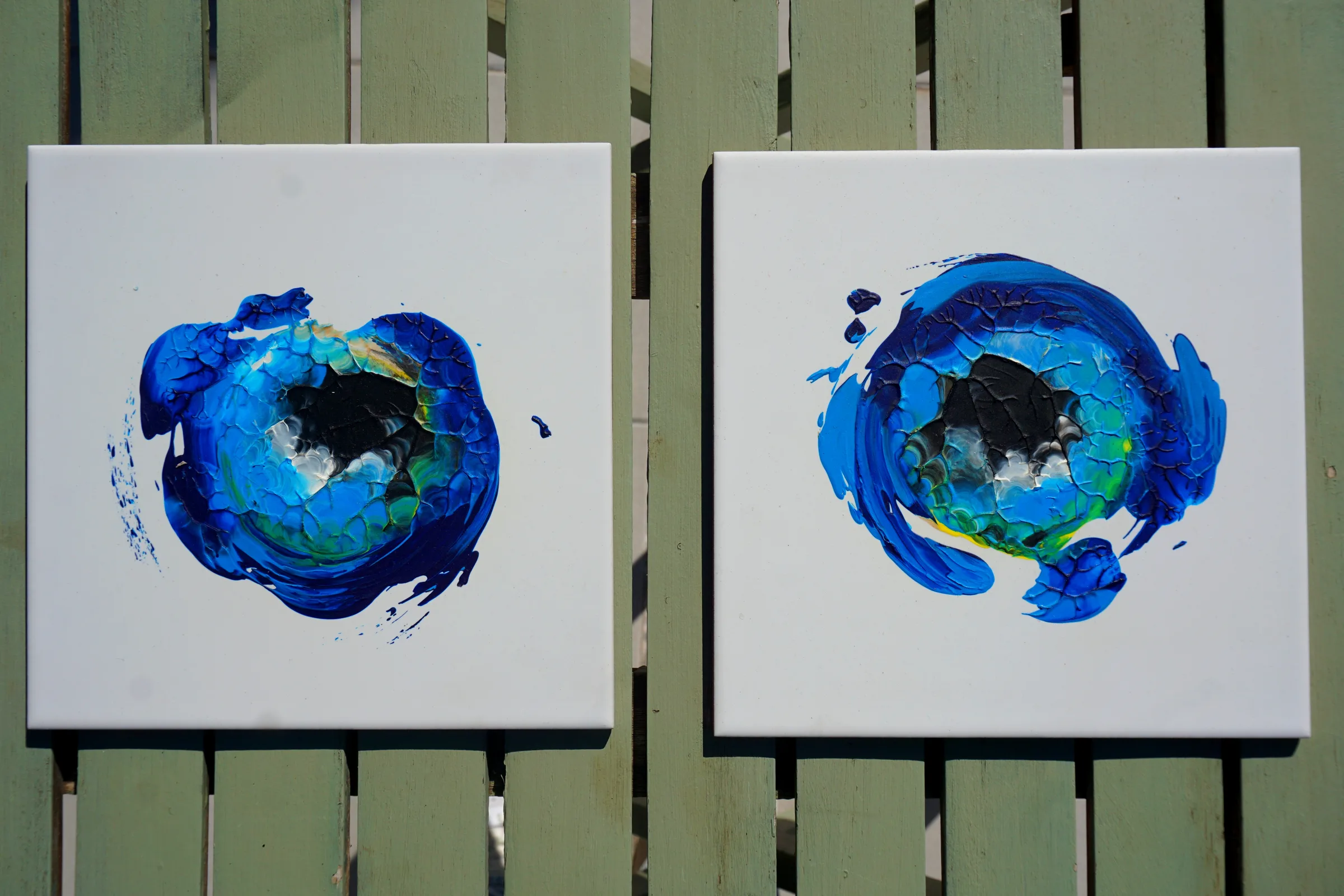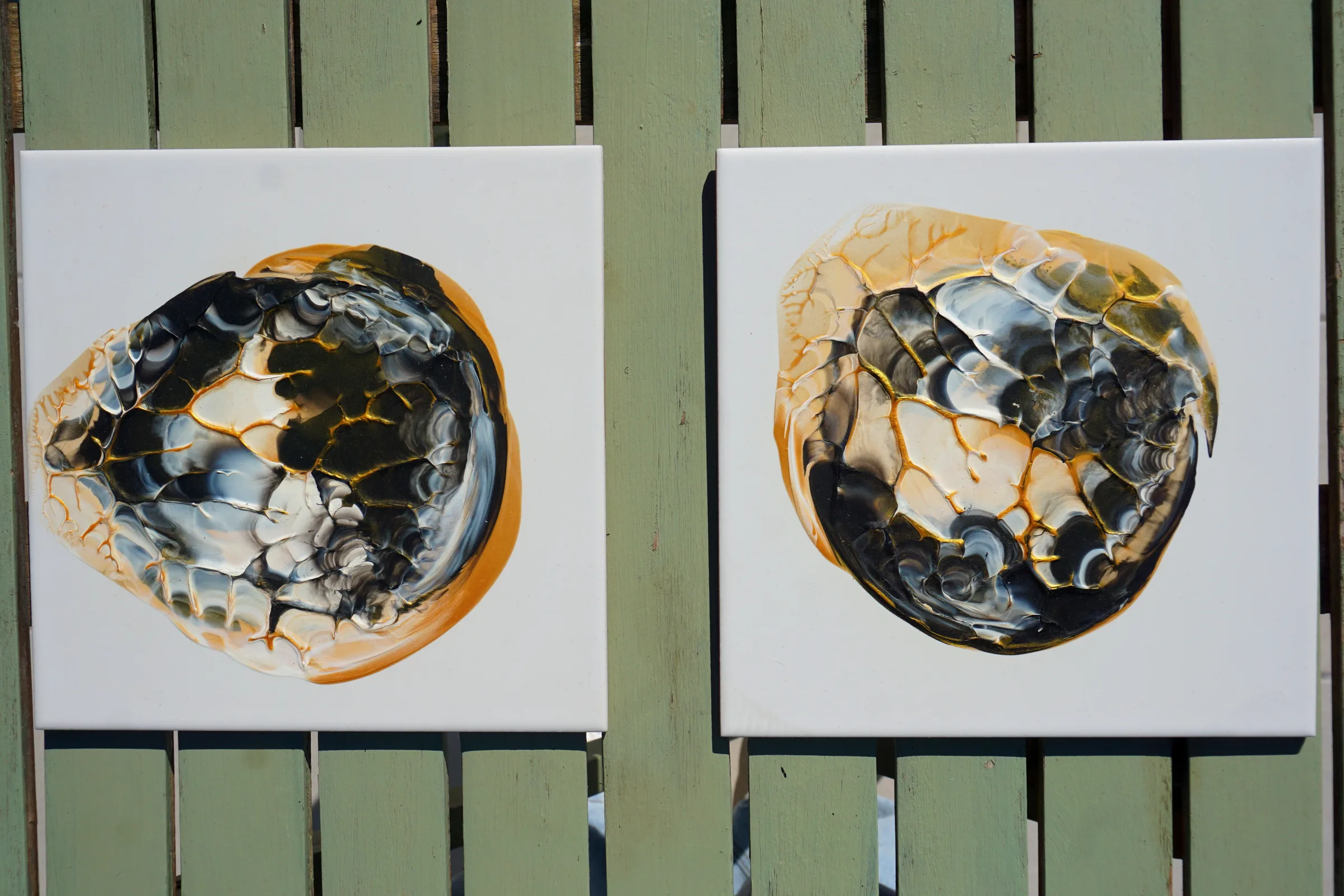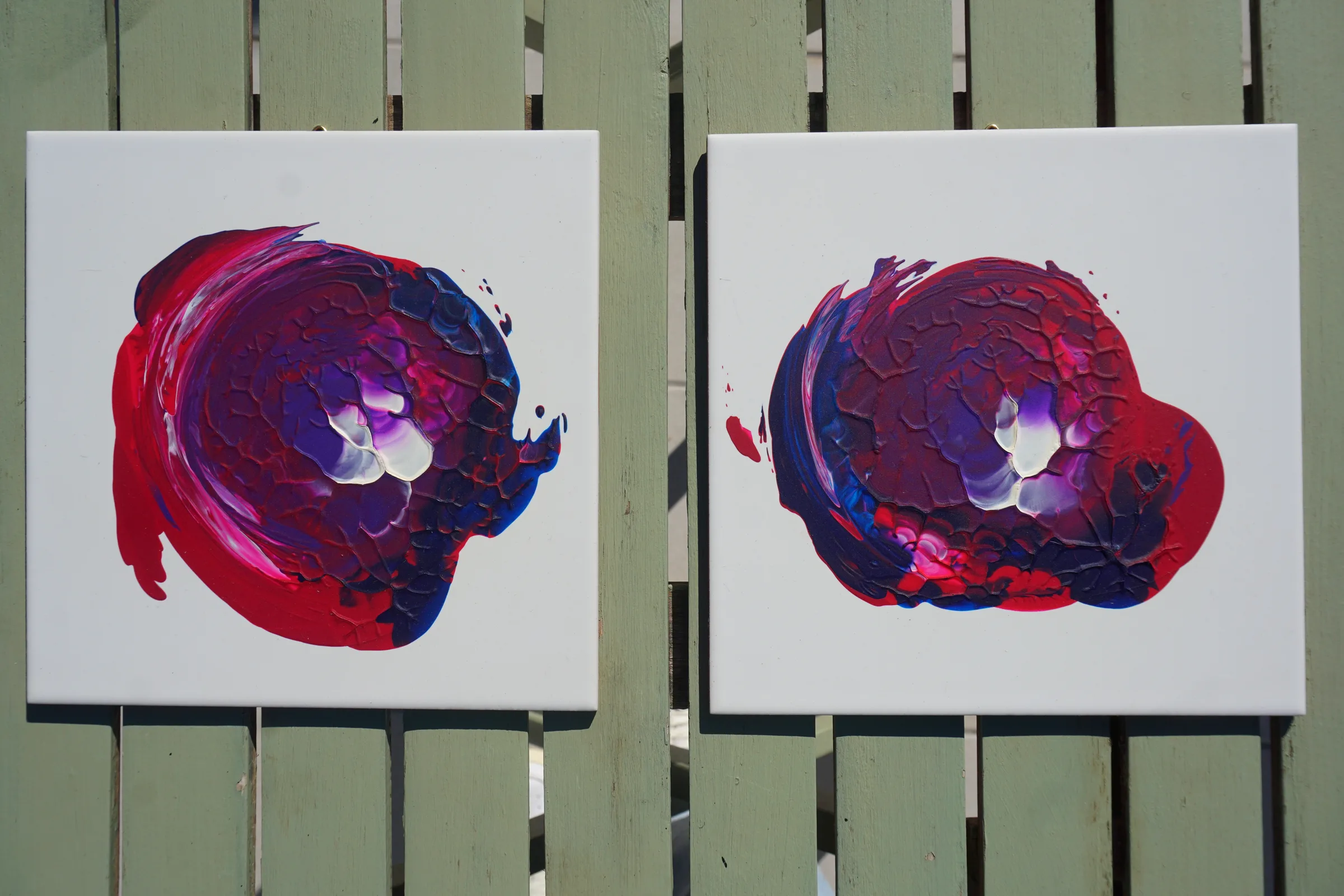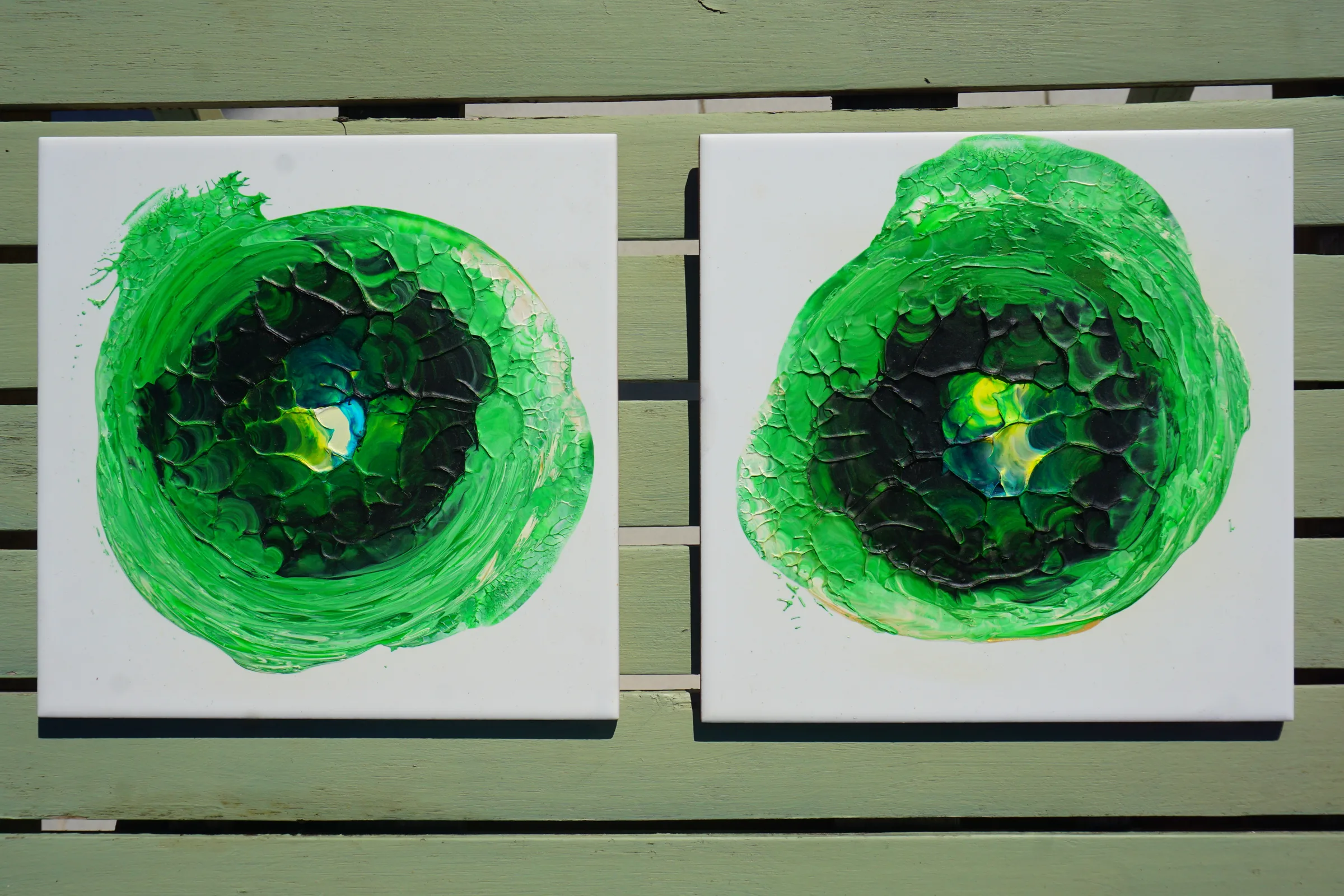
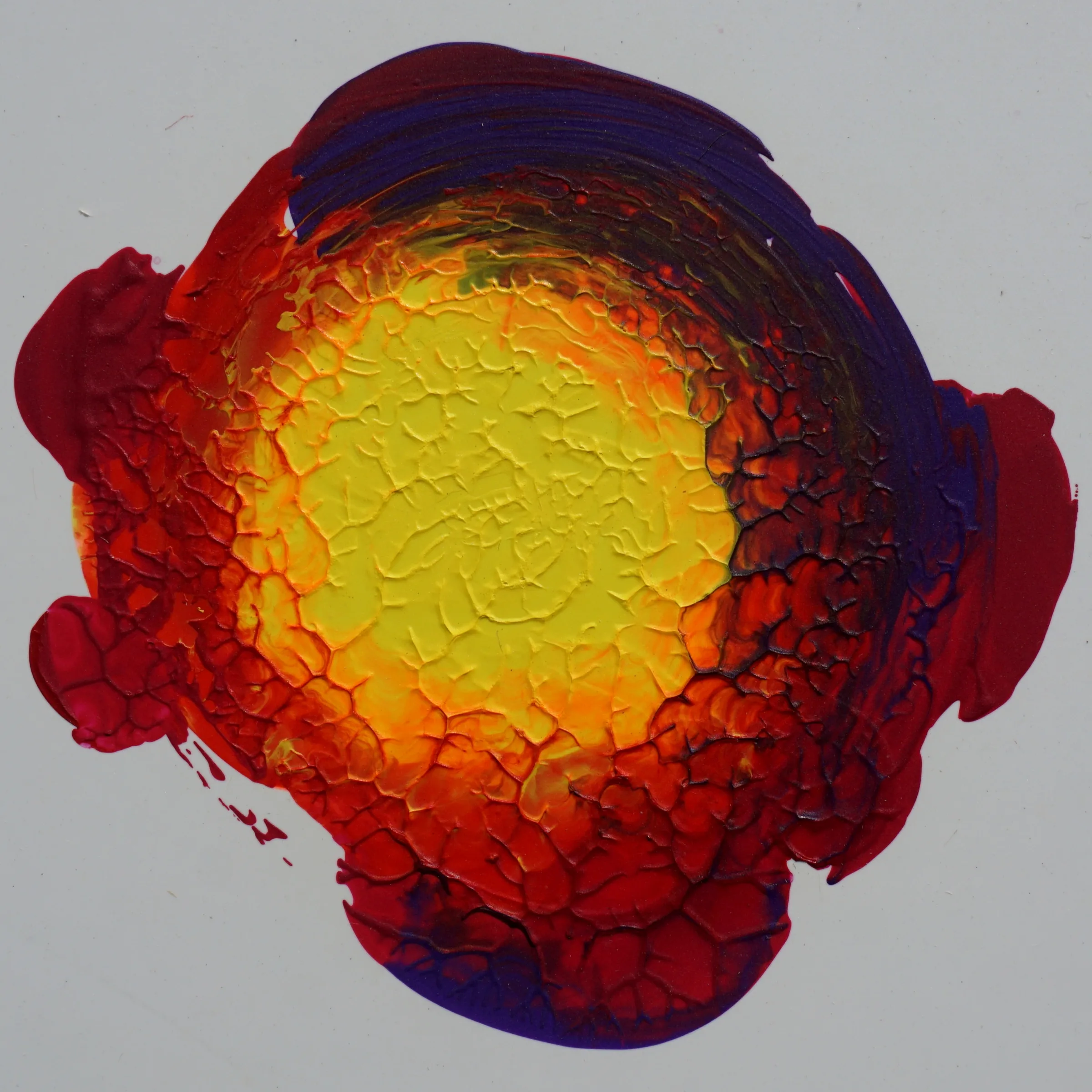
They look, at first, like something you would pass over. Two sister tiles of ceramic bisque, bone-pale, a dark weather occupying one flank. Passion can be like that sometimes — hard, not colorful, a rind with no promise on it. Then you come close, and the yellow is waiting: yolk, ember, the gold of a fruit that had been night on the outside.
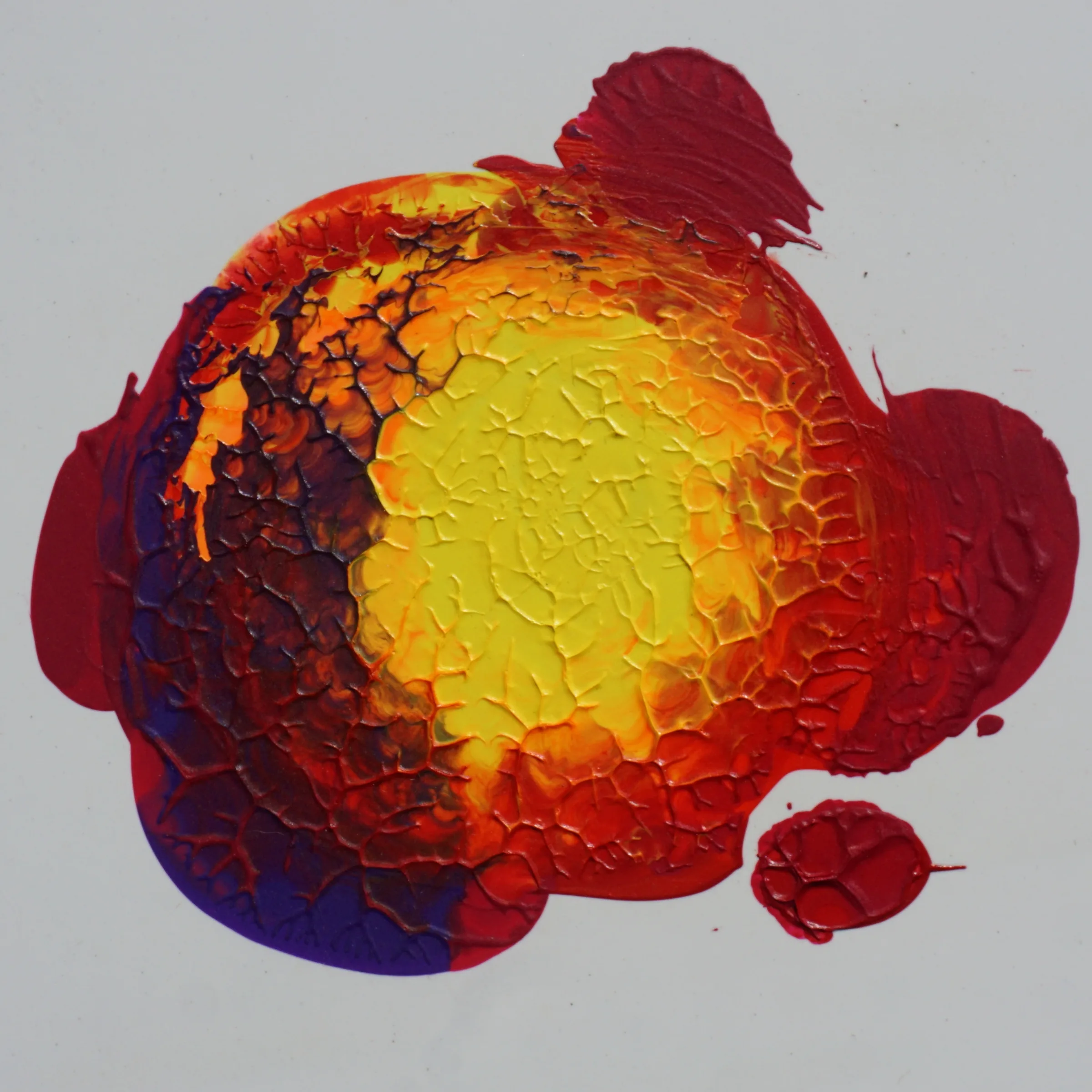
The sisters were a single surface until the moment they came apart. The pigment tore into cells, bloomed at the core, chose a face. Tile B kept a rounder yellow heart, nearly whole, ringed in orange then the red of crushed fruit, indigo dragged across the crown. Tile A kept the torn purple-black flank whose cells are almost char, three crimson lobes, and a small red island that broke away and stayed. The relief is that instant, still raised — a mudflat after fire, concentric terraces, the opening made solid.
Seen together they complete a form that was never going to stay whole. The yellow cores face each other across the bisque. What looked like dusk was gold. You taste it and it proves you wrong. They are sold only together; each tile's only sibling is the one it was born with.
You would have walked past.
Dusk on the rind,
a hard purple night,
no shine.
The sisters were one
until they were not.
Gold bloomed in the tear —
a heart still round on one face,
shouldered aside on the other,
ember, then crimson,
a small red island
that chose a sister and stayed.
The relief kept the opening:
cells, terraces, the fruit's inside
raised and matte.
Passion is like that sometimes.
Hard. Not colorful.
Then you taste it
and it proves you wrong.
Passion Fruit — Listen