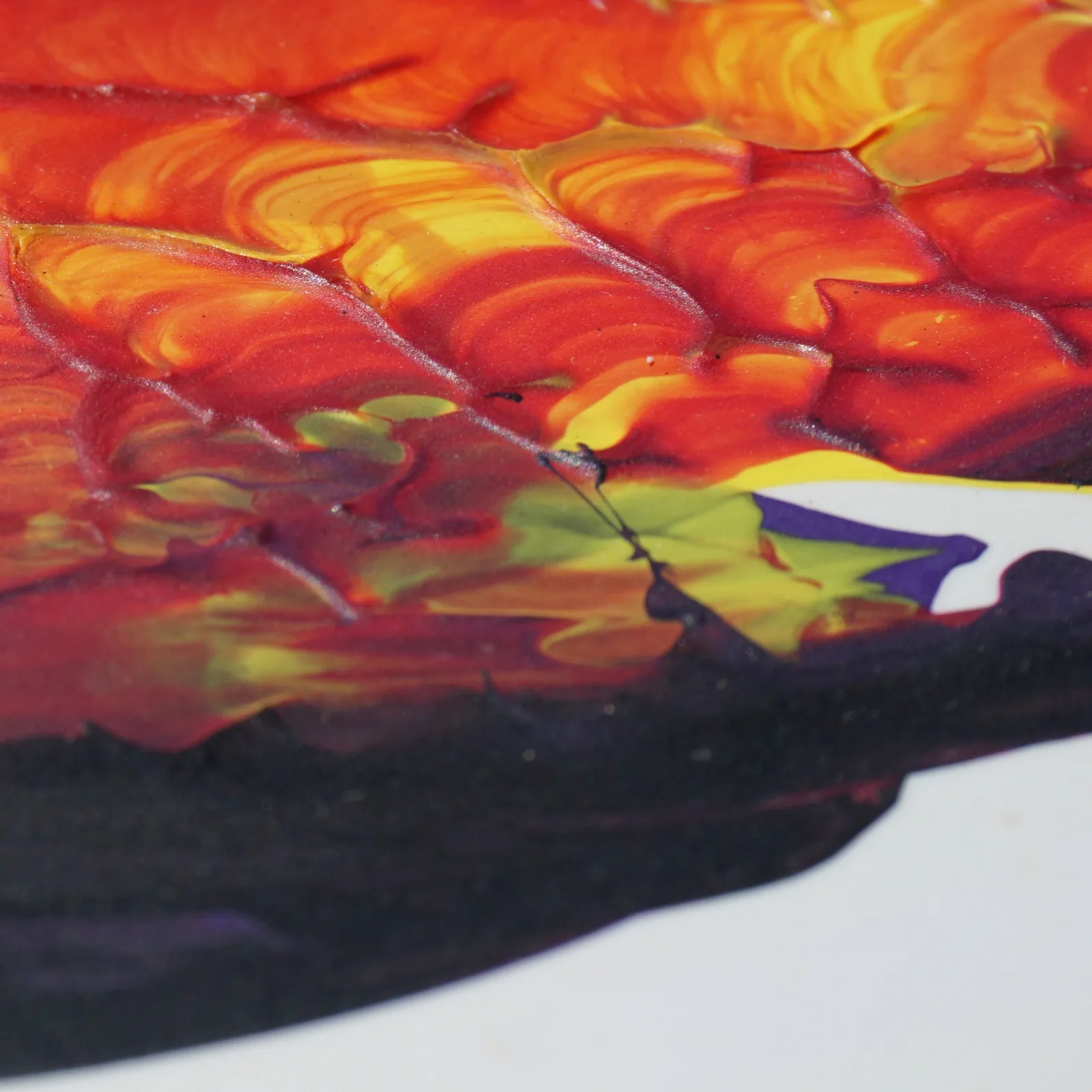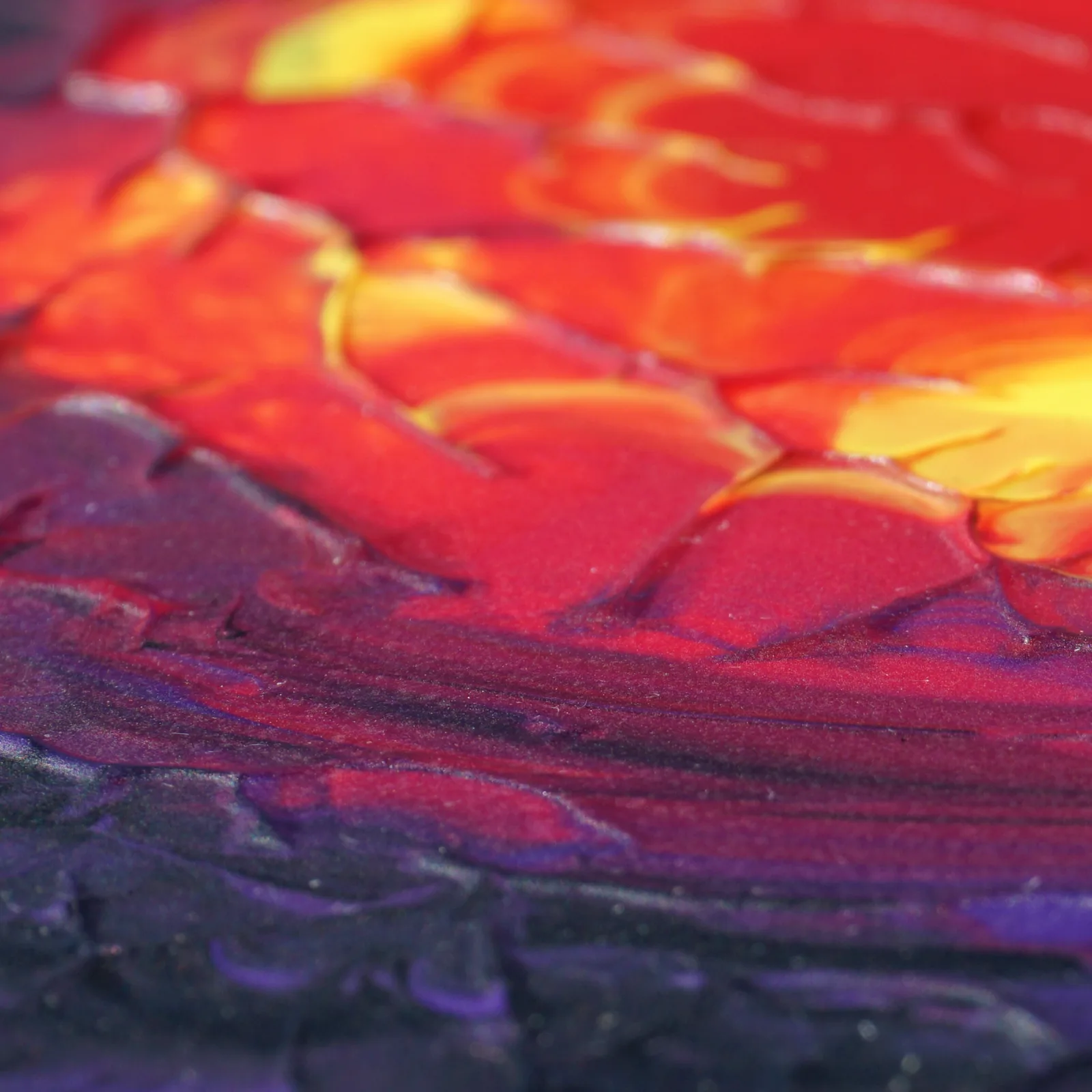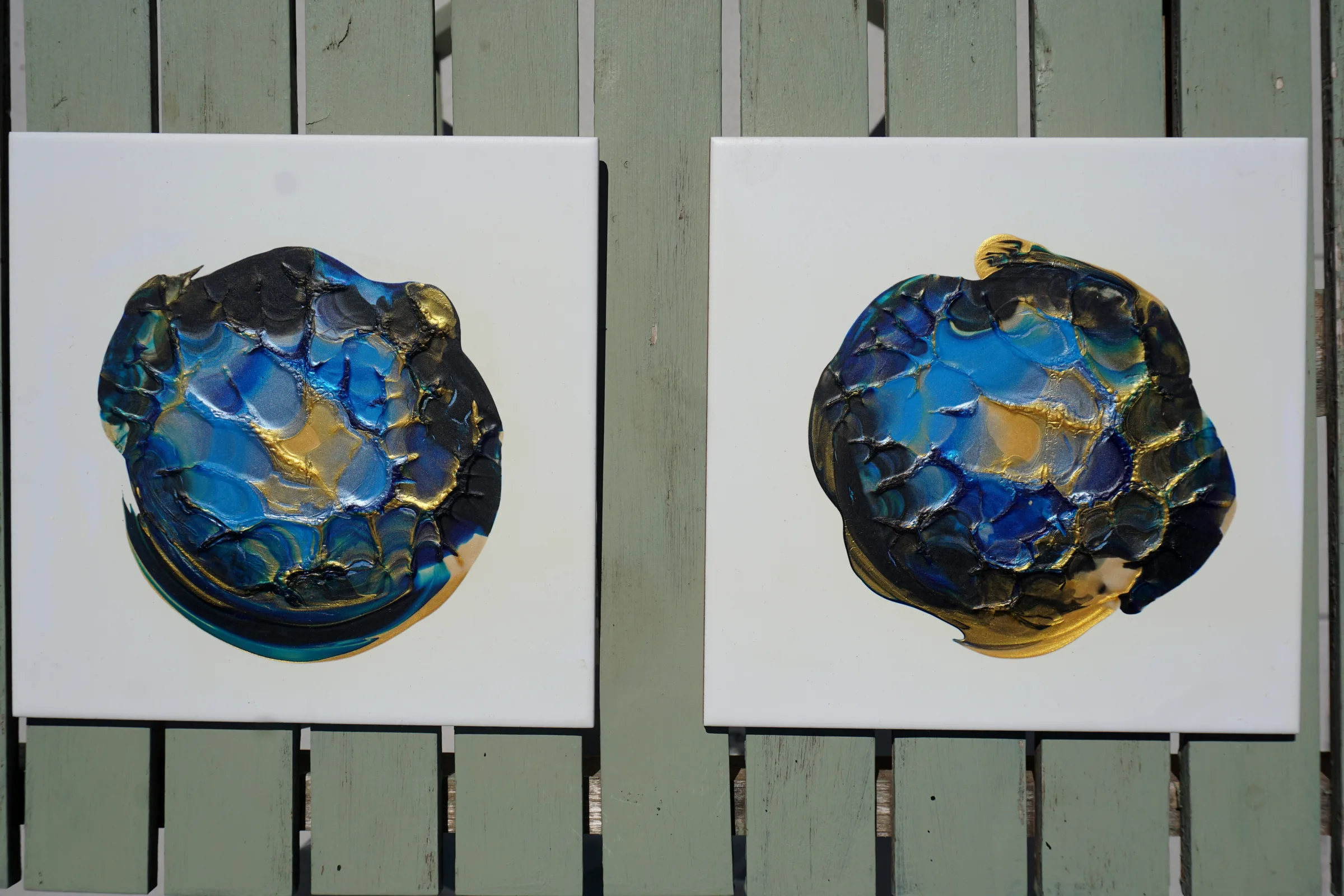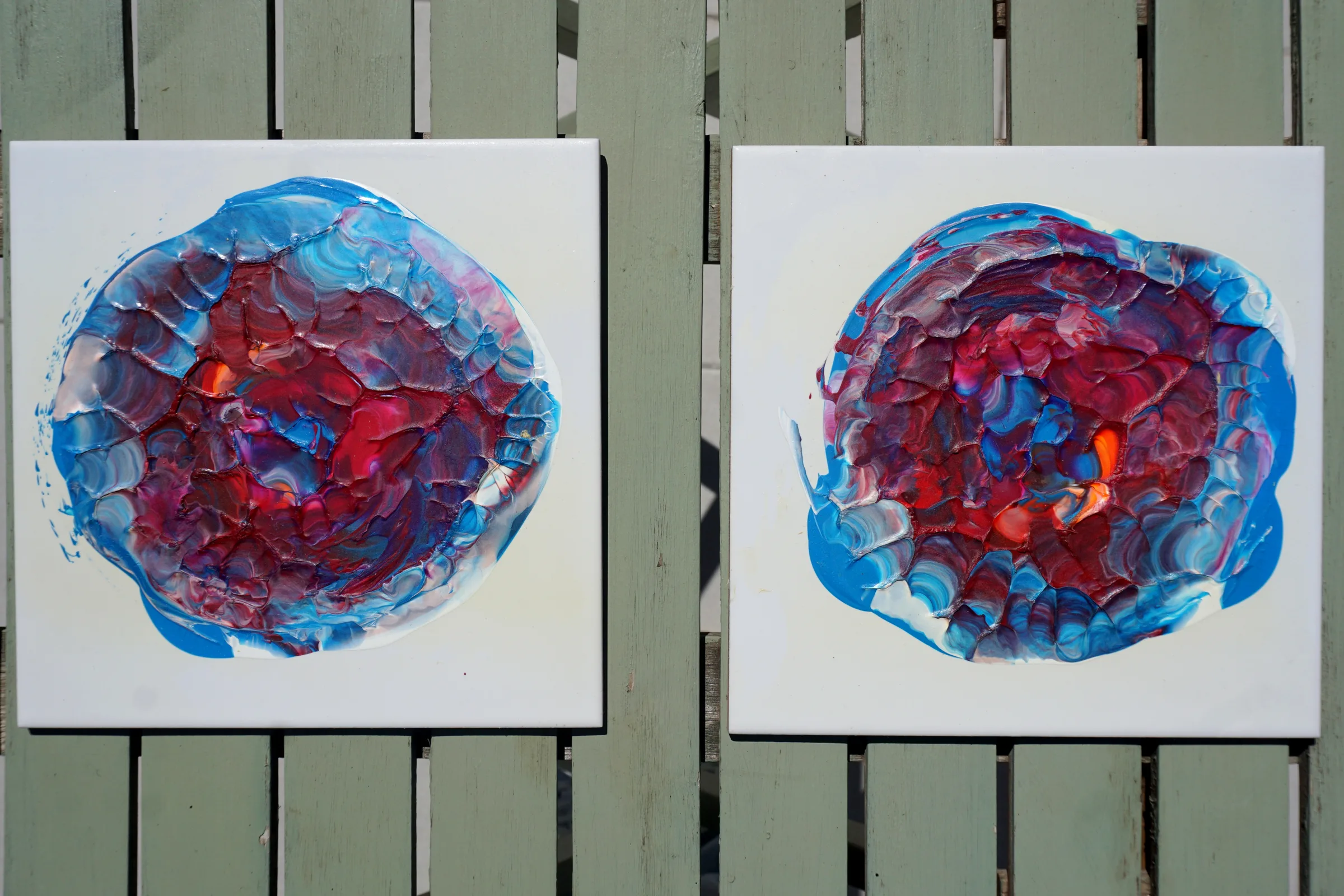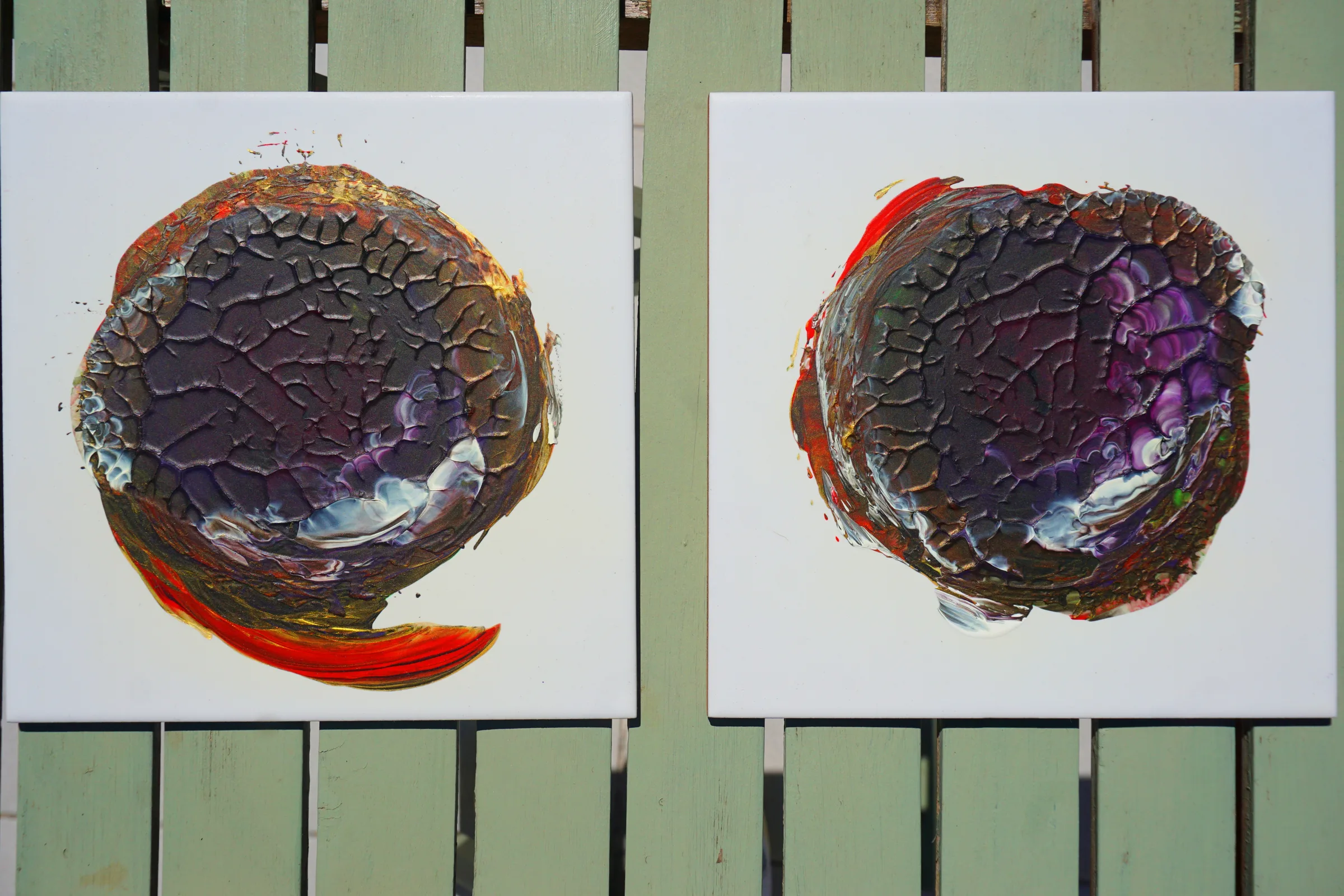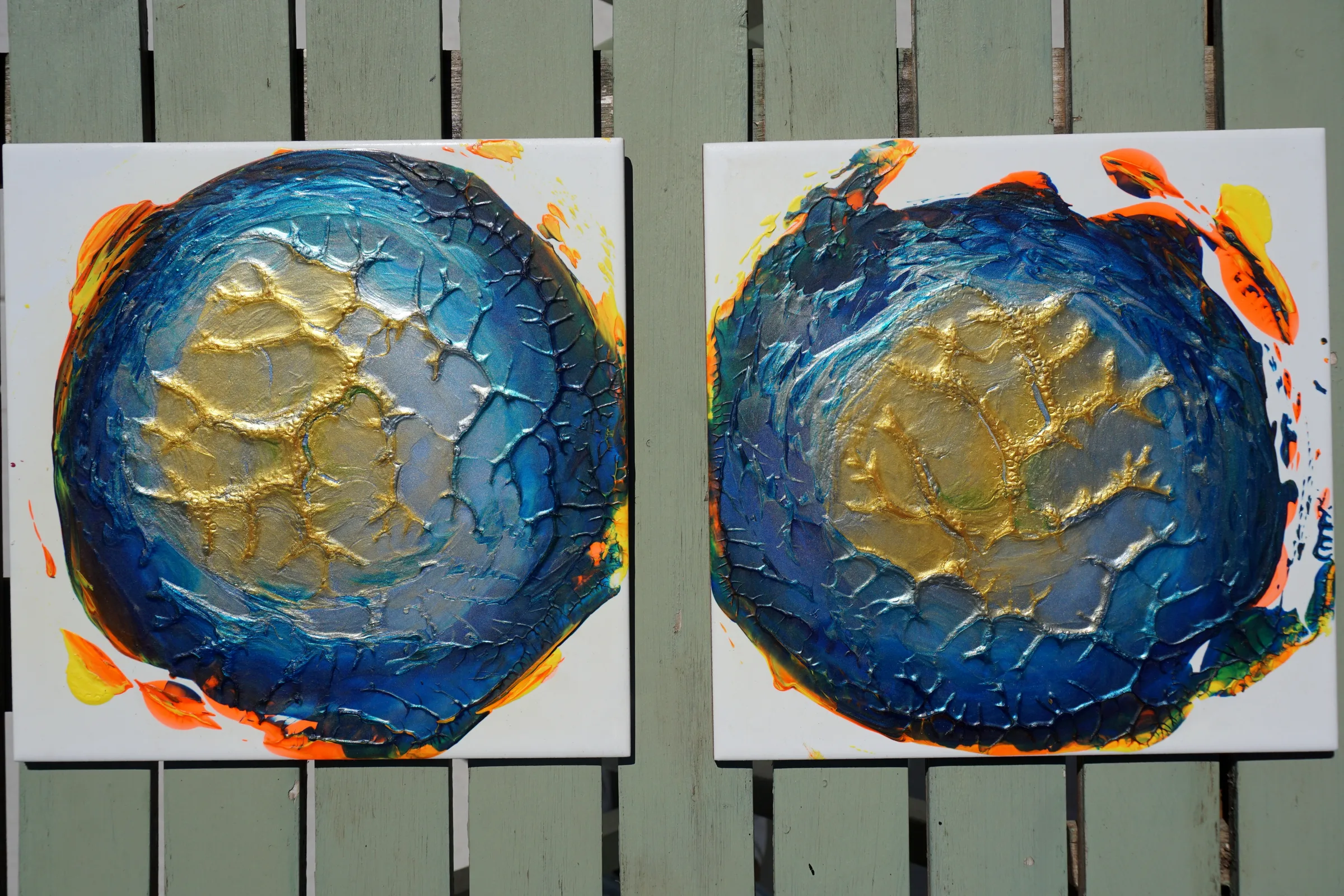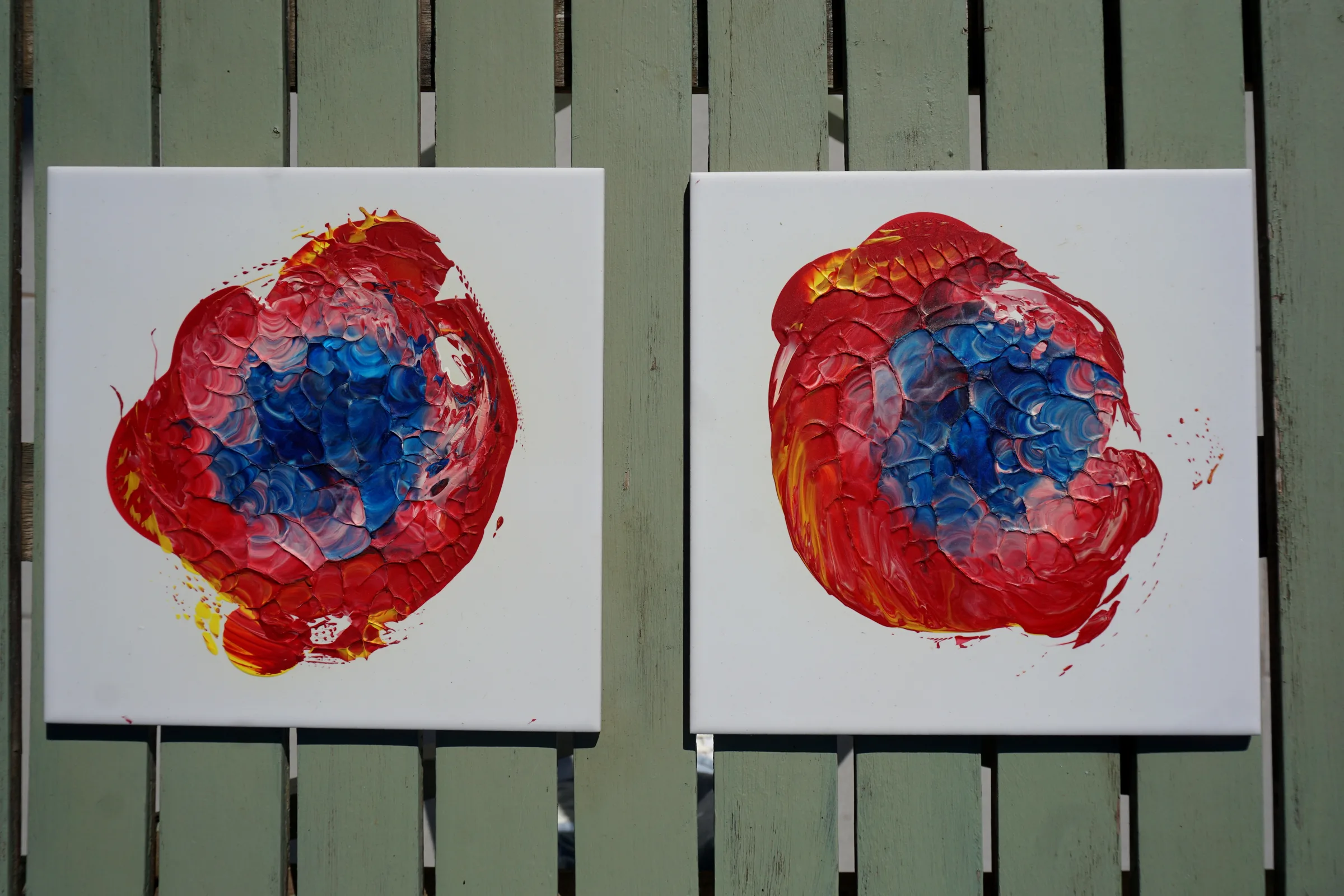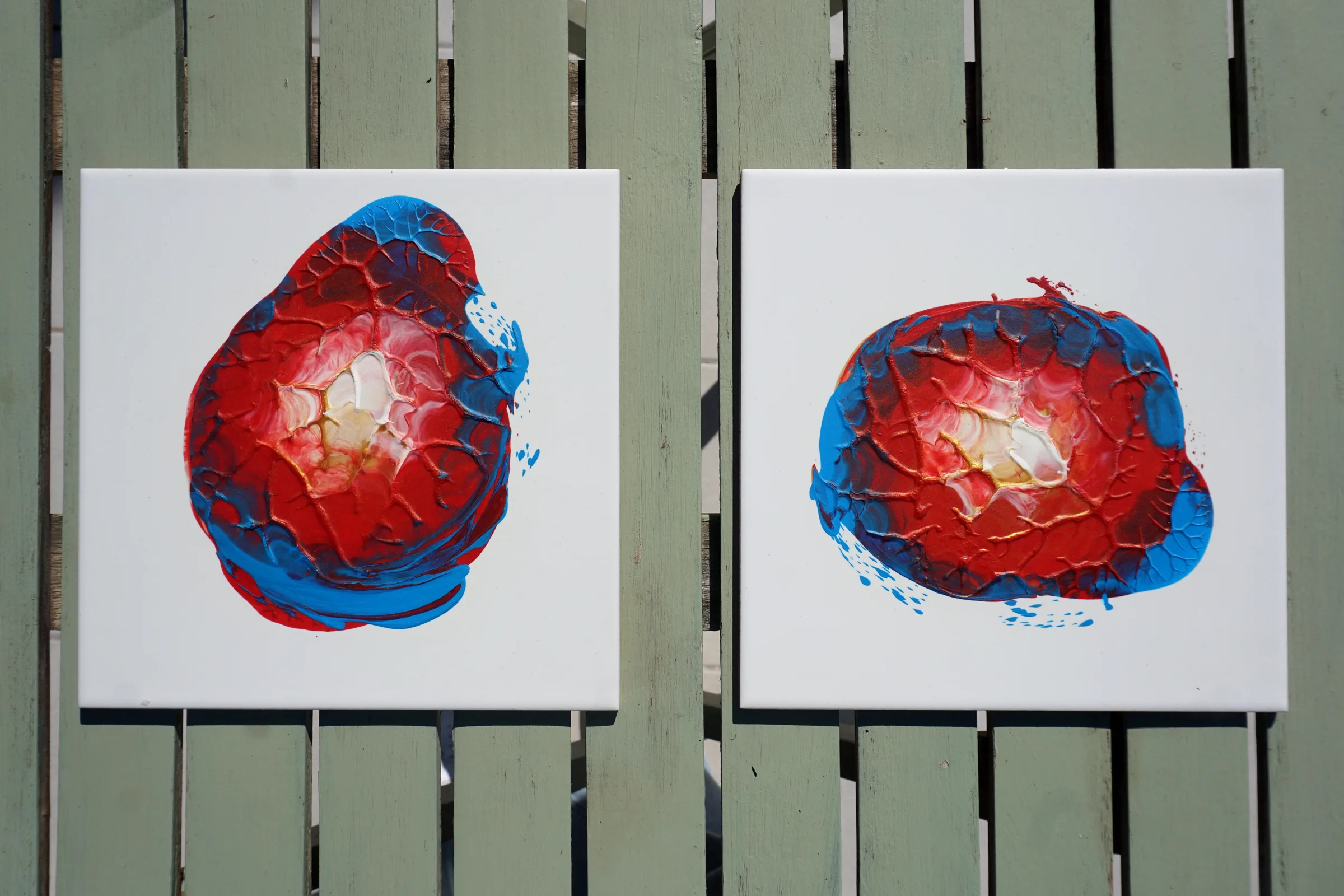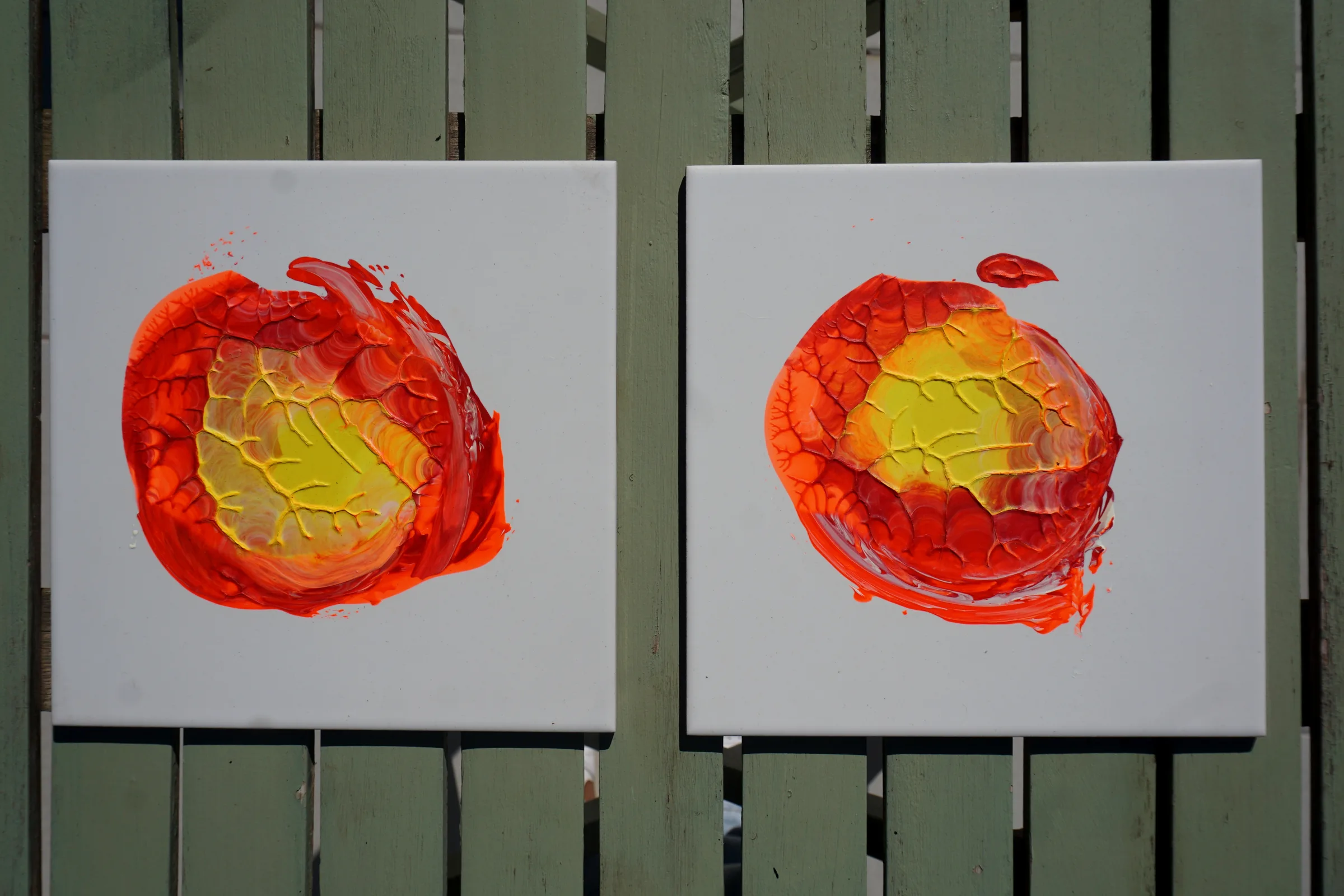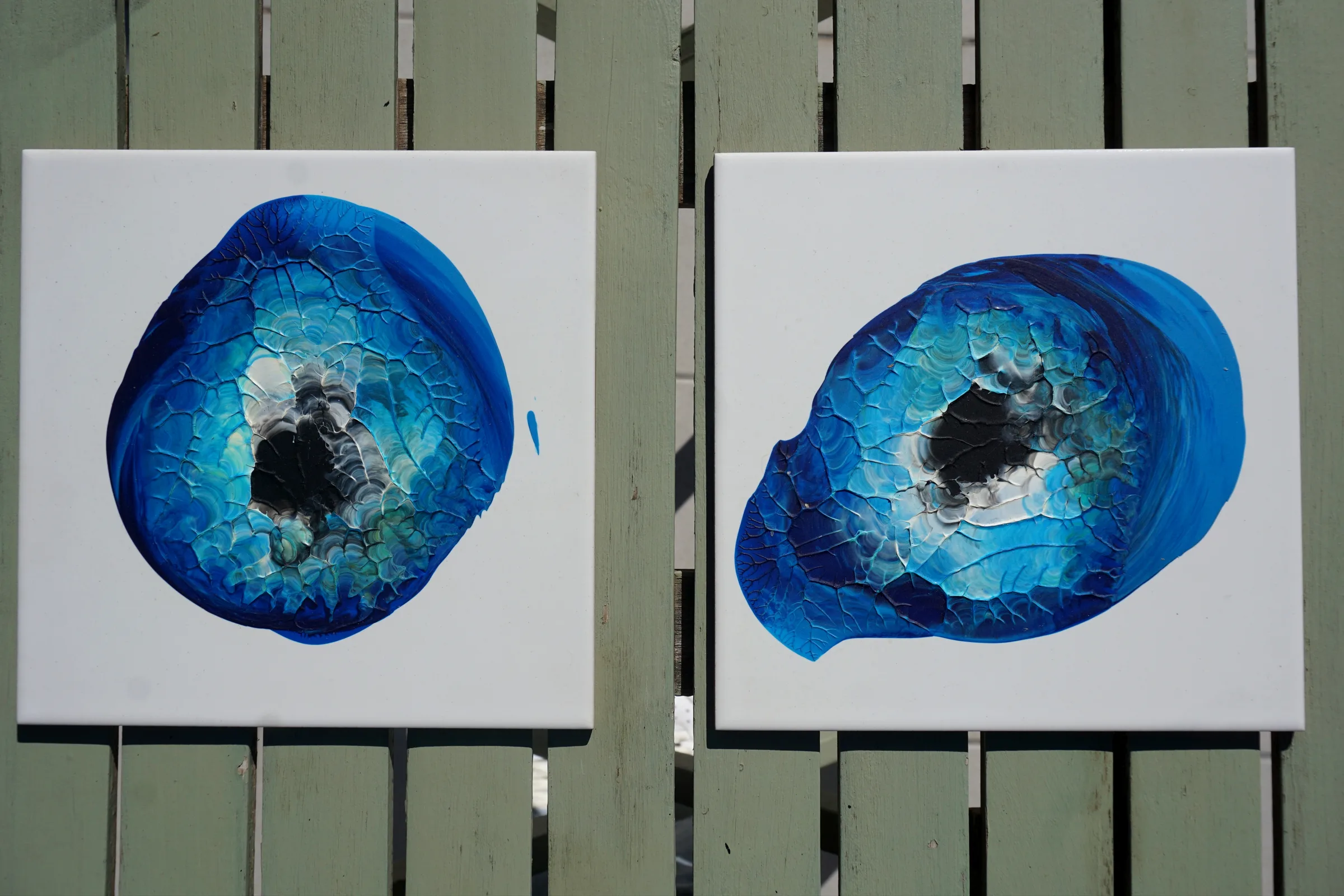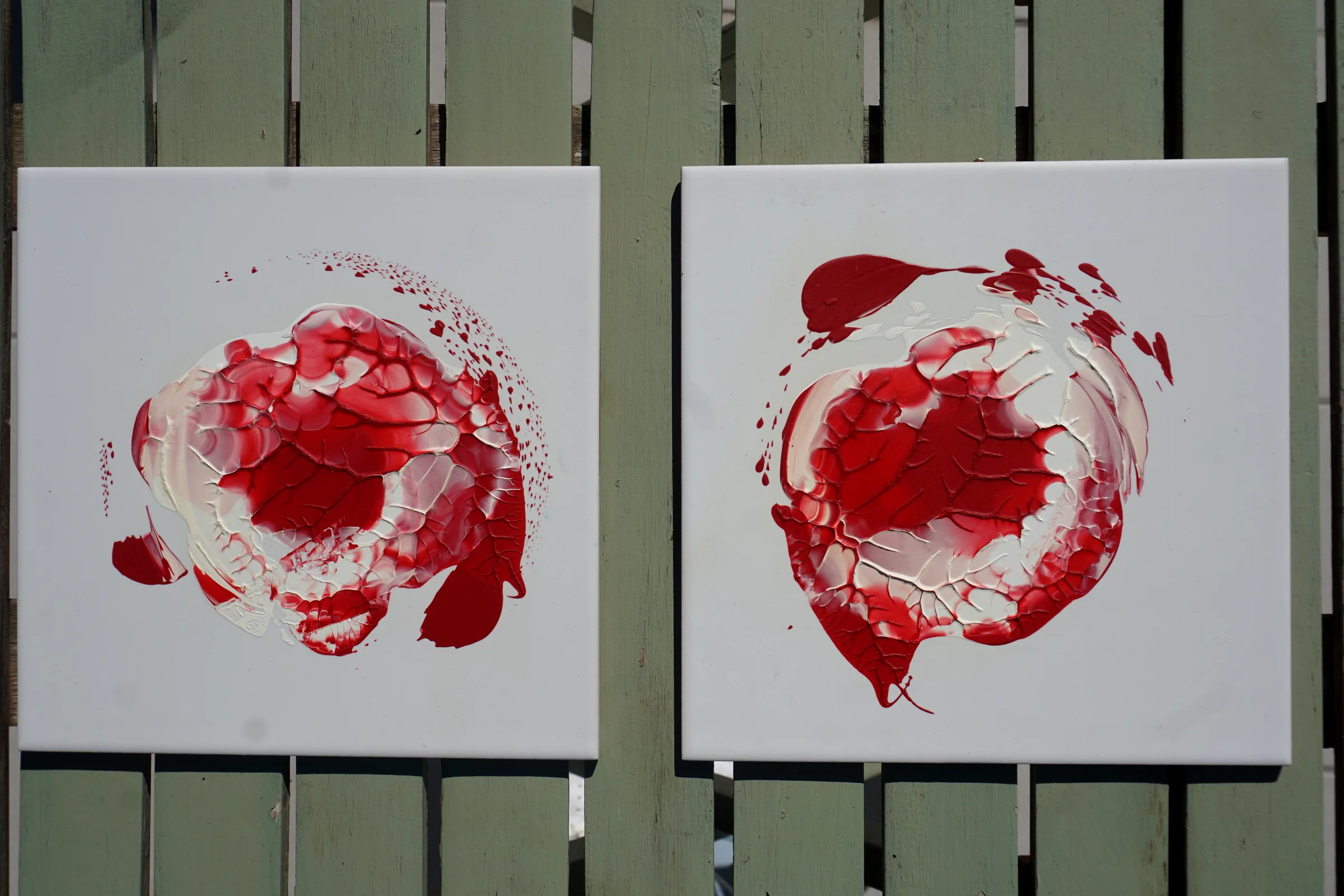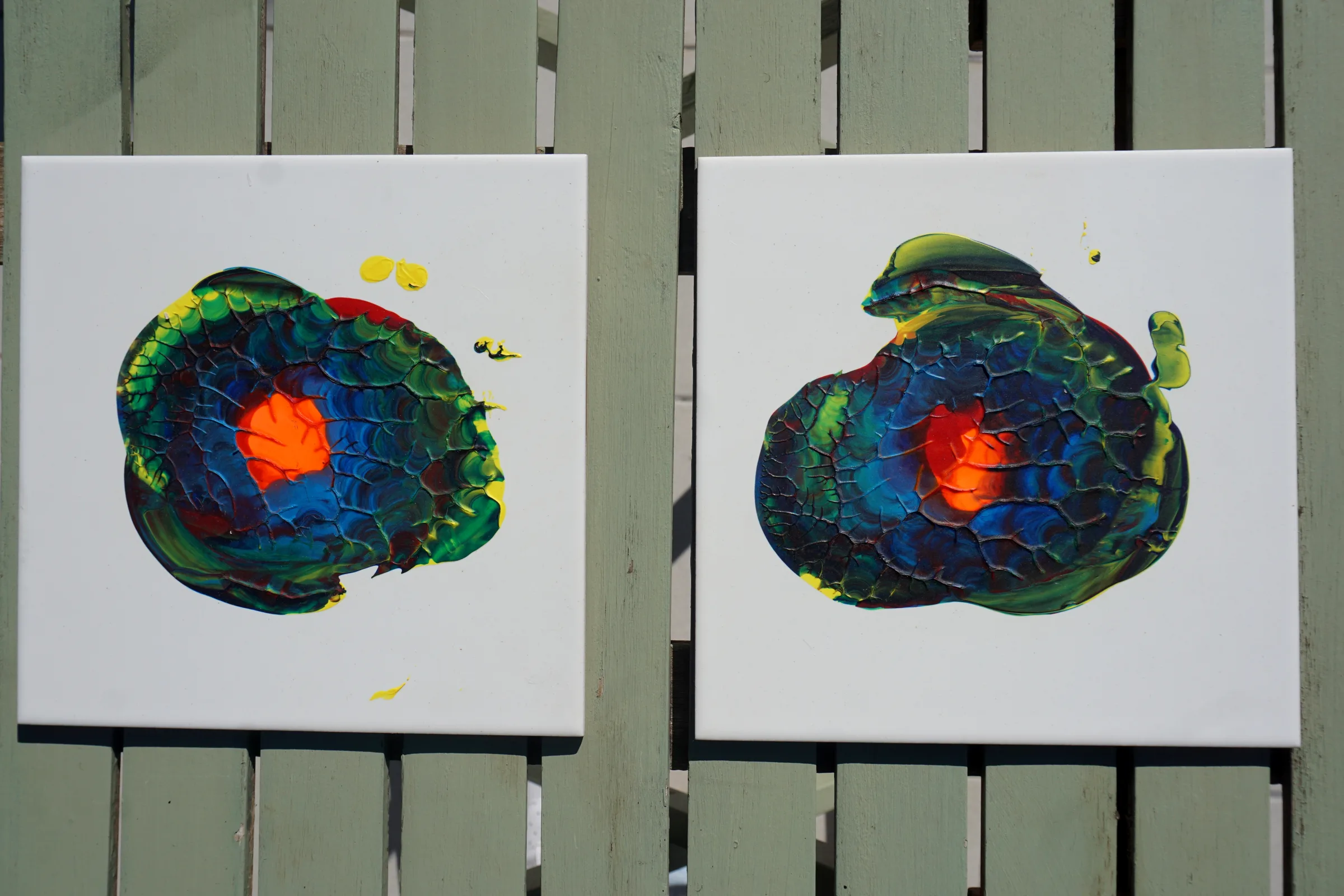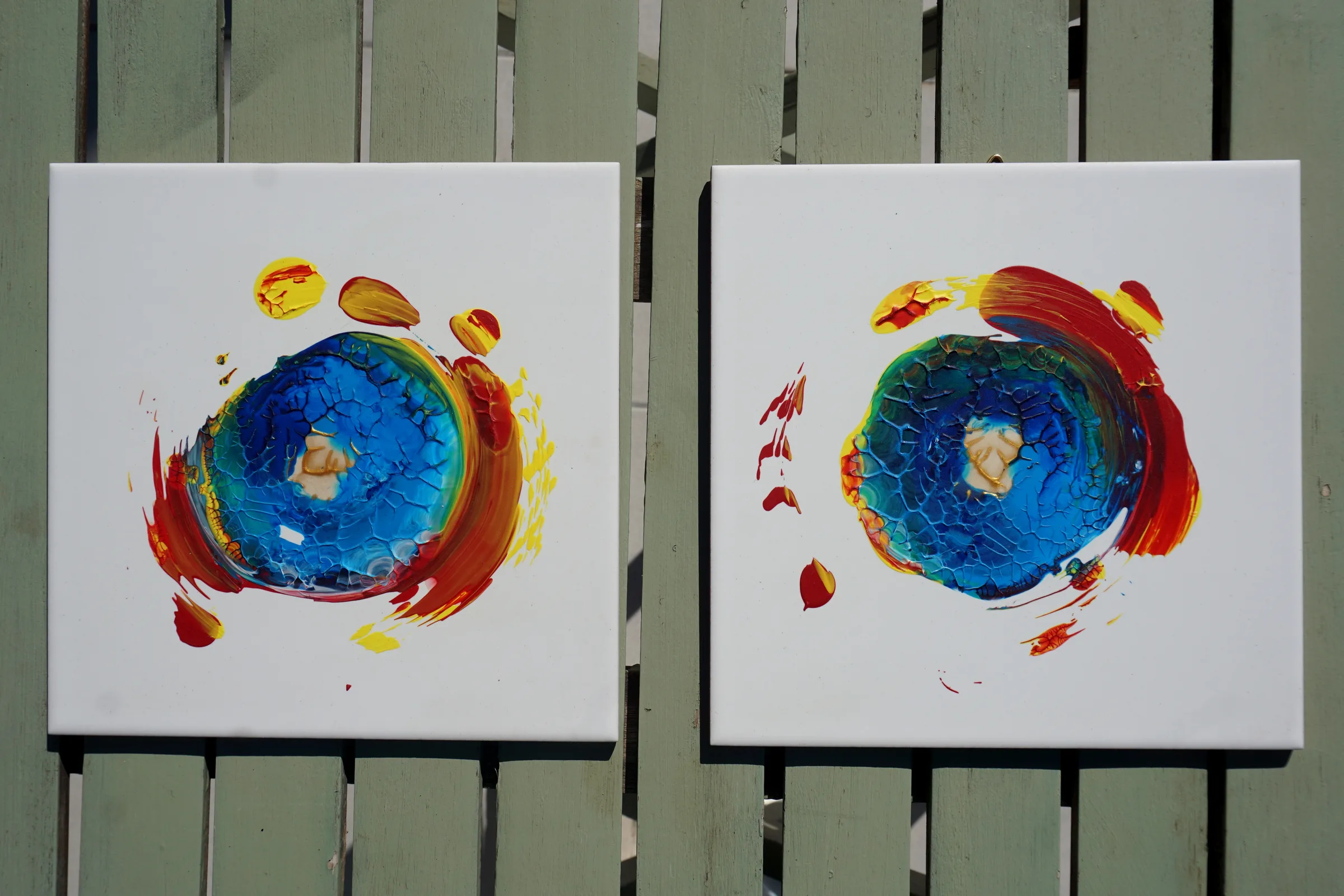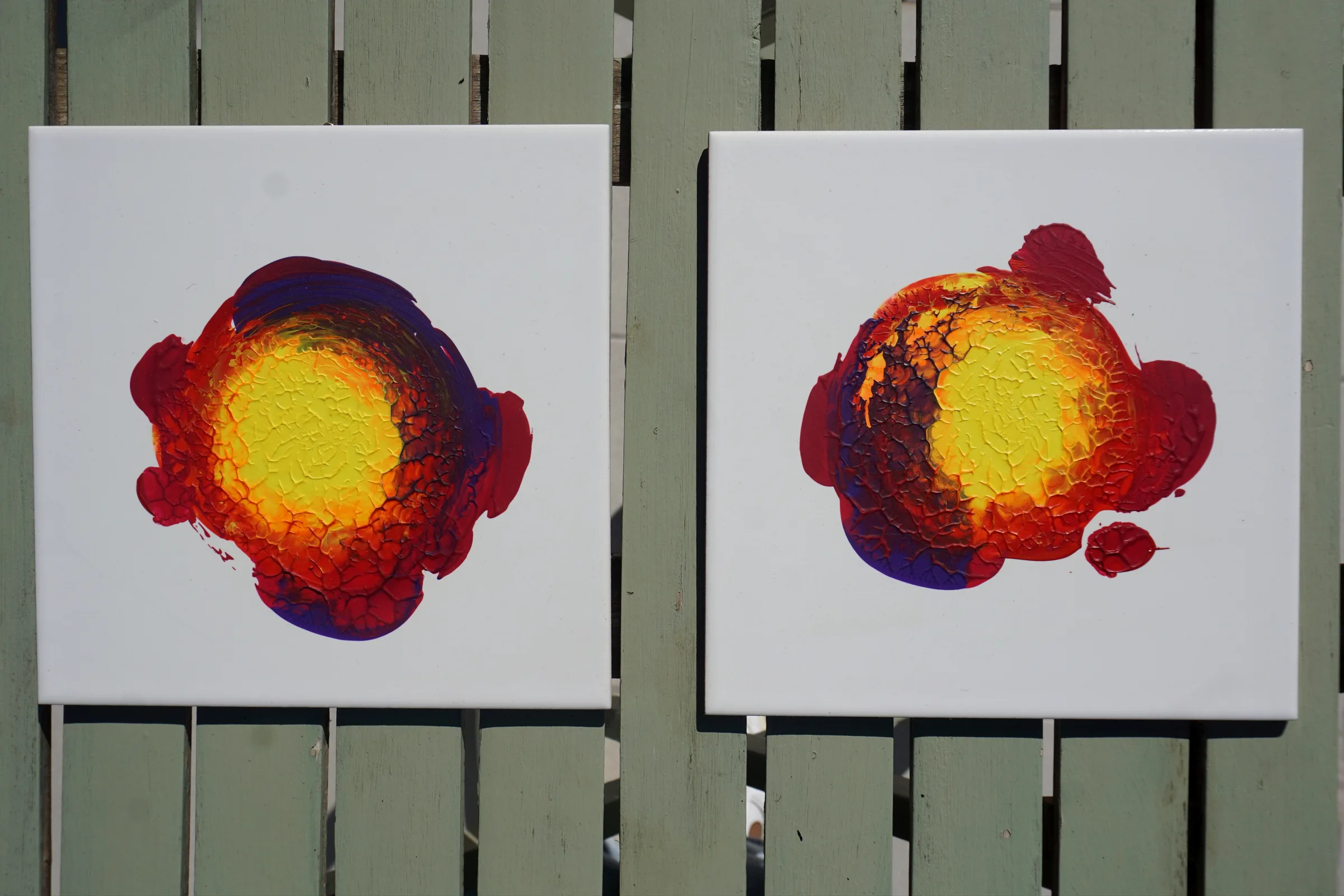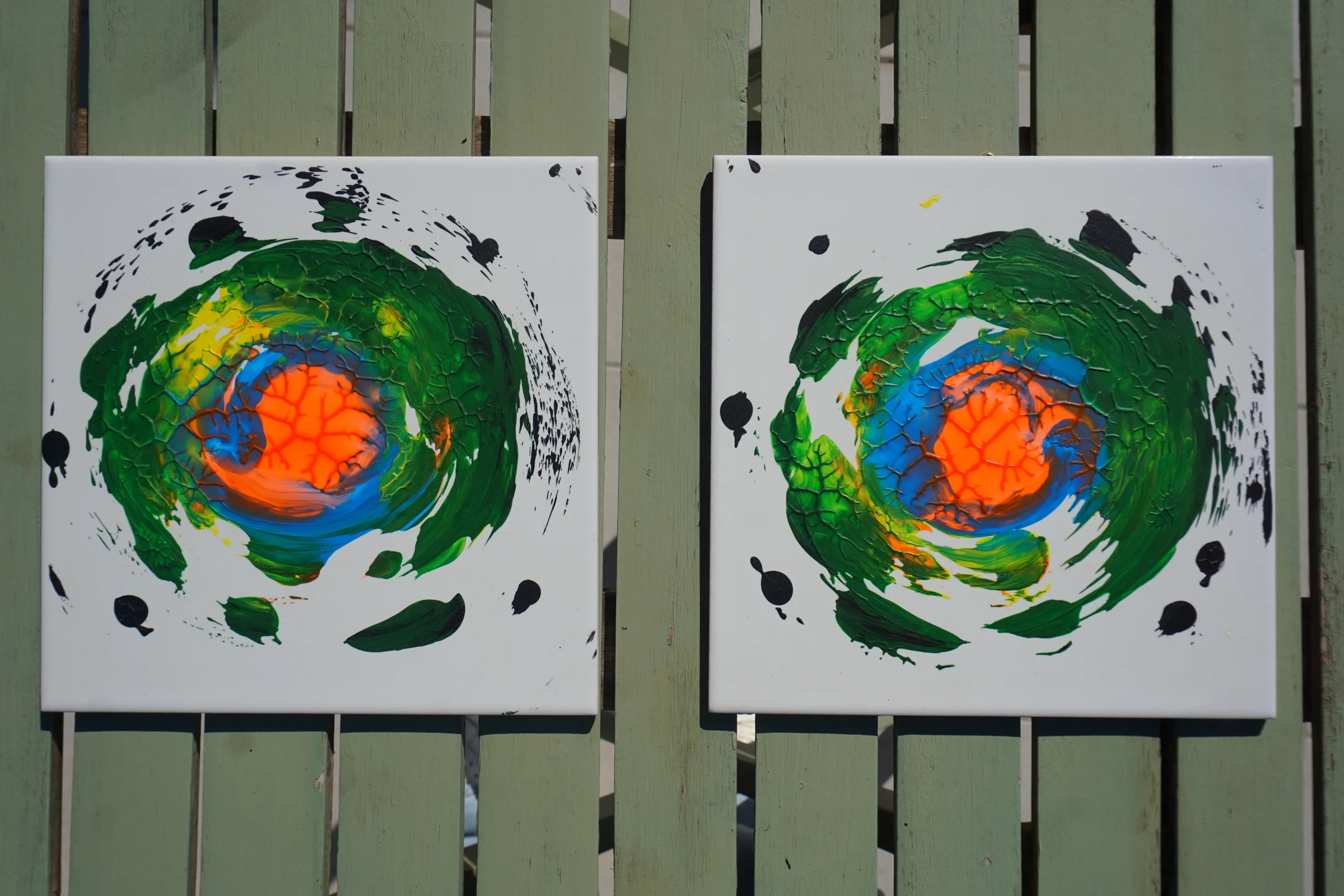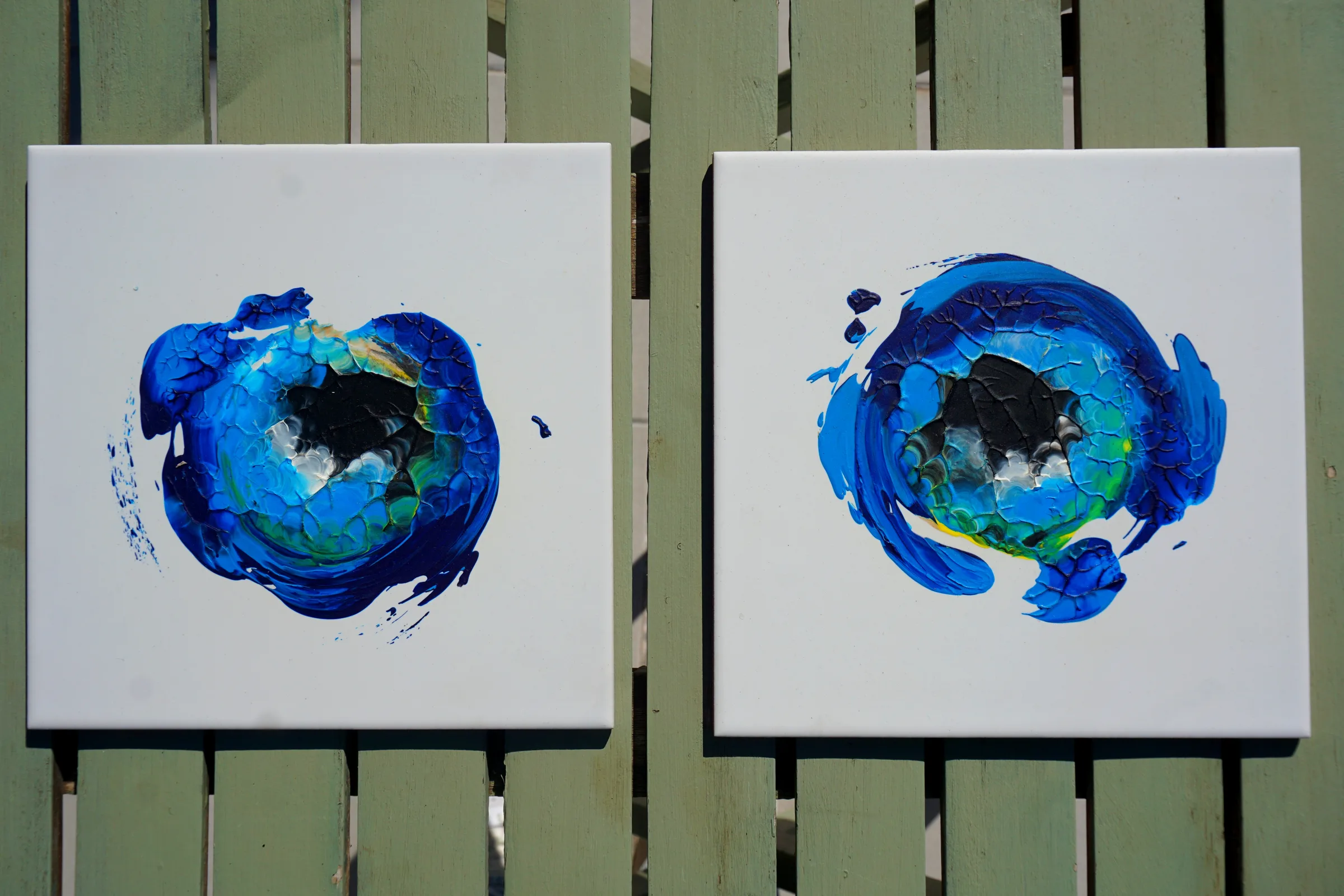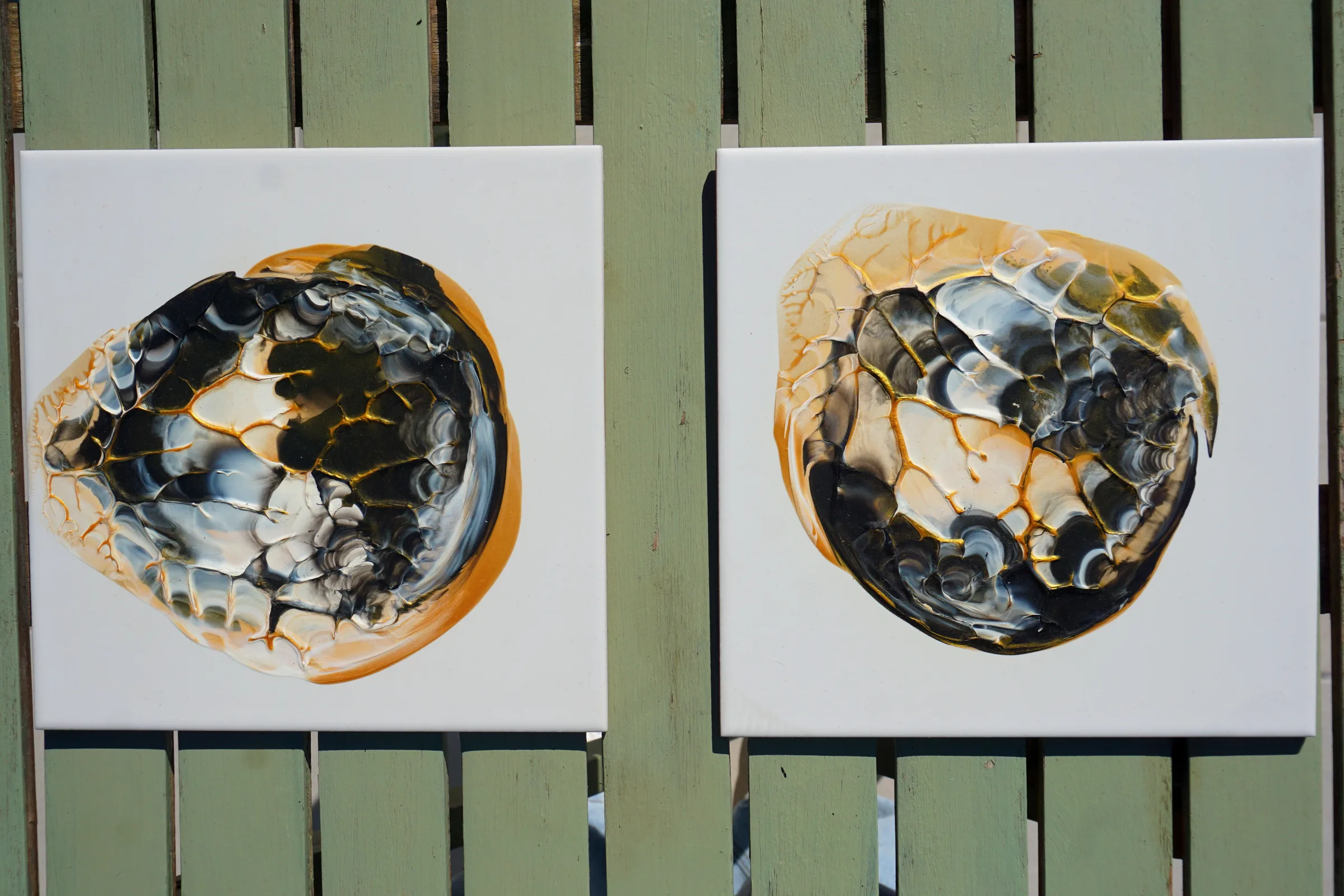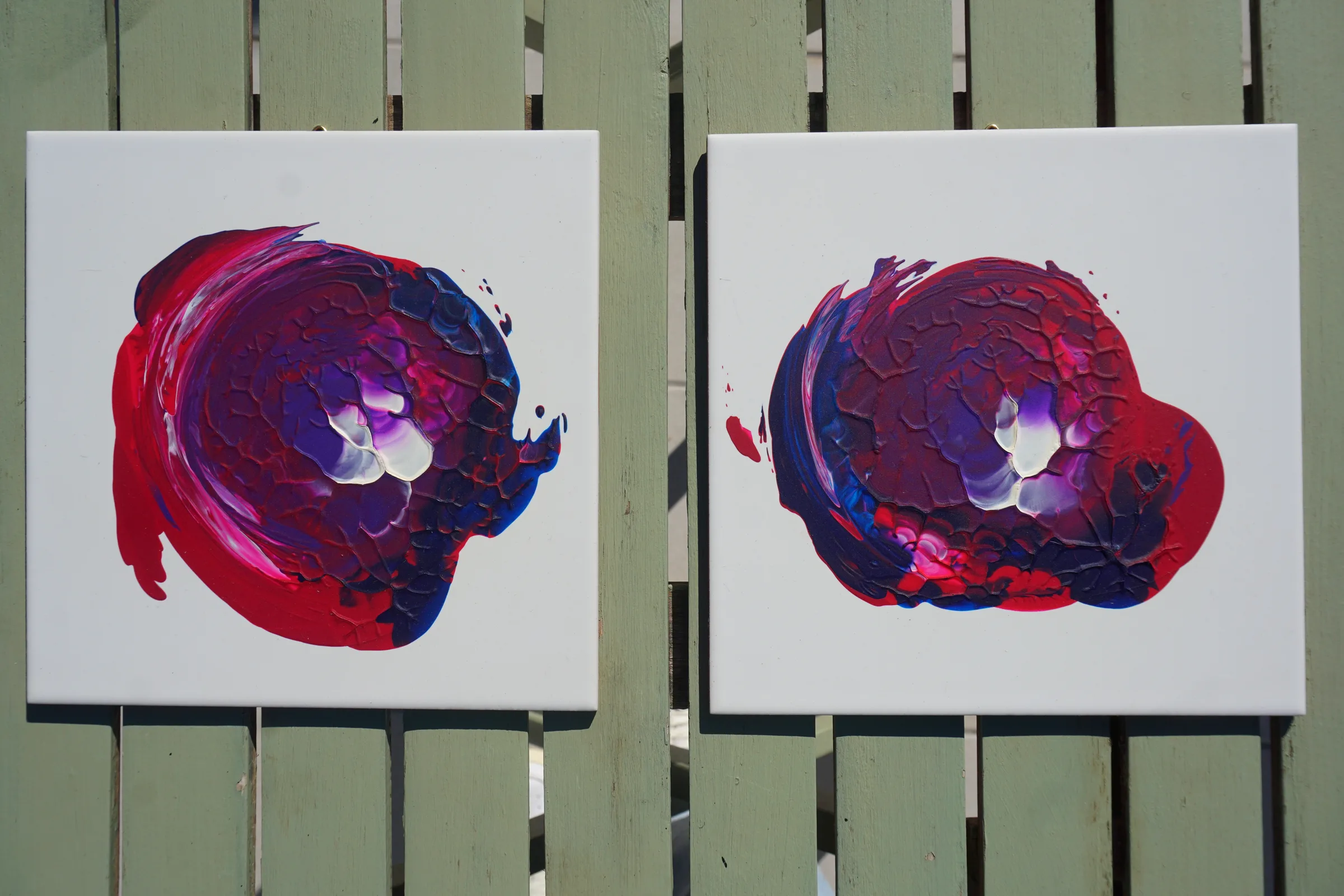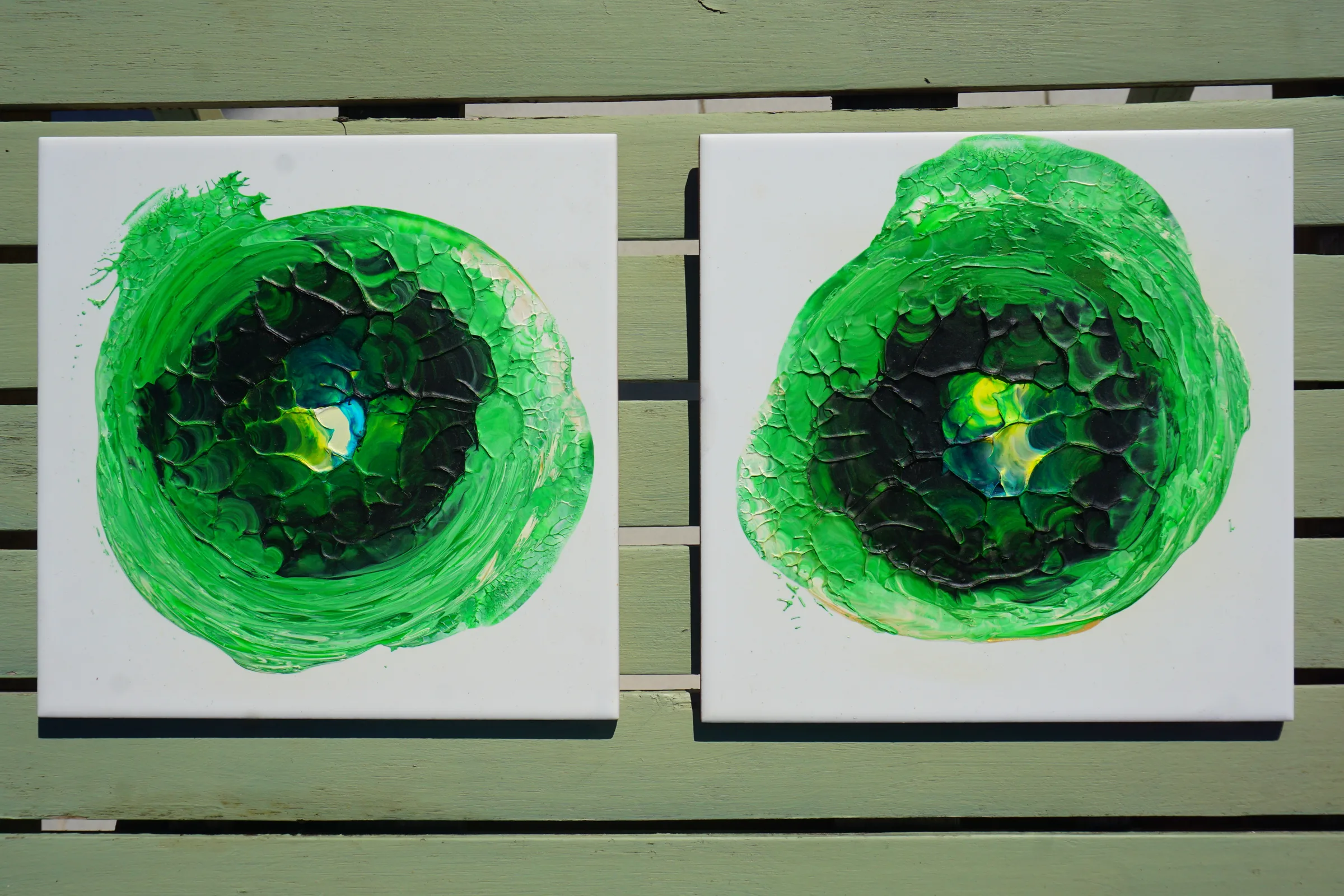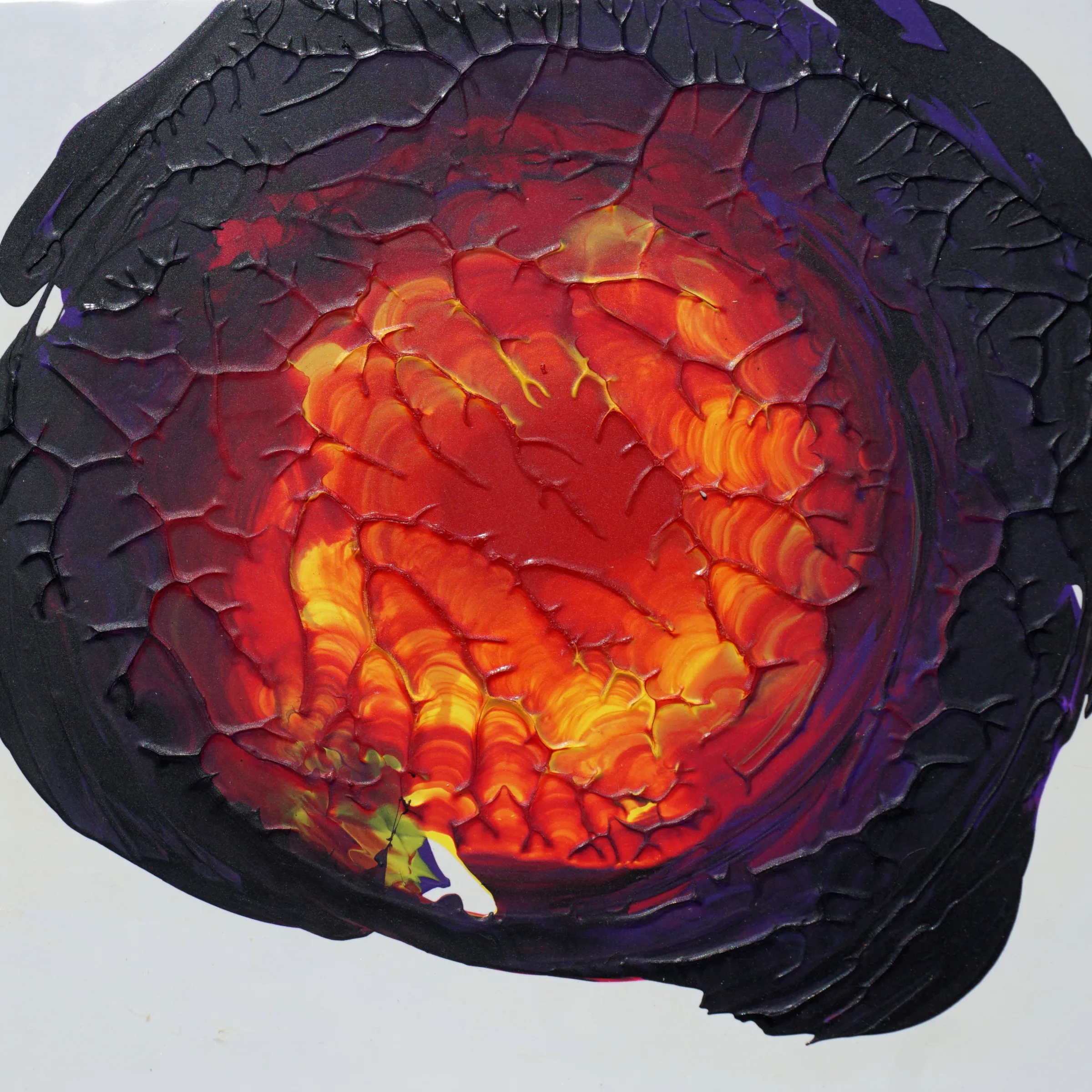
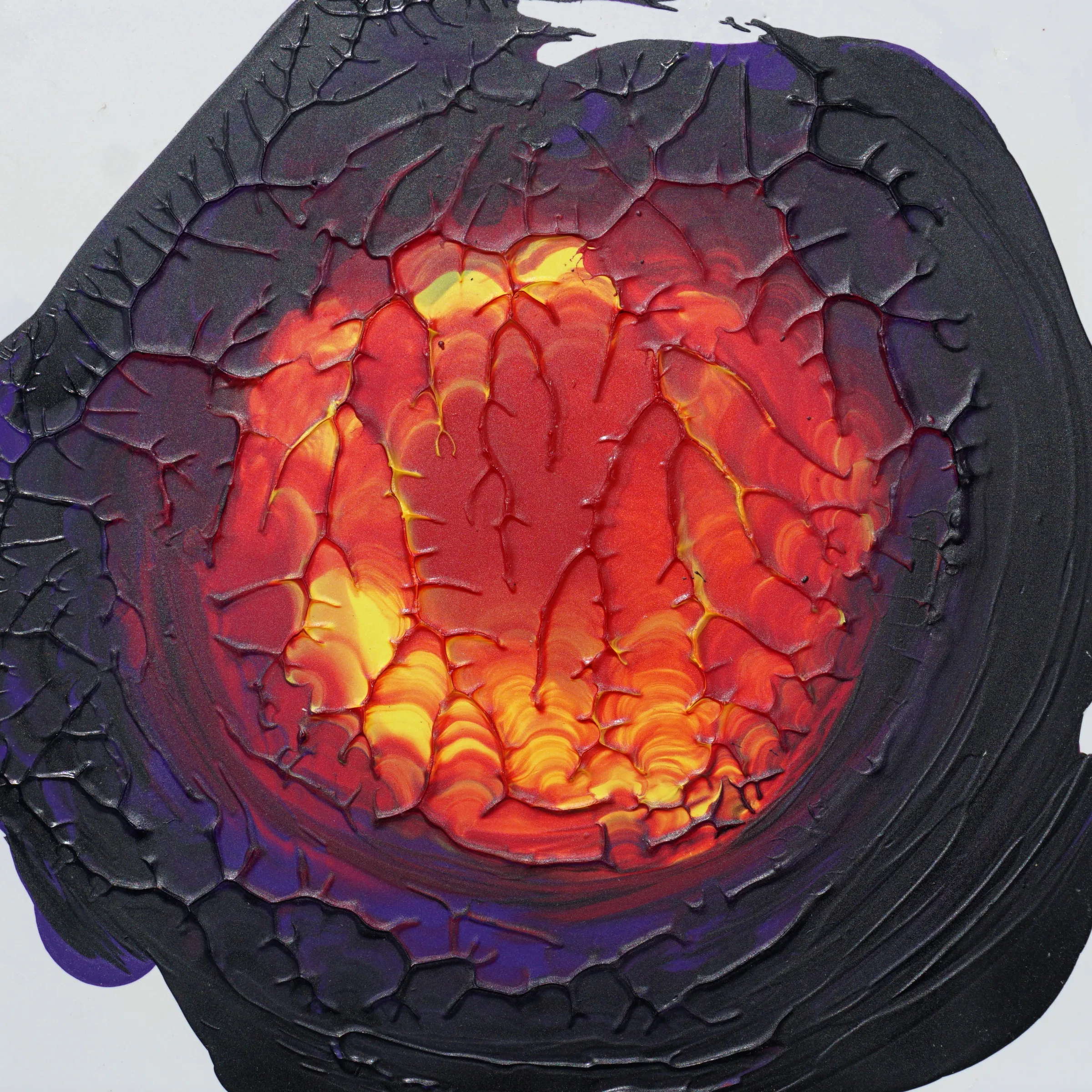
Looking down into this pair is like leaning over a caldera suspended in another realm. The two ceramic bisques were a single surface until the instant they were not. Pigment tore and bloomed between the faces; what it left is a crater on each tile, low relief still warm to the eye — cells of vermilion and gold, a black volcanic crust, heat contained rather than spent.
Tile A kept the rounder furnace, yellow running through lava cells, and a green-gold tear that reached the white of the bisque, the fire's only escape. Tile B kept more of the pull. Its cells stretch longer; yellow gathers into lobes; and where its sister leaked light, this one drank violet — a bruise of lilac wrapping the lower crust like an atmospheric spell, the threshold where the furnace meets something cooler and more dangerous.
Stand in front of them and the cores still share their heat. The white clay around the pour is the quiet after. One sister kept the wound; the other kept the dusk that held the crater in. The relief remembers the separation. They only finish each other.
Look down.
Two mouths of one fire
open on the clay.
A black crust sealed
the moment the sisters came apart.
What the pull left is relief:
lava cells, a crater rim,
heat still breathing in the bisque.
One kept the green-gold tear.
The other drank the violet —
the spell that held the furnace in.
You are not meant to fear the burn.
You are meant to lean closer,
as if this were the hearth
of a world still forging
its quiet, dangerous light.
The Witch-Crater — Listen