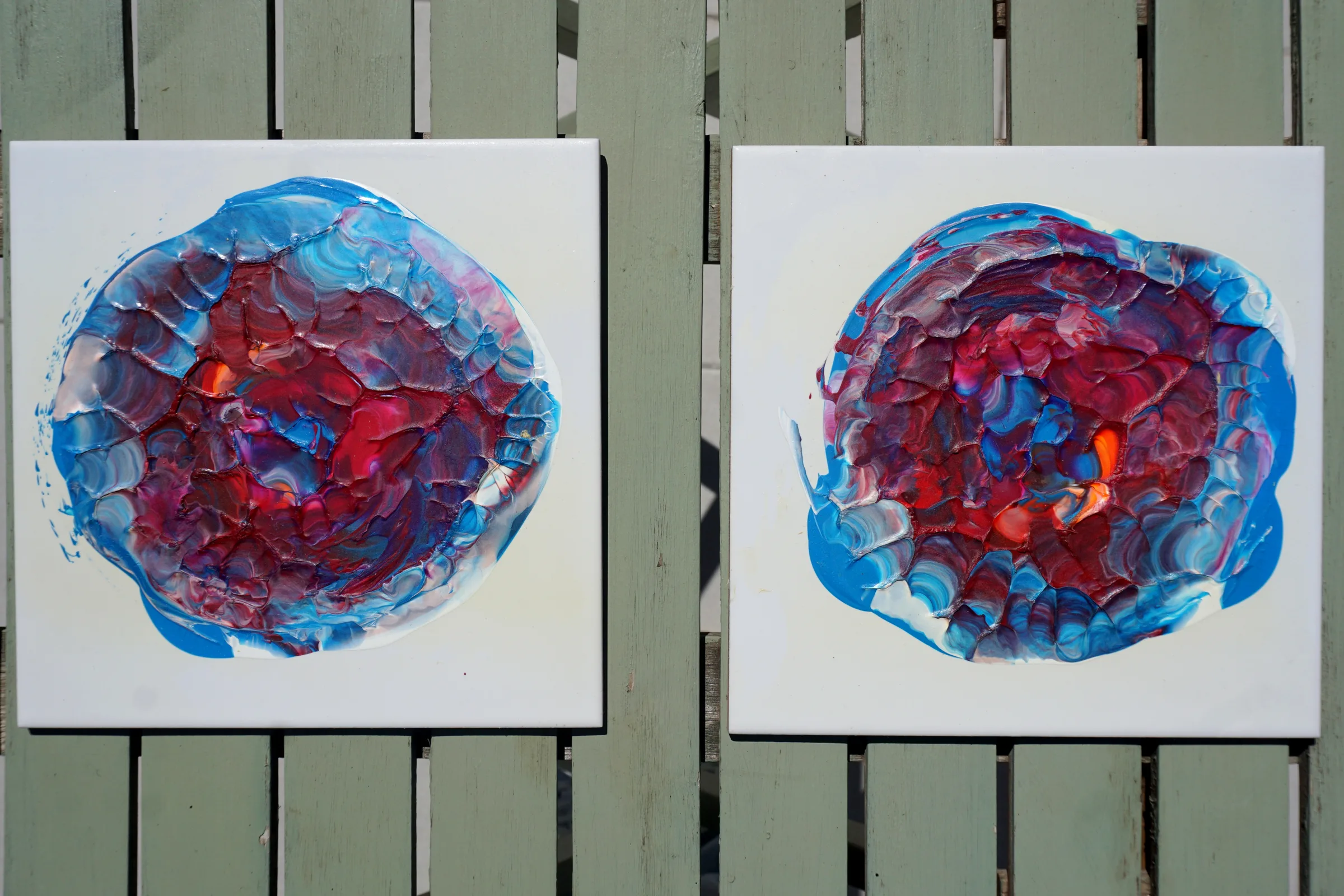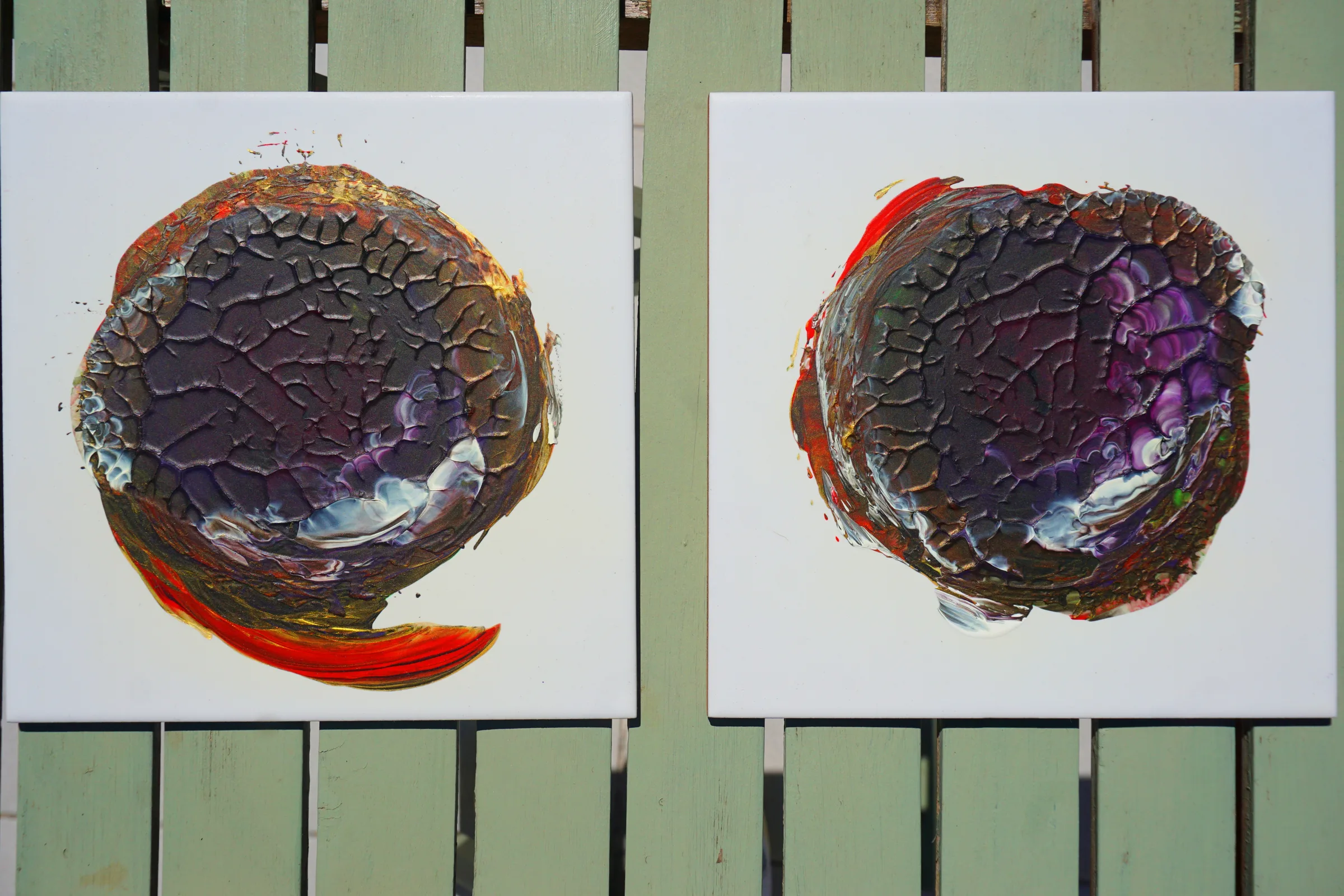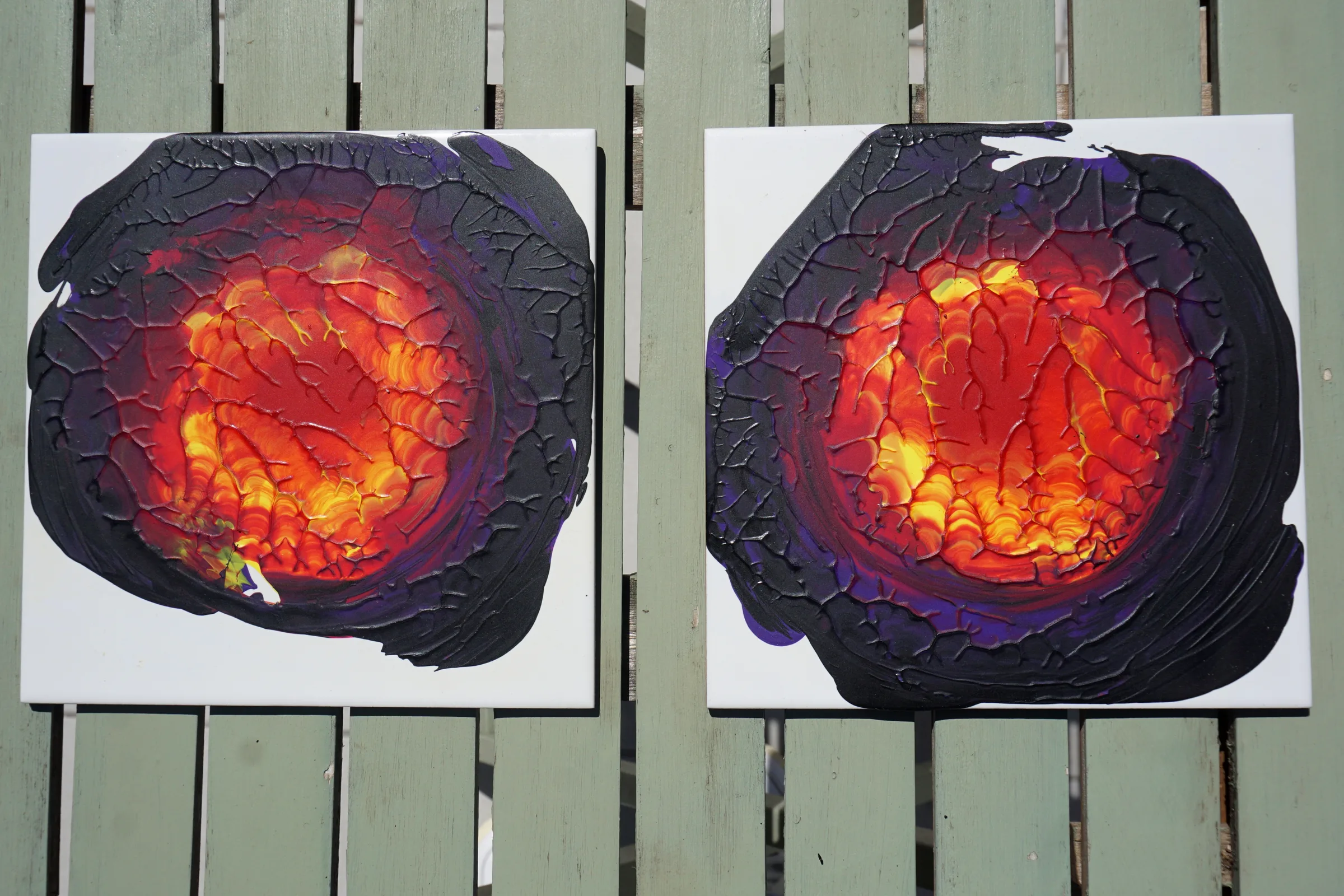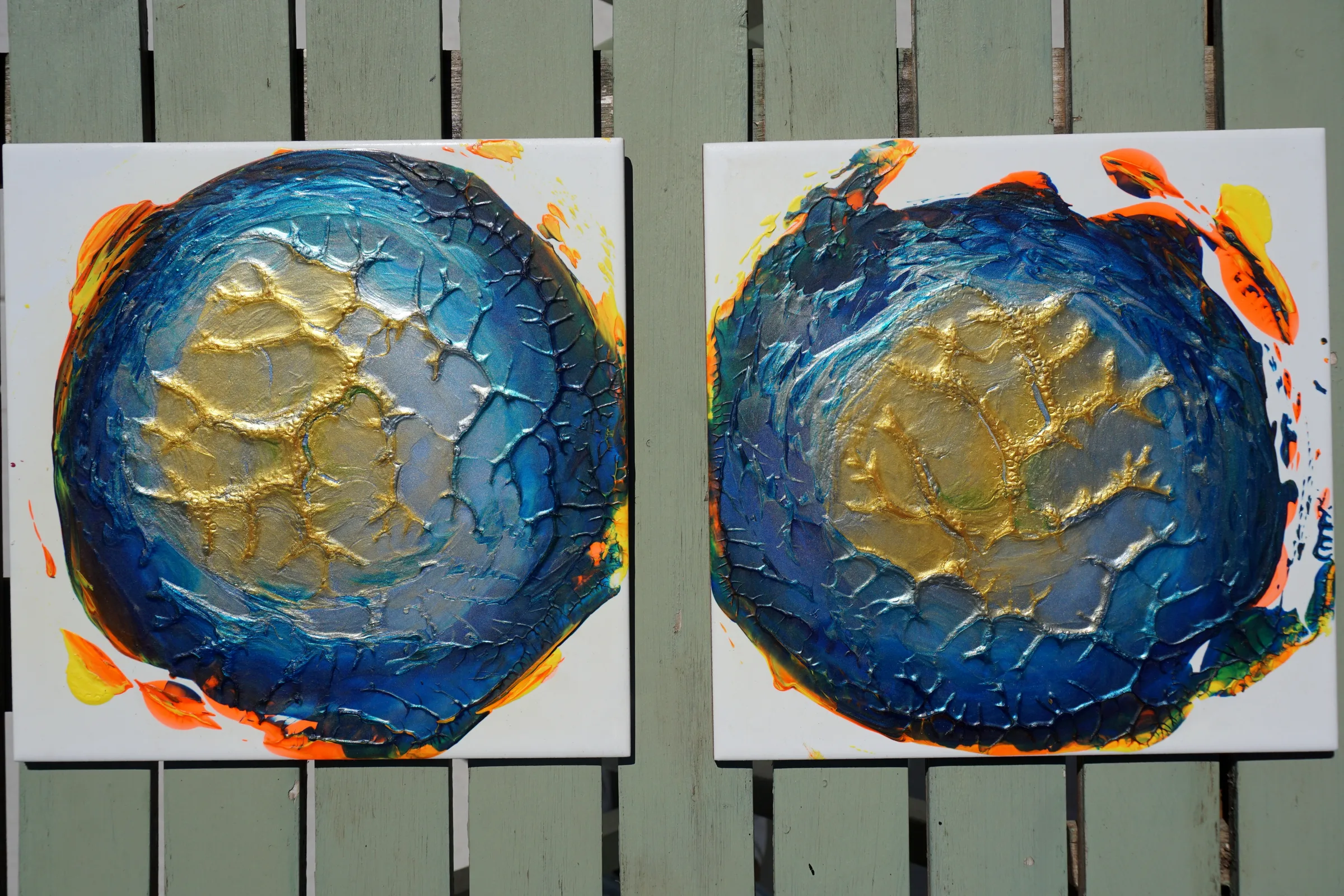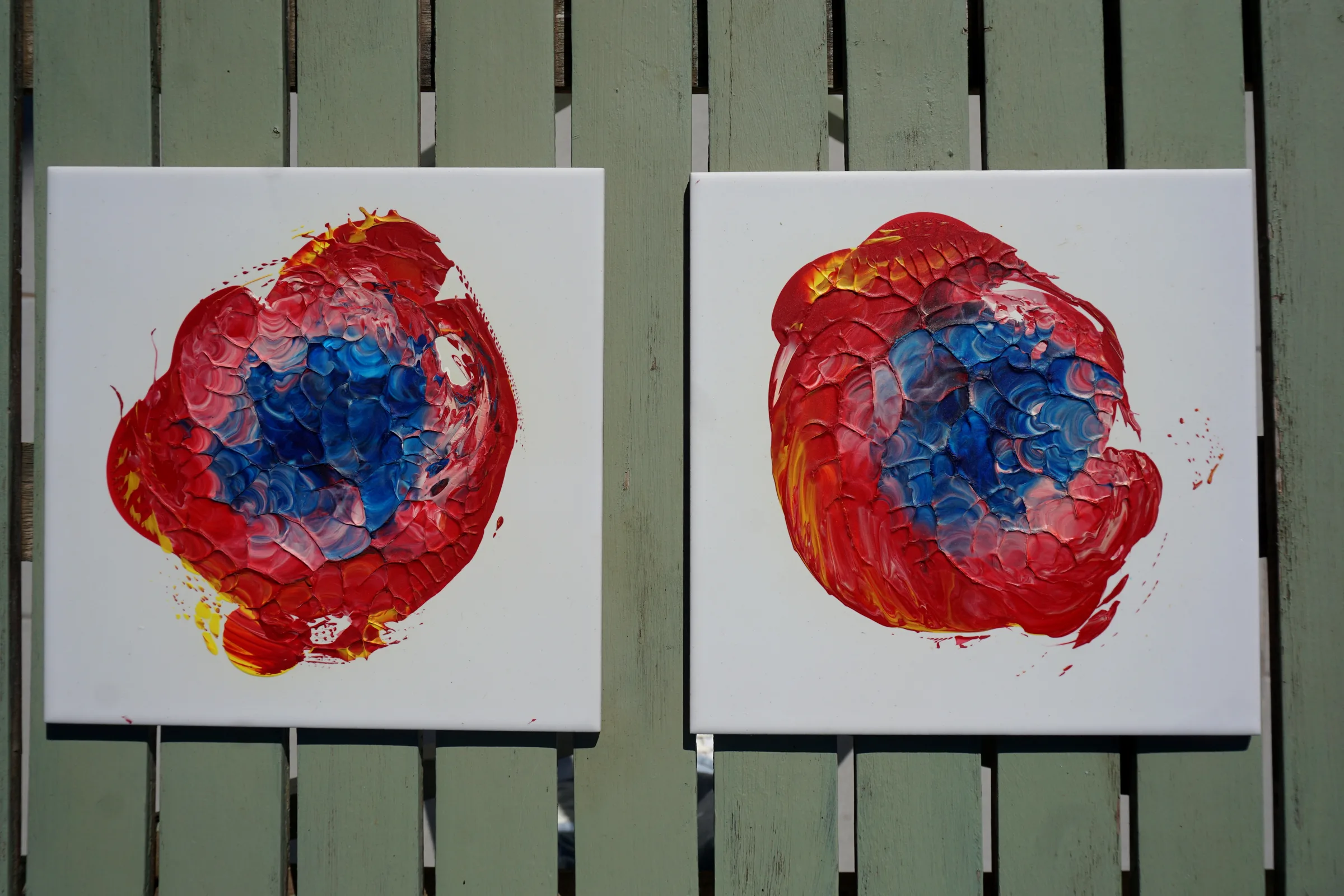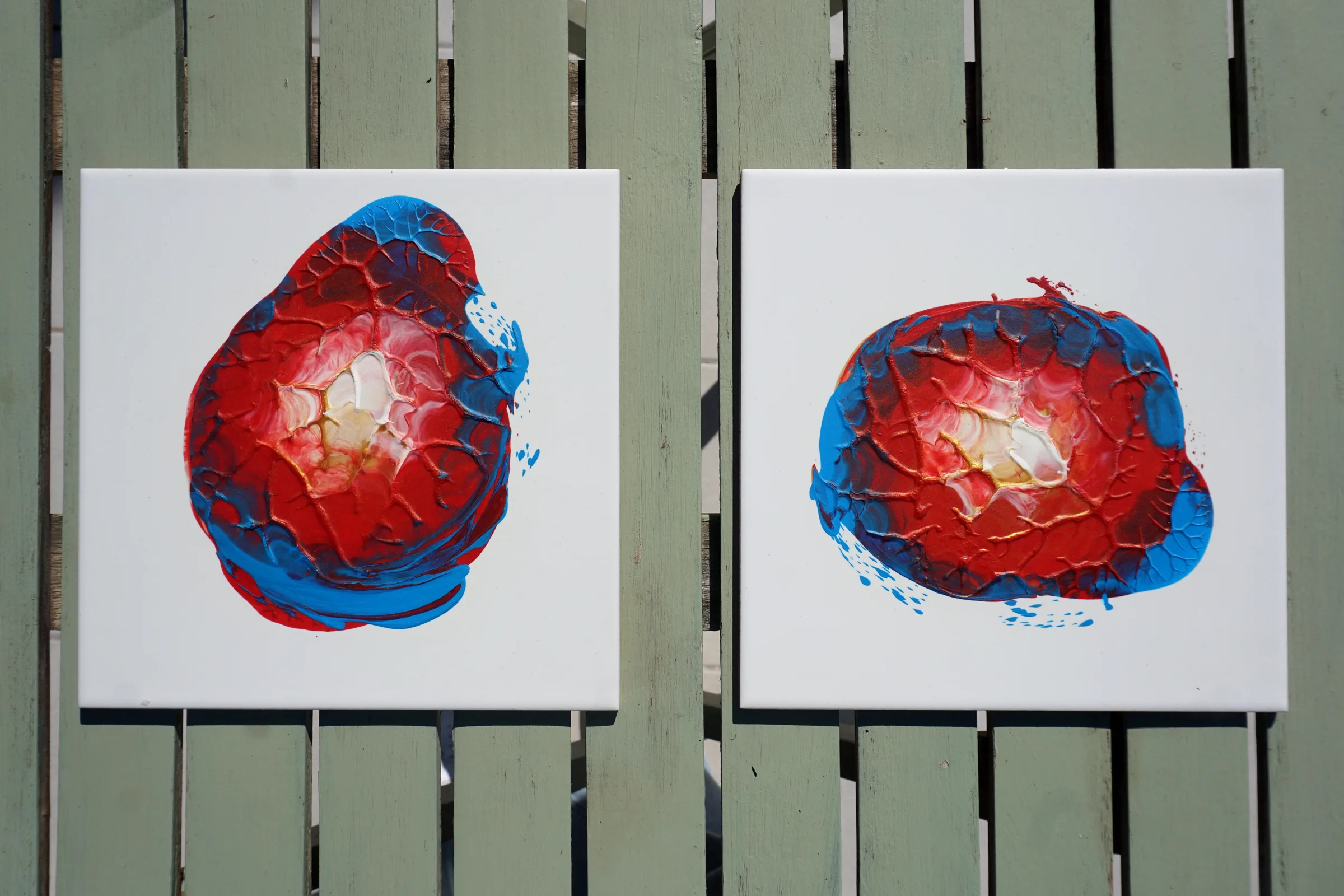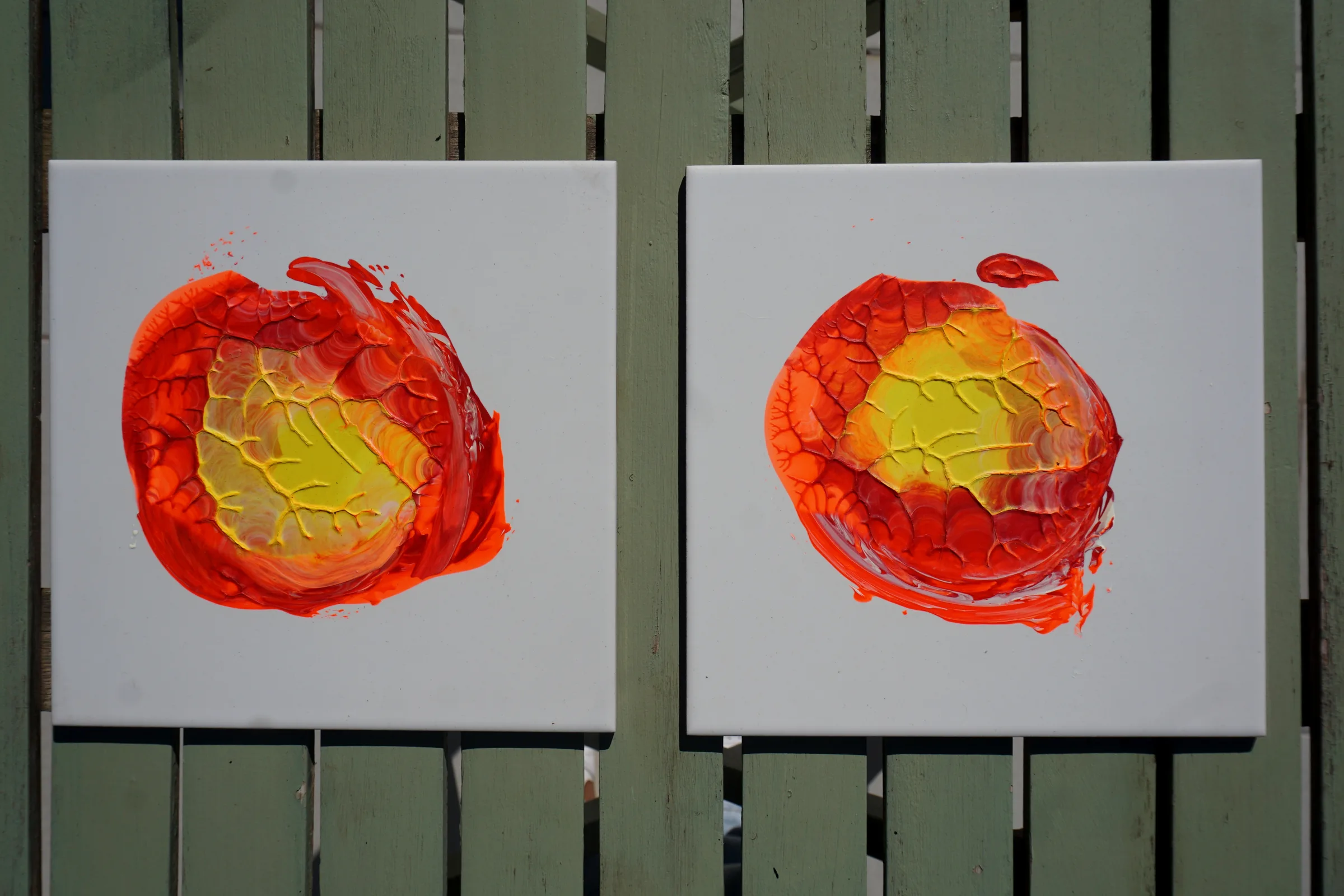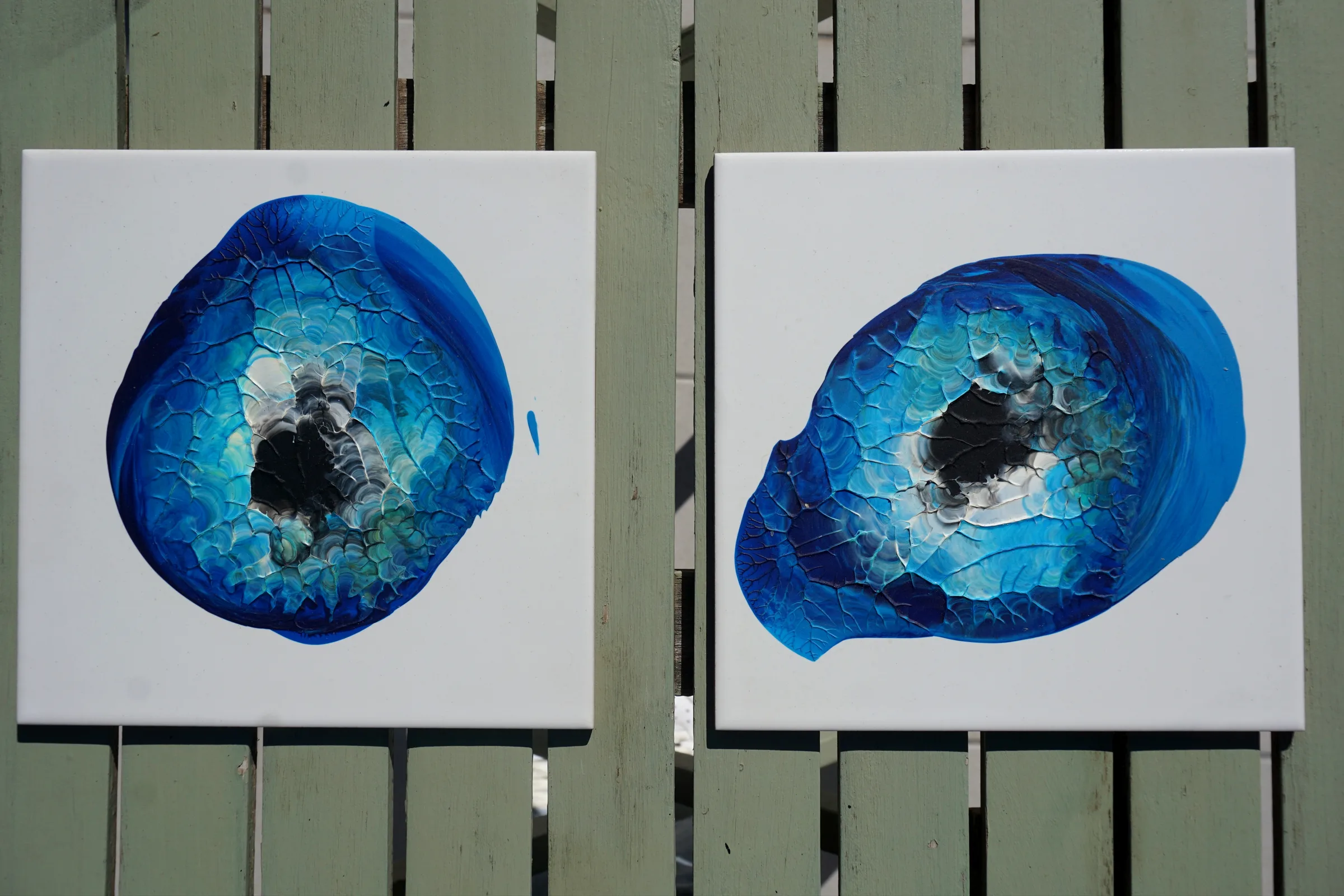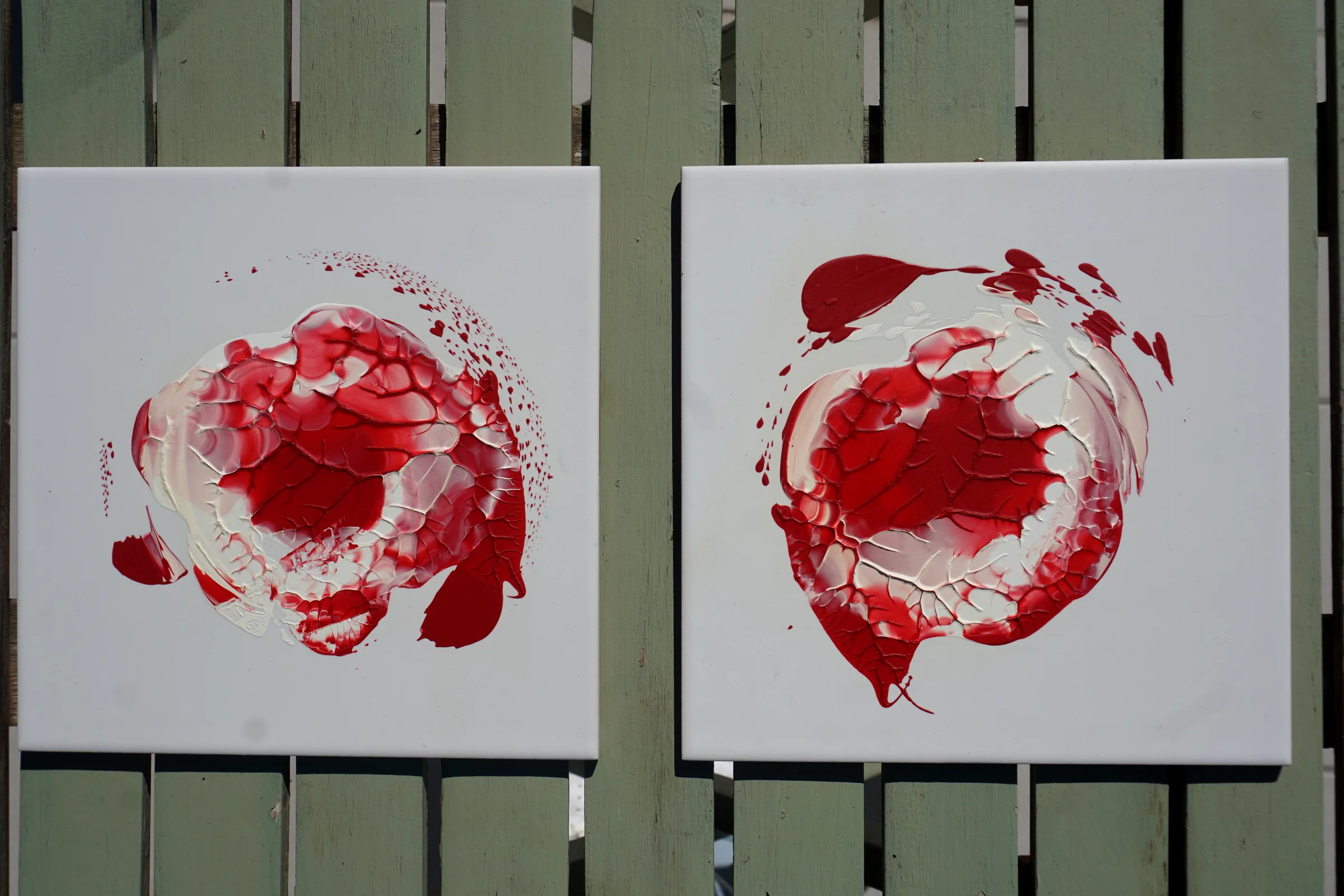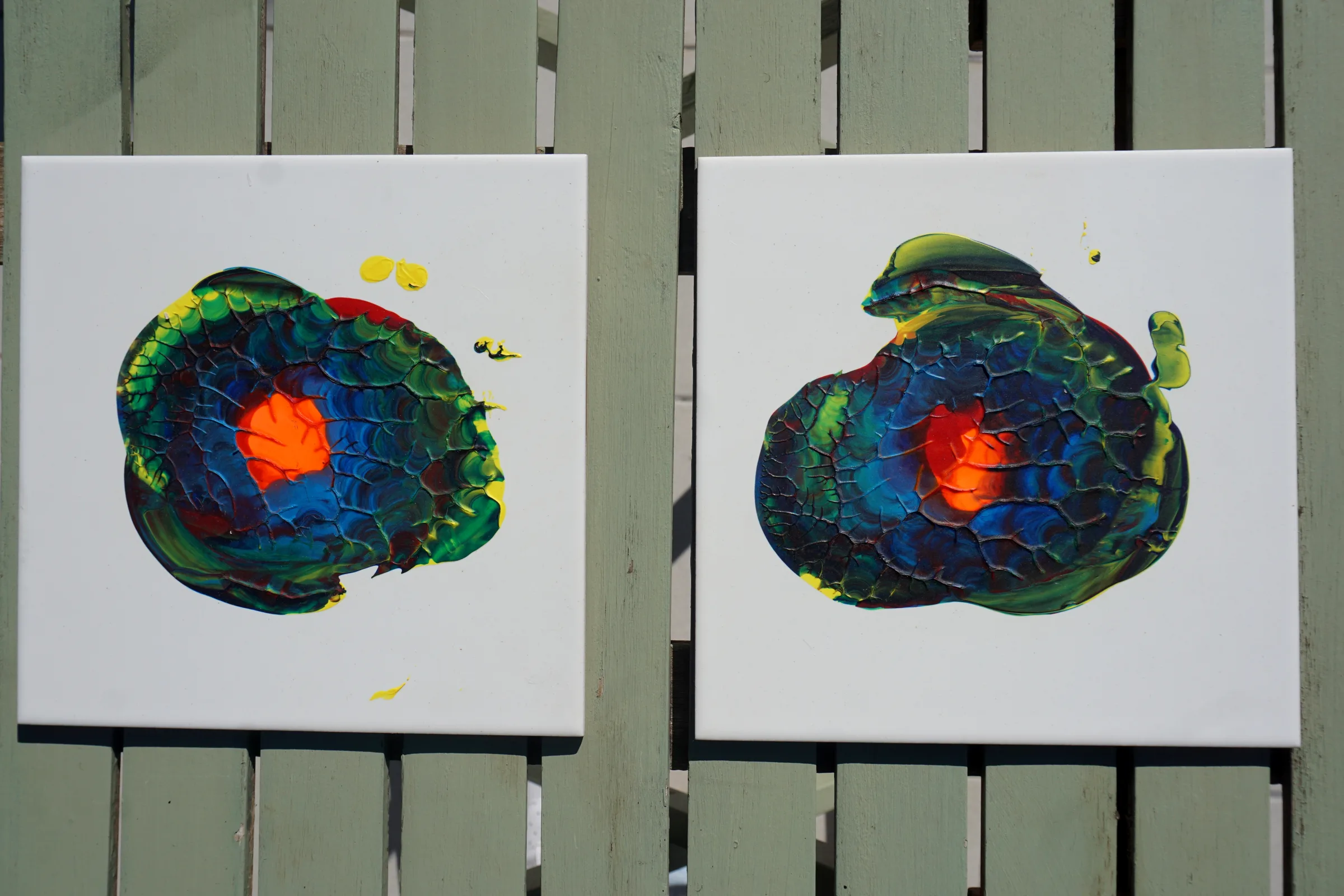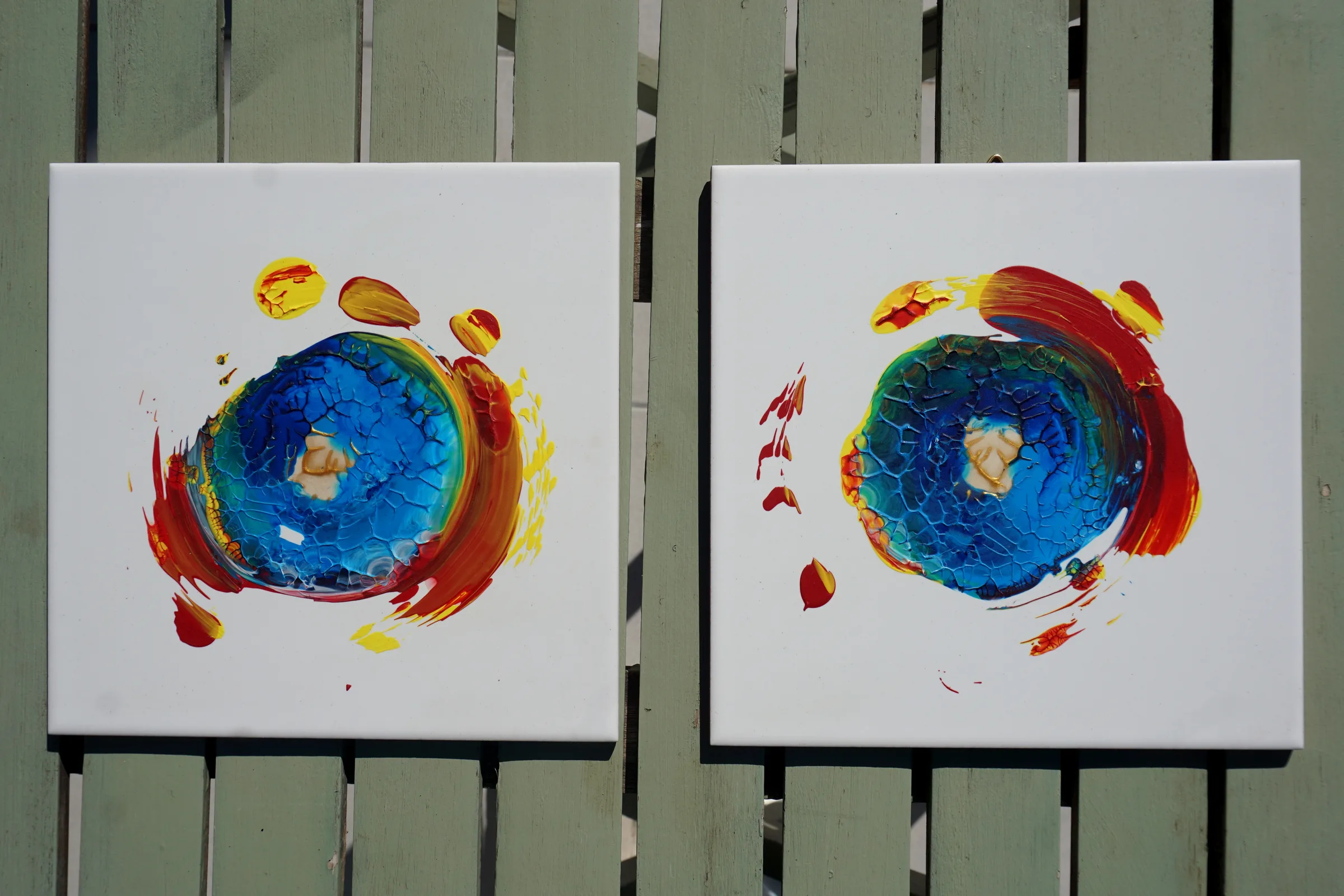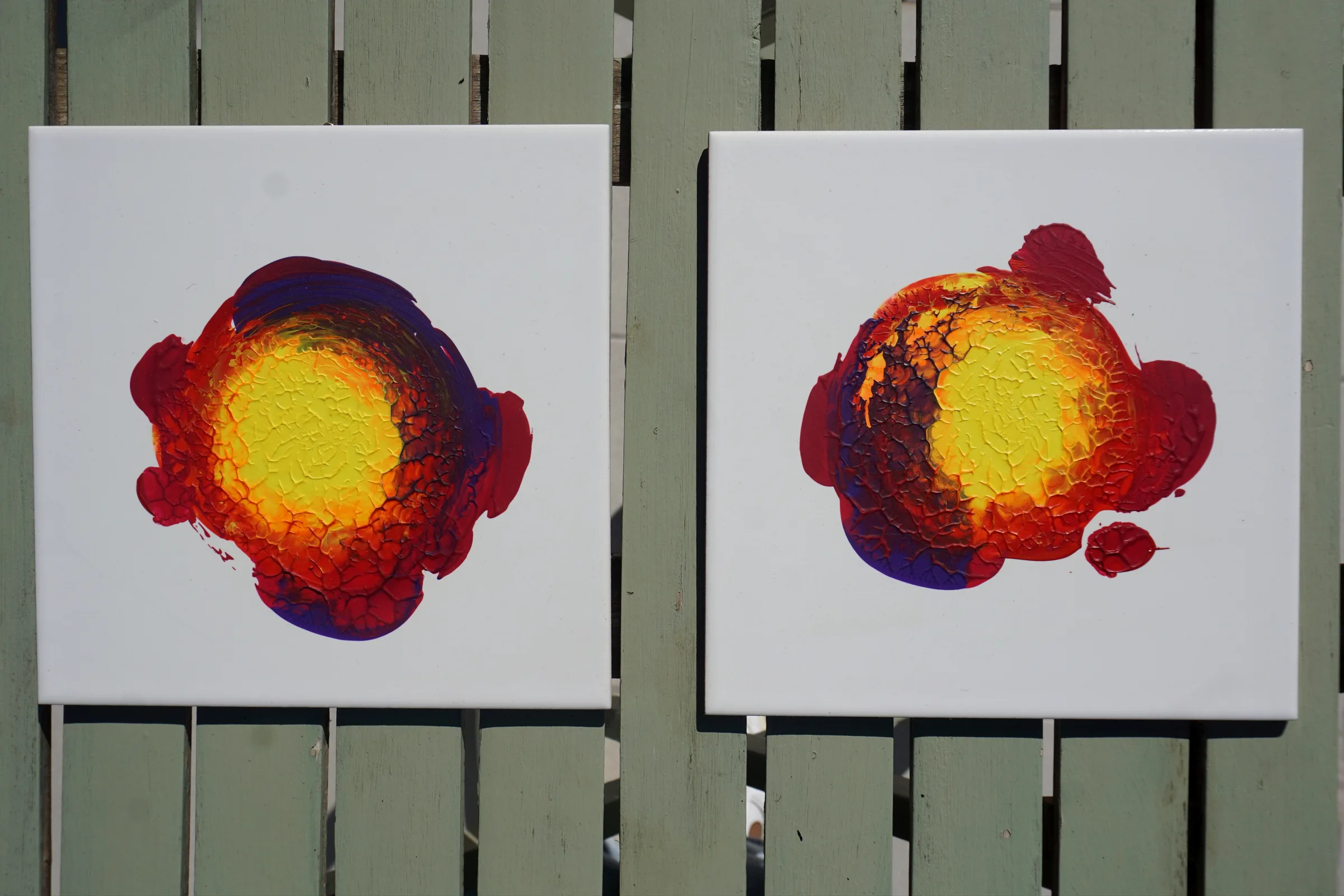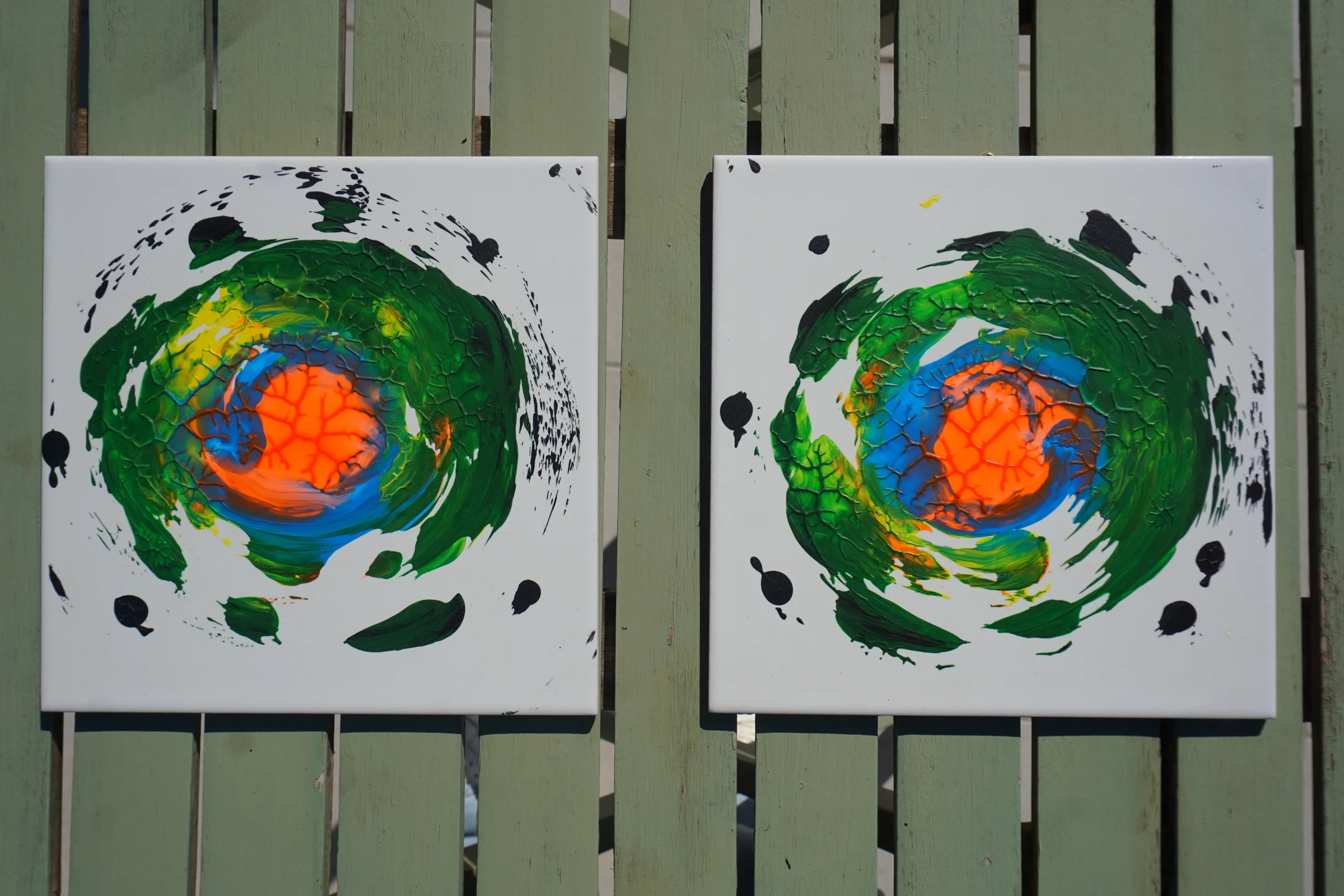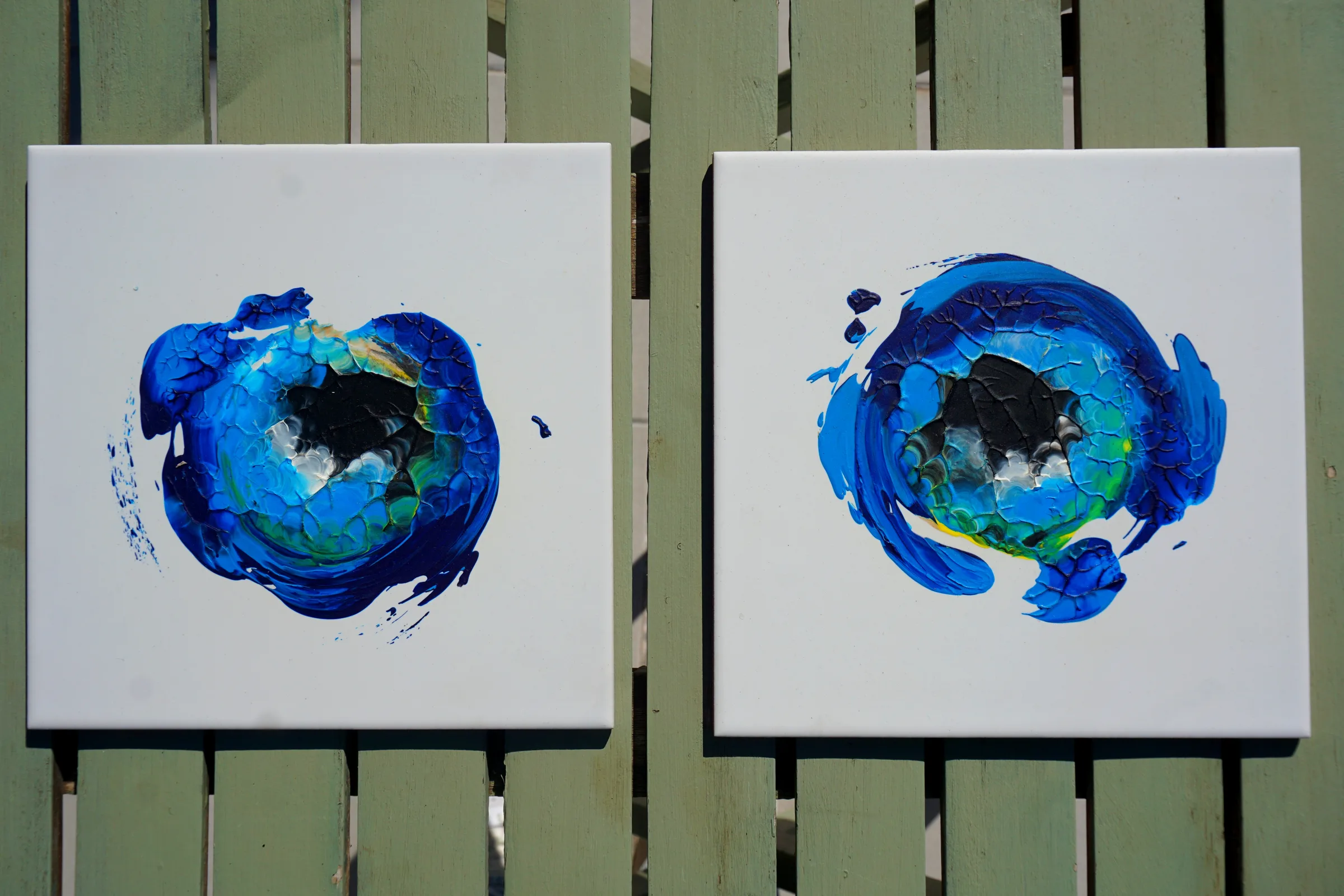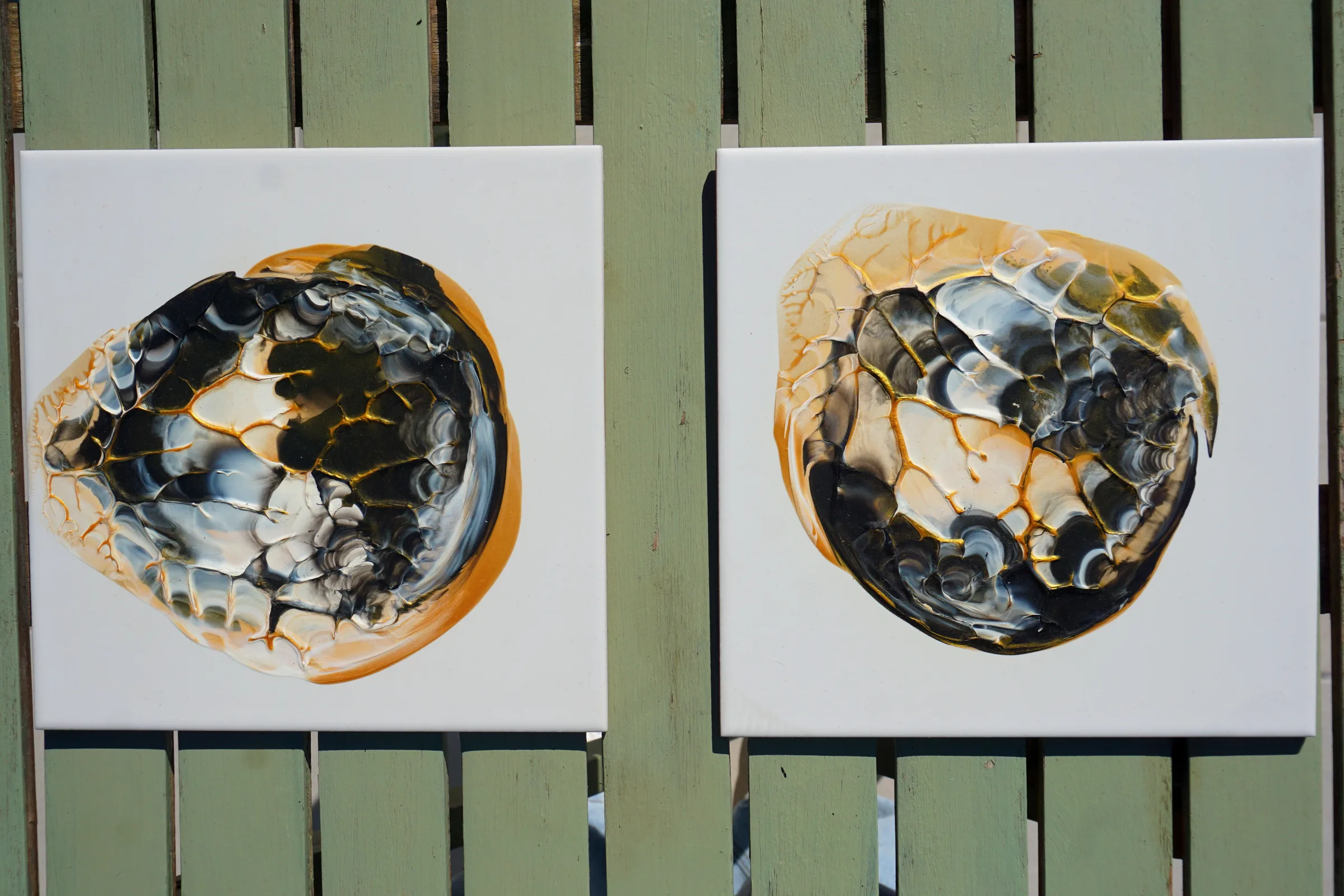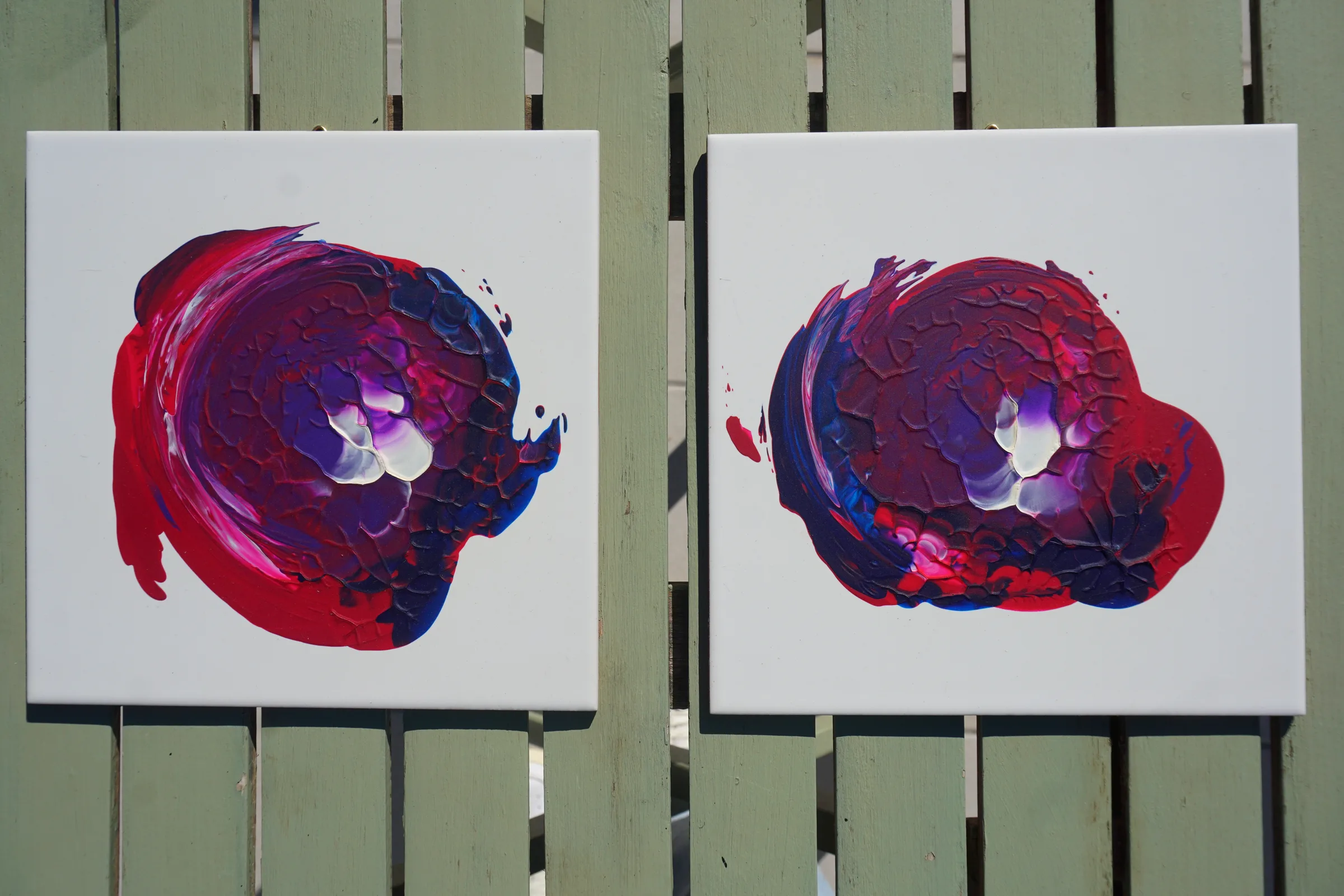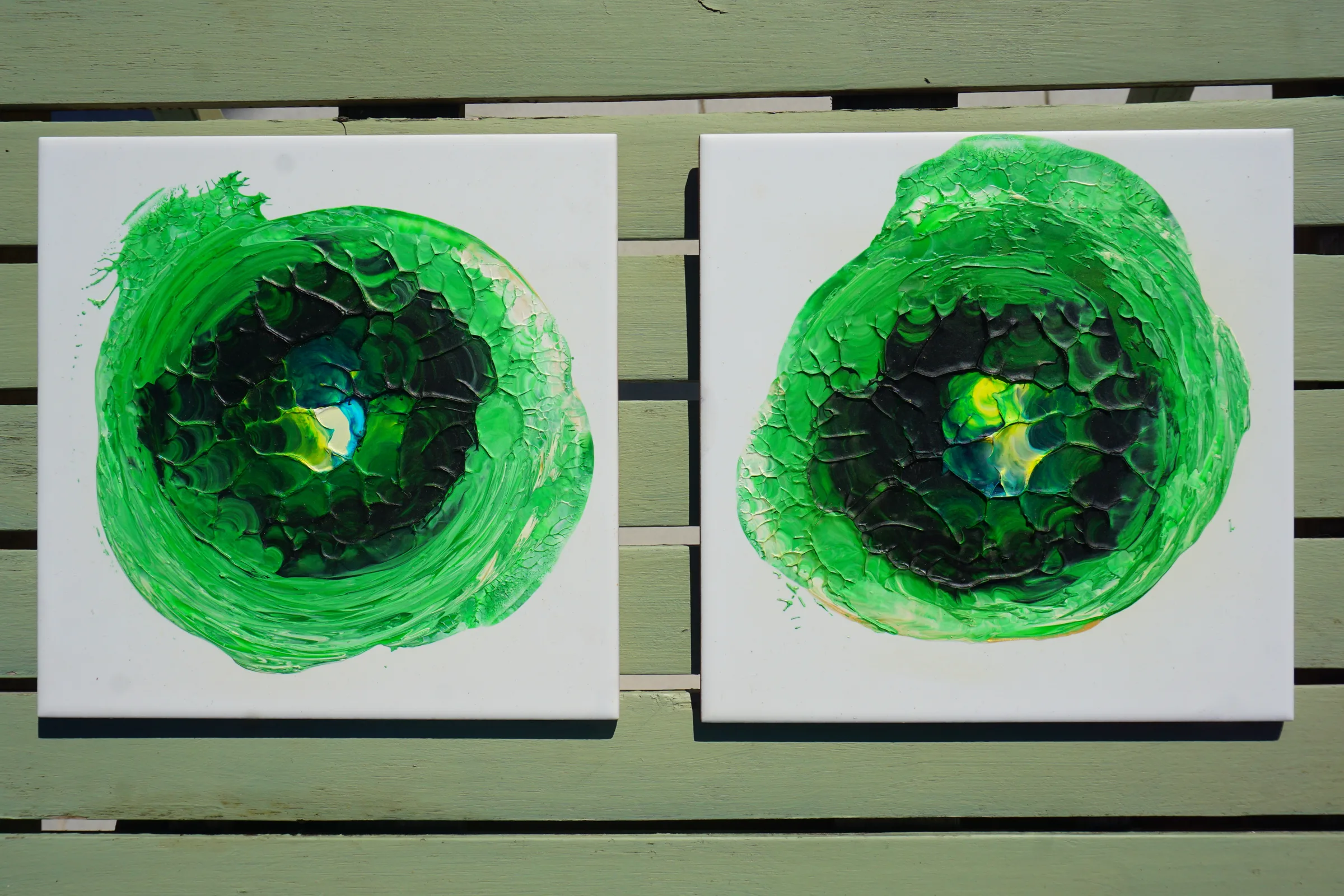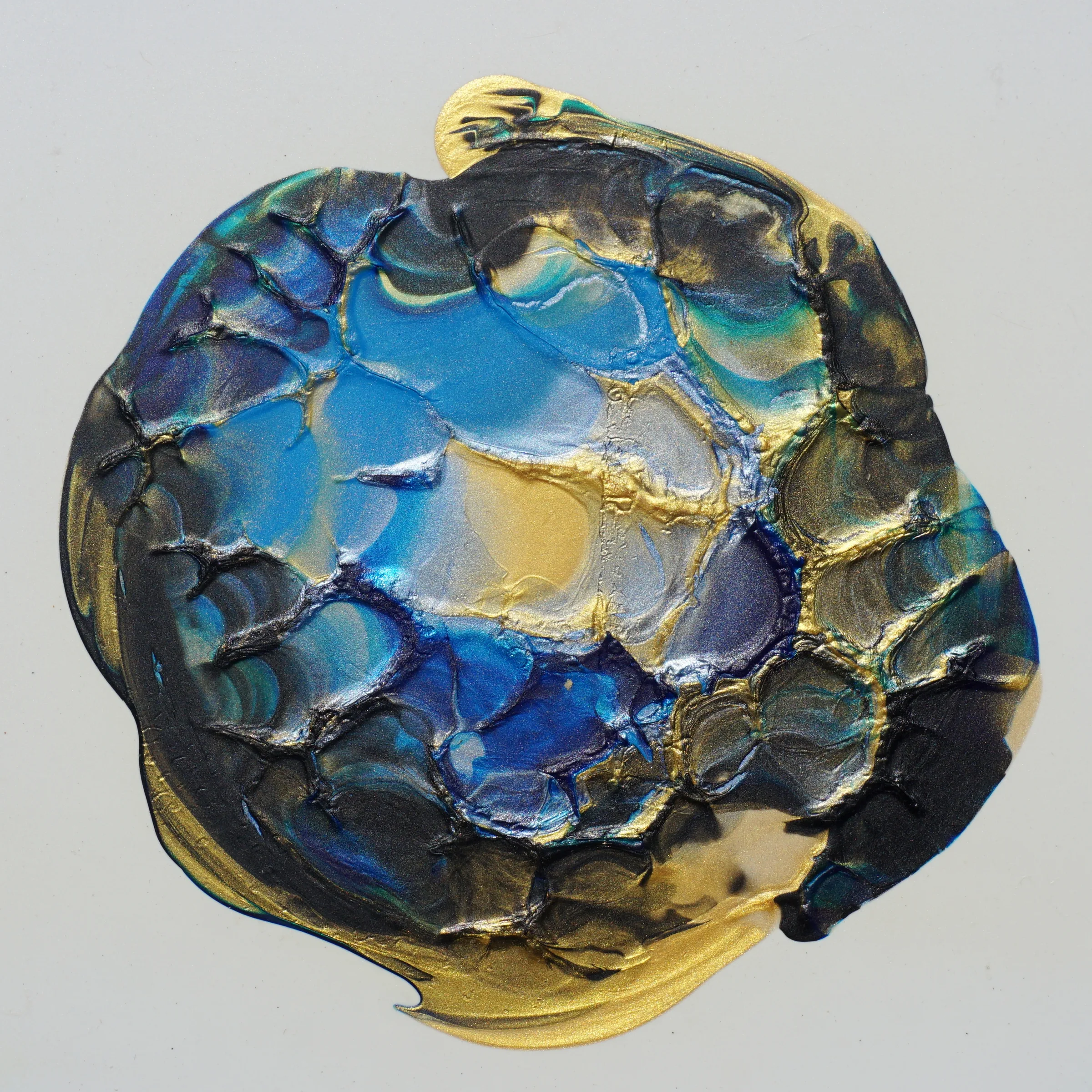
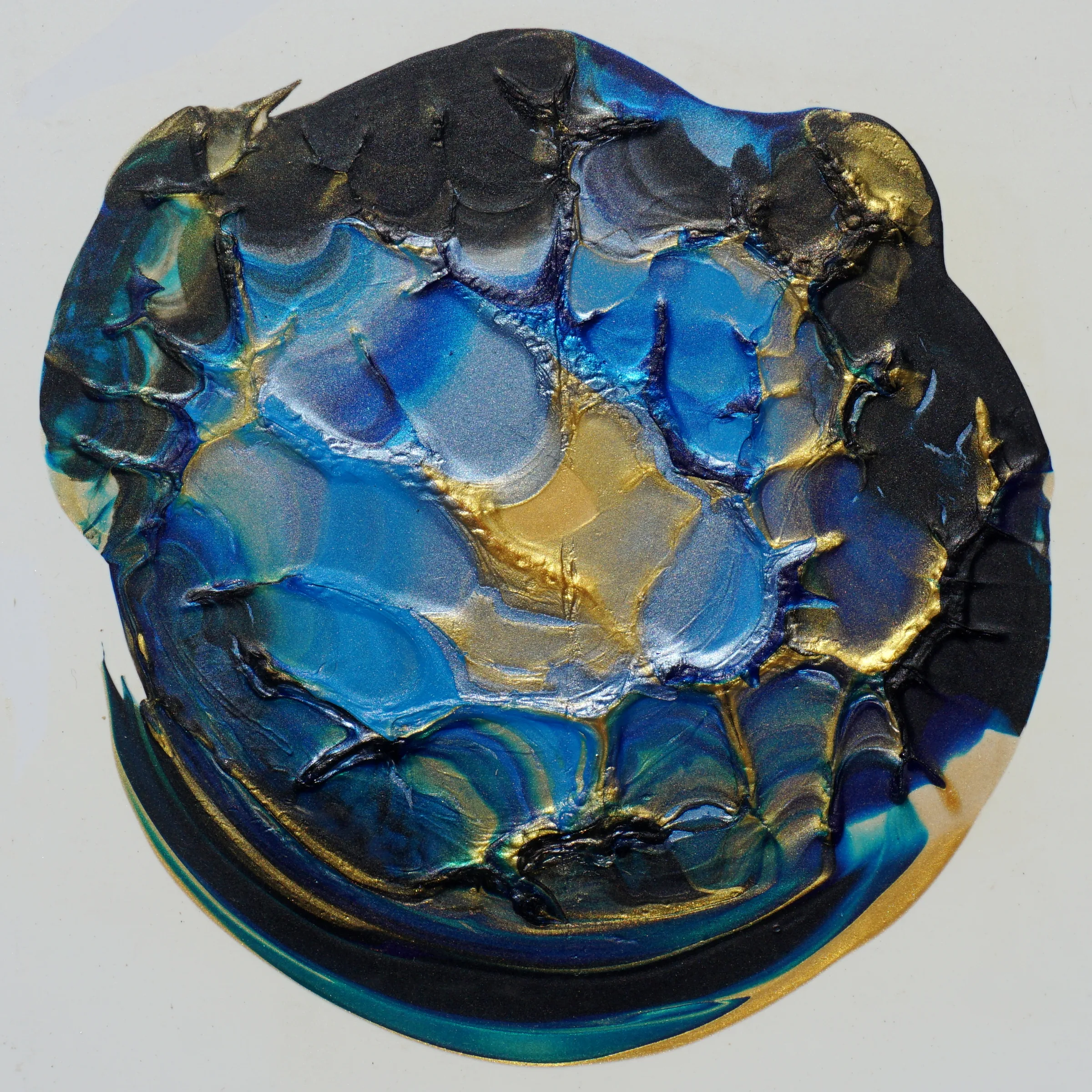
They do not wait to be seen. They arrive the way a relic arrives — already asking, already holding a temperature that does not belong to this room. Two ceramic bisques, sister tiles, a single surface until the instant they were drawn apart.
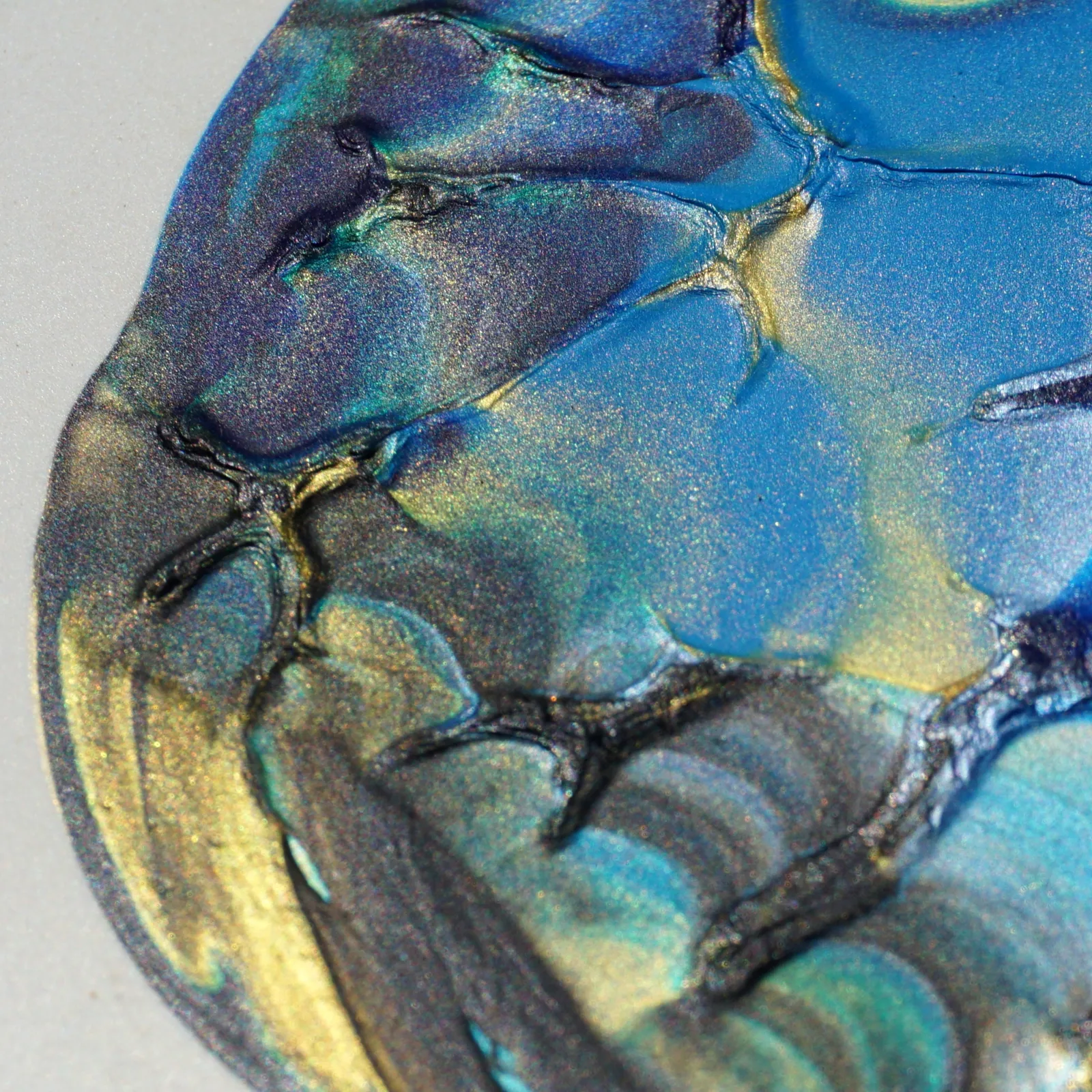
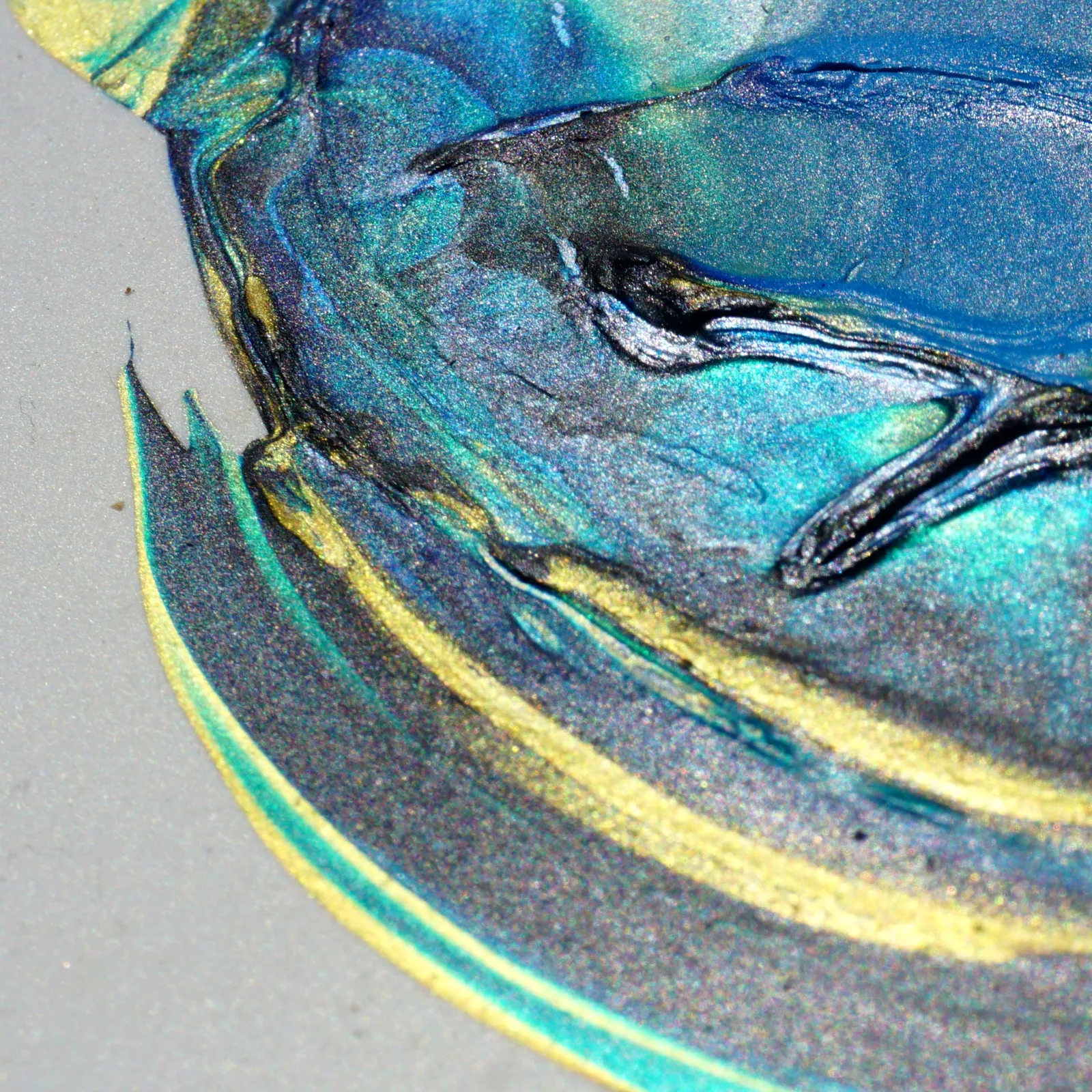
What remains is the record of that instant. The relief is low and mineral: cellular plateaus of deep lagoon, wet-slate riverbeds, gold that cracked through the dark as if through obsidian. At the centre a cream-gold heart still faces itself across the gap. Tile A kept the gold — a thick tongue along the lower shore, a small bright nub at the crown, leftover light blooming in the cells. Tile B kept the night: a dark crescent banded in teal, the crown heavy with ink, a coastline no one stood above.
Neither is complete. The cells still look at one another. You are looking down on a petrified ocean the moment after it broke, and the quiet is not soft. It is the solemn quiet of something precious found in the dark — an artifact from a lost star, or a forgotten galaxy, still radiating what it stored when the pigment chose and would not go back.
Found in the dark
like something that waited—
sister tiles, once a single face,
pigment torn into cells
of lagoon and ink,
gold cracking through
as through old stone.

One sister held the leftover light.
The other held the dusk after it.
Neither is whole.

The pale heart looks across the gap
at the pale heart.
This is the quiet of a lost star:
not a memory you had,
the one that found you.
Relic of a Lost Star — Listen