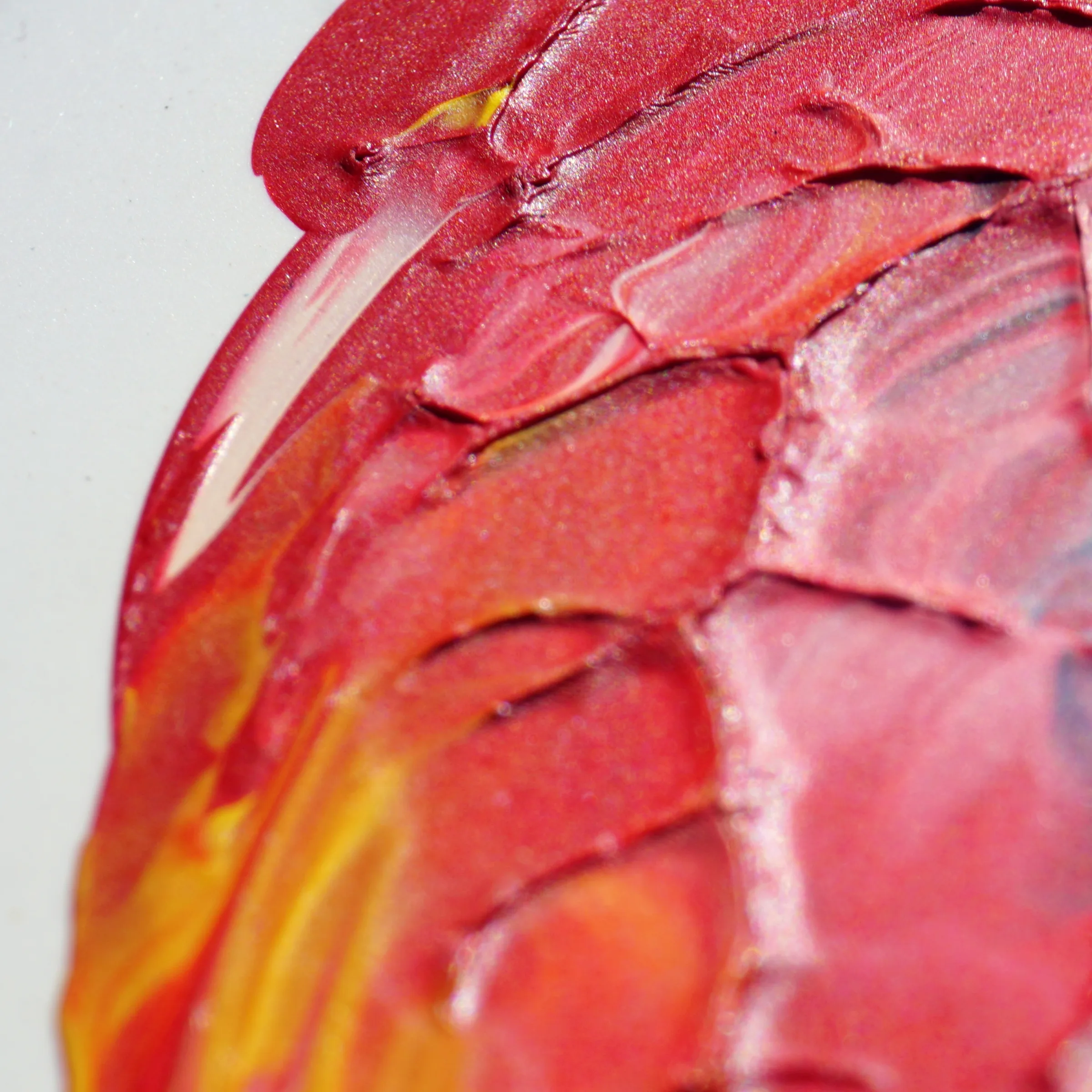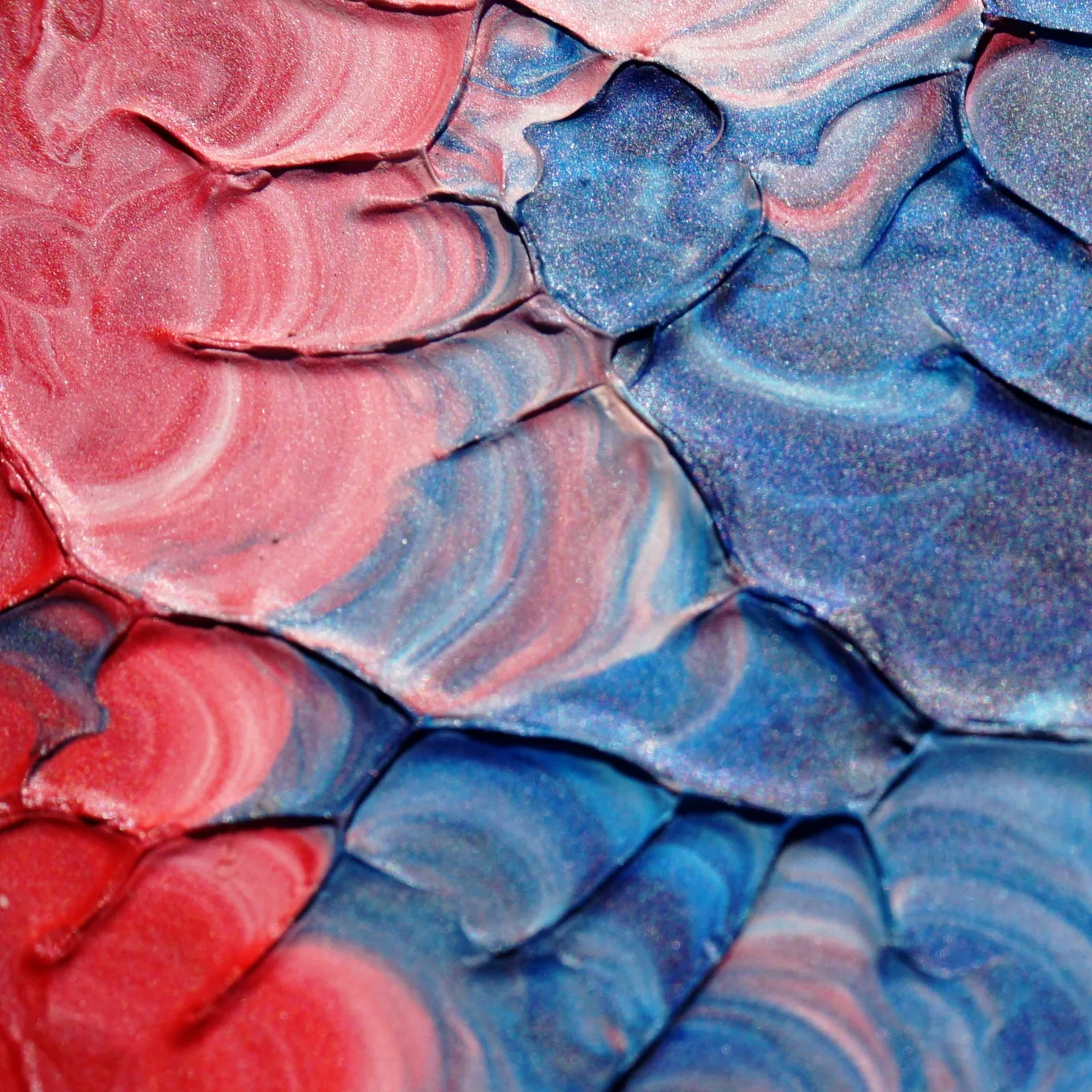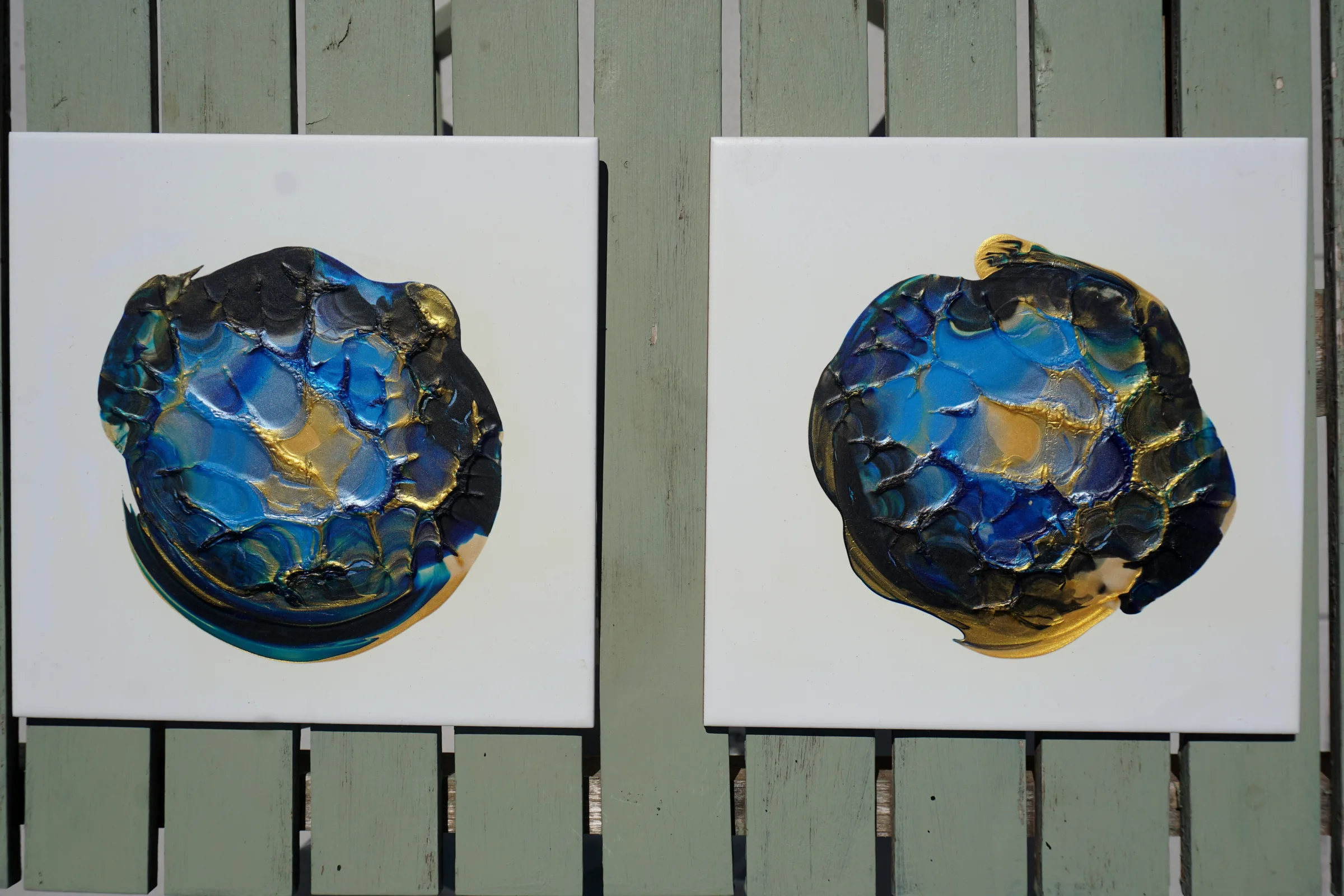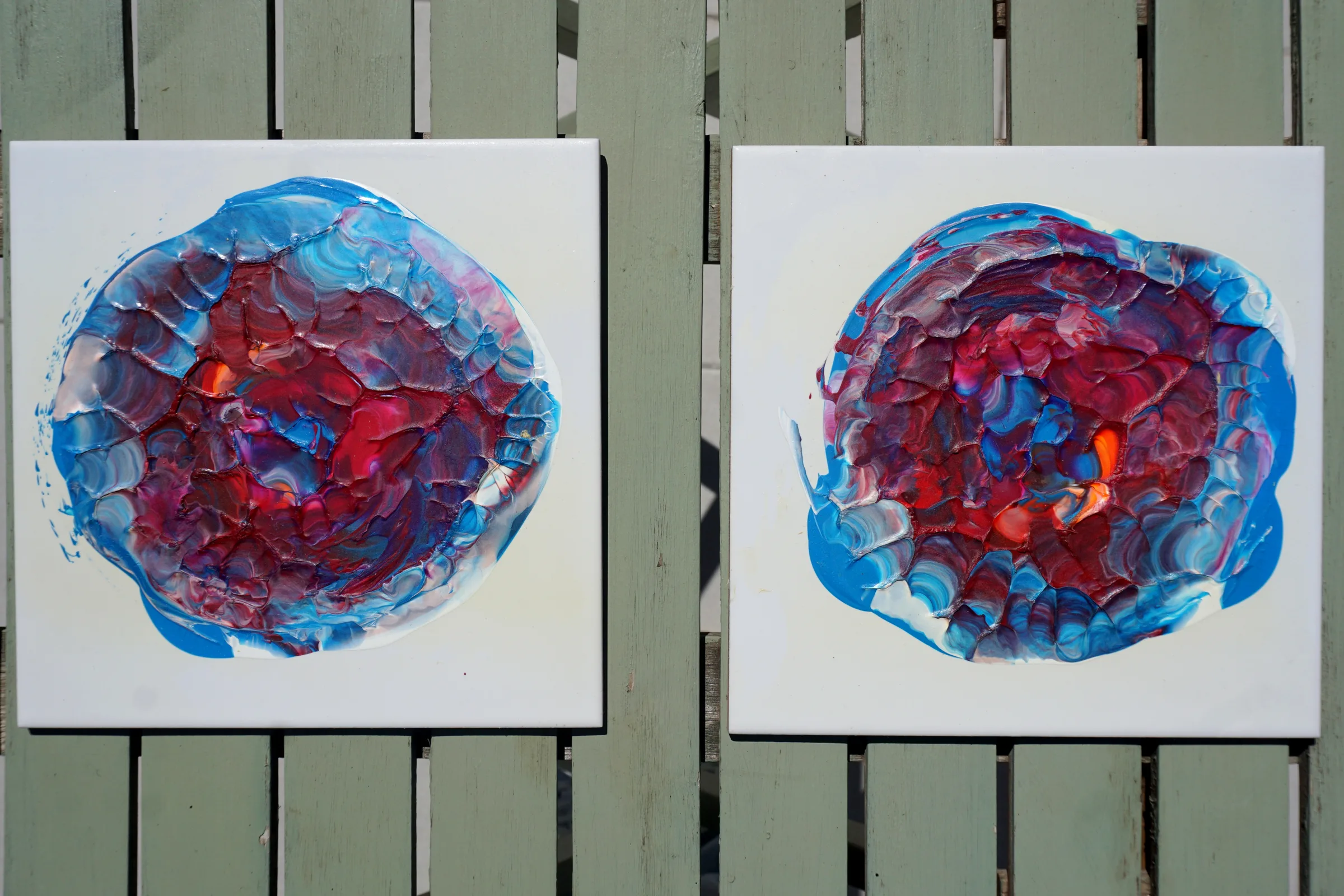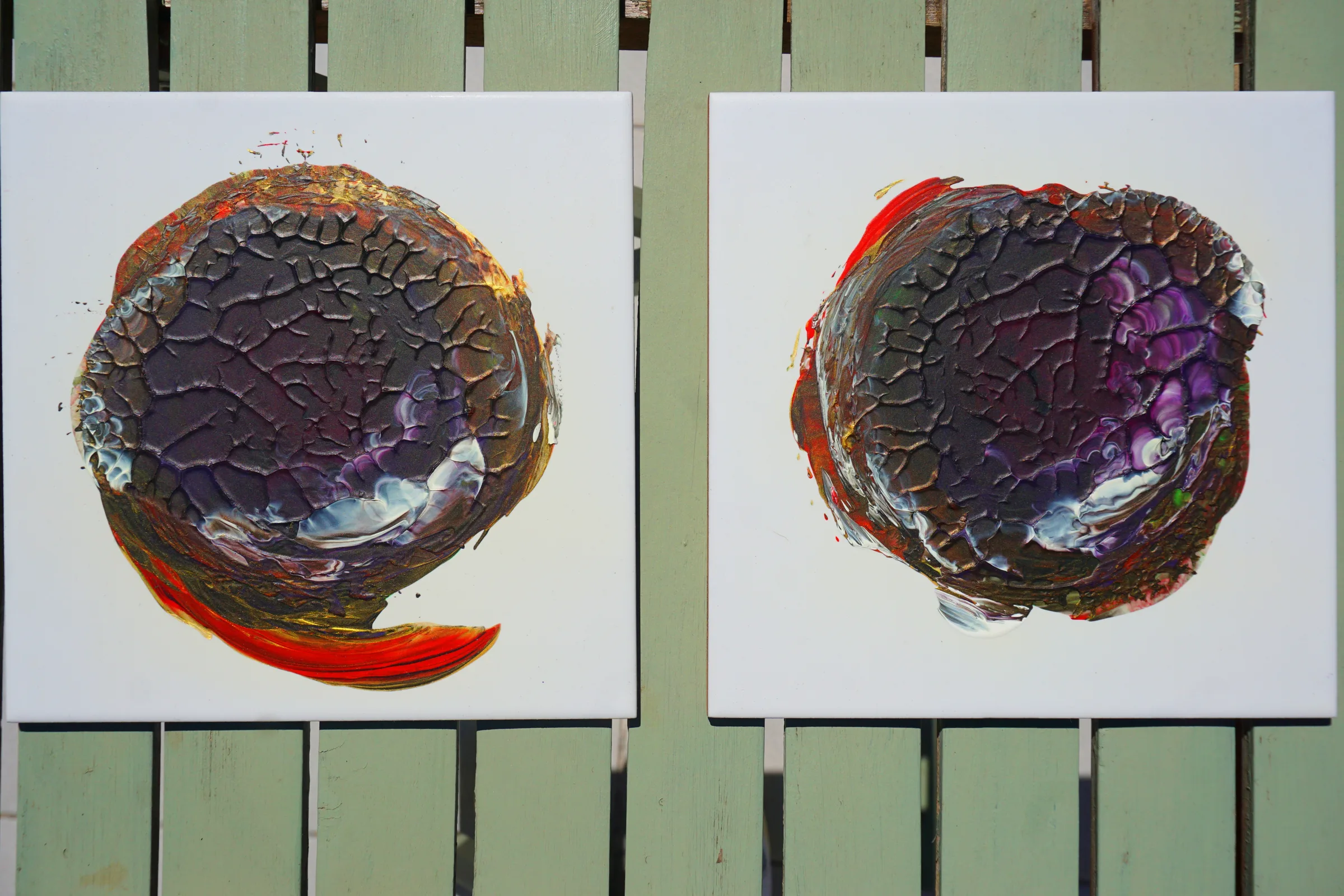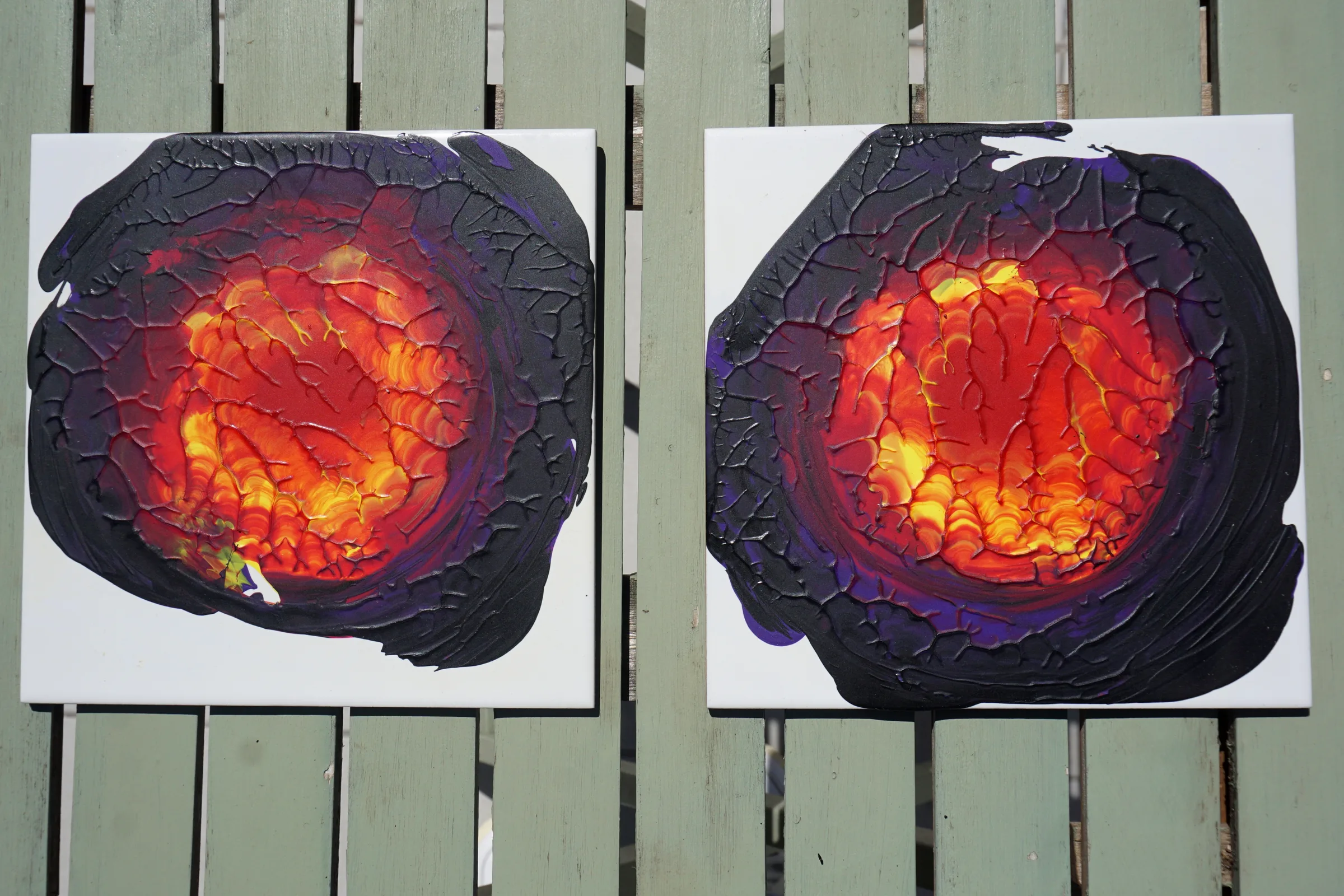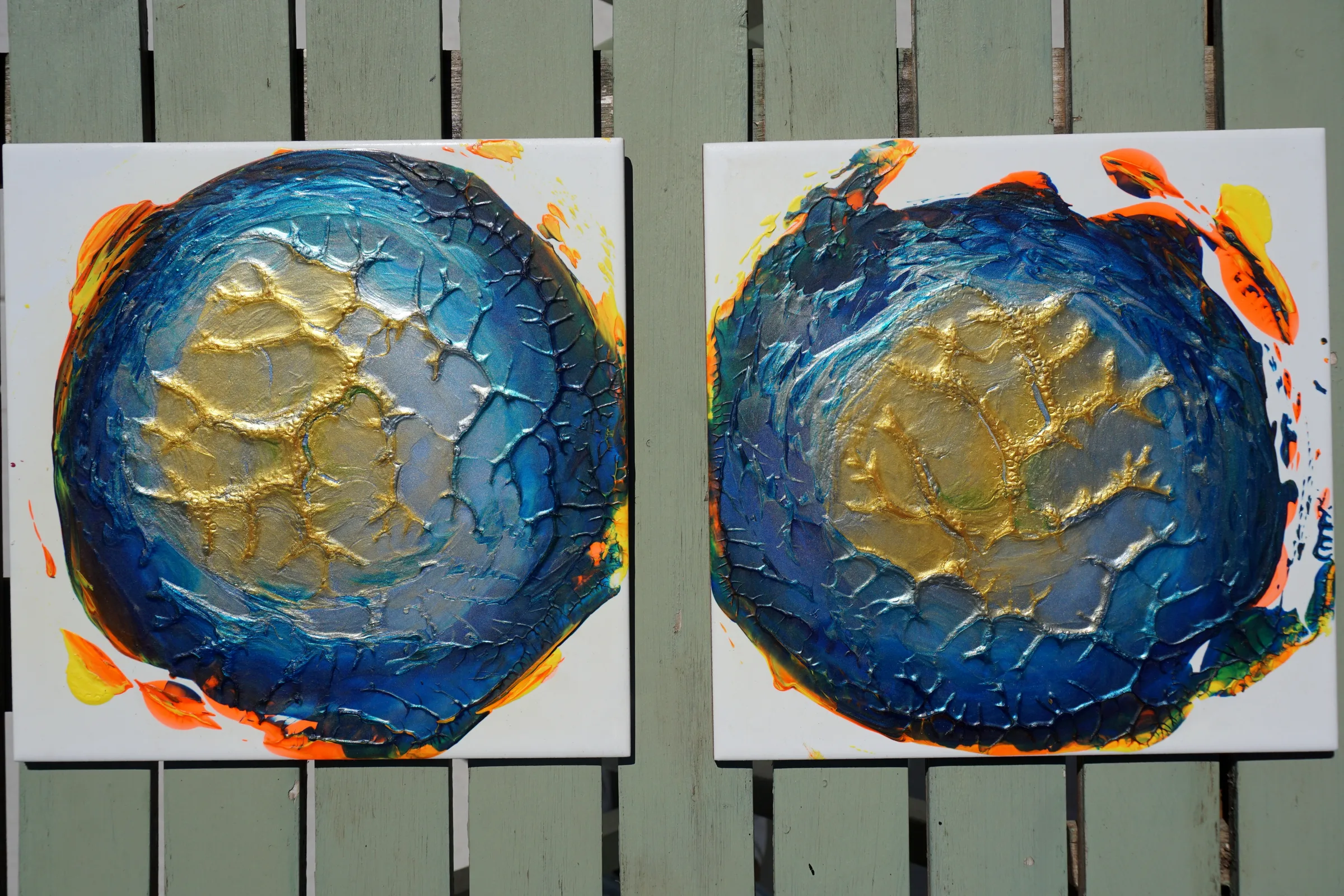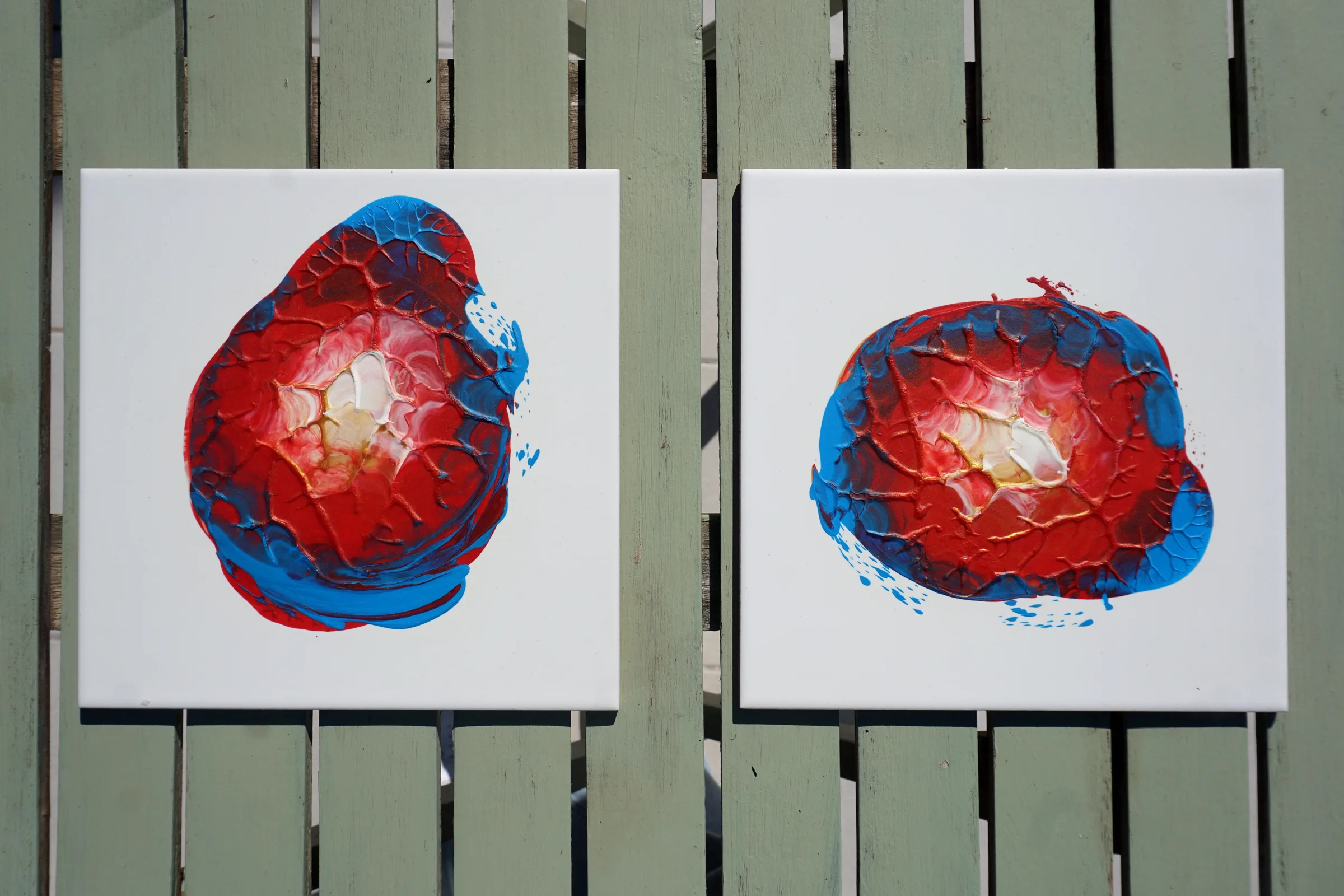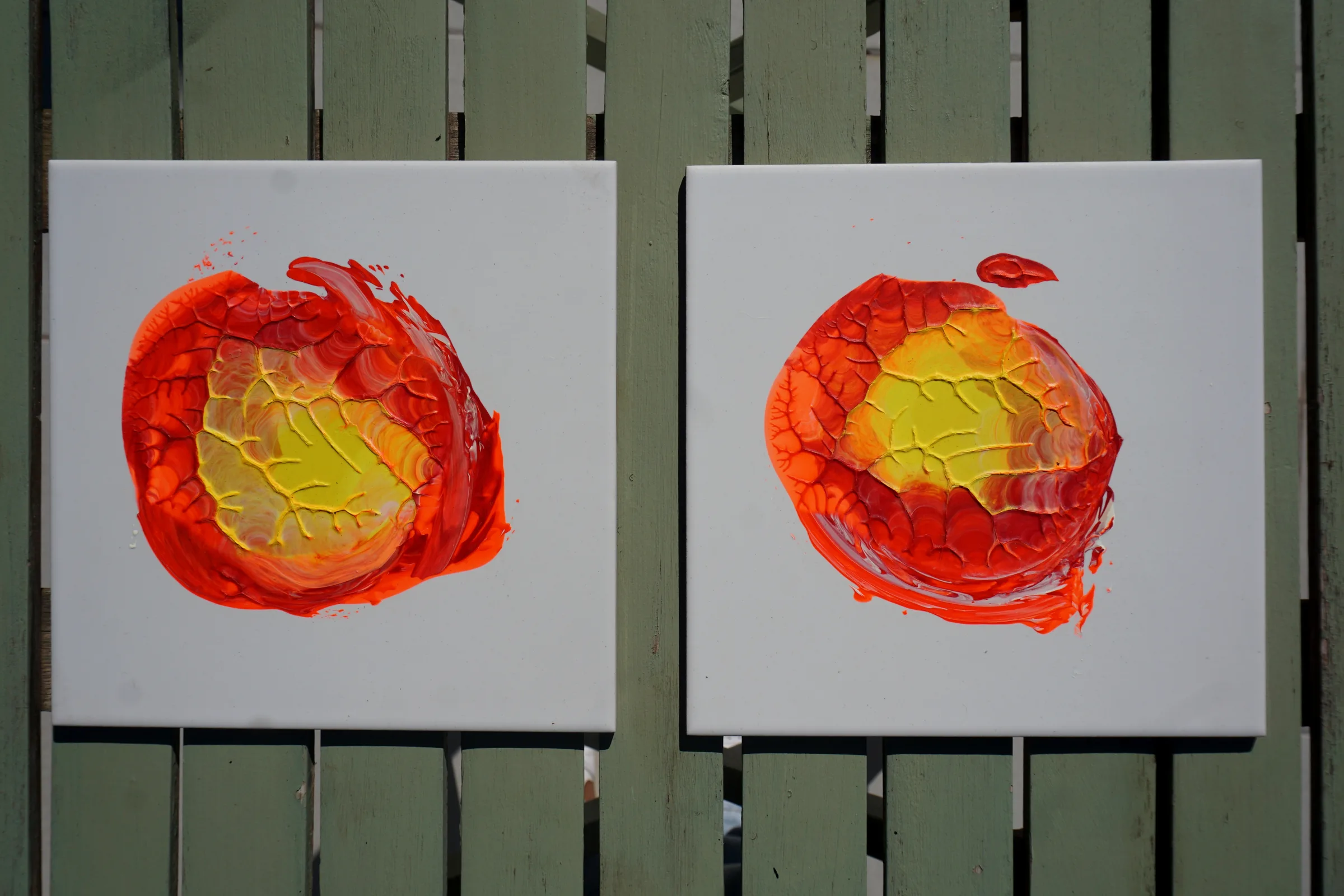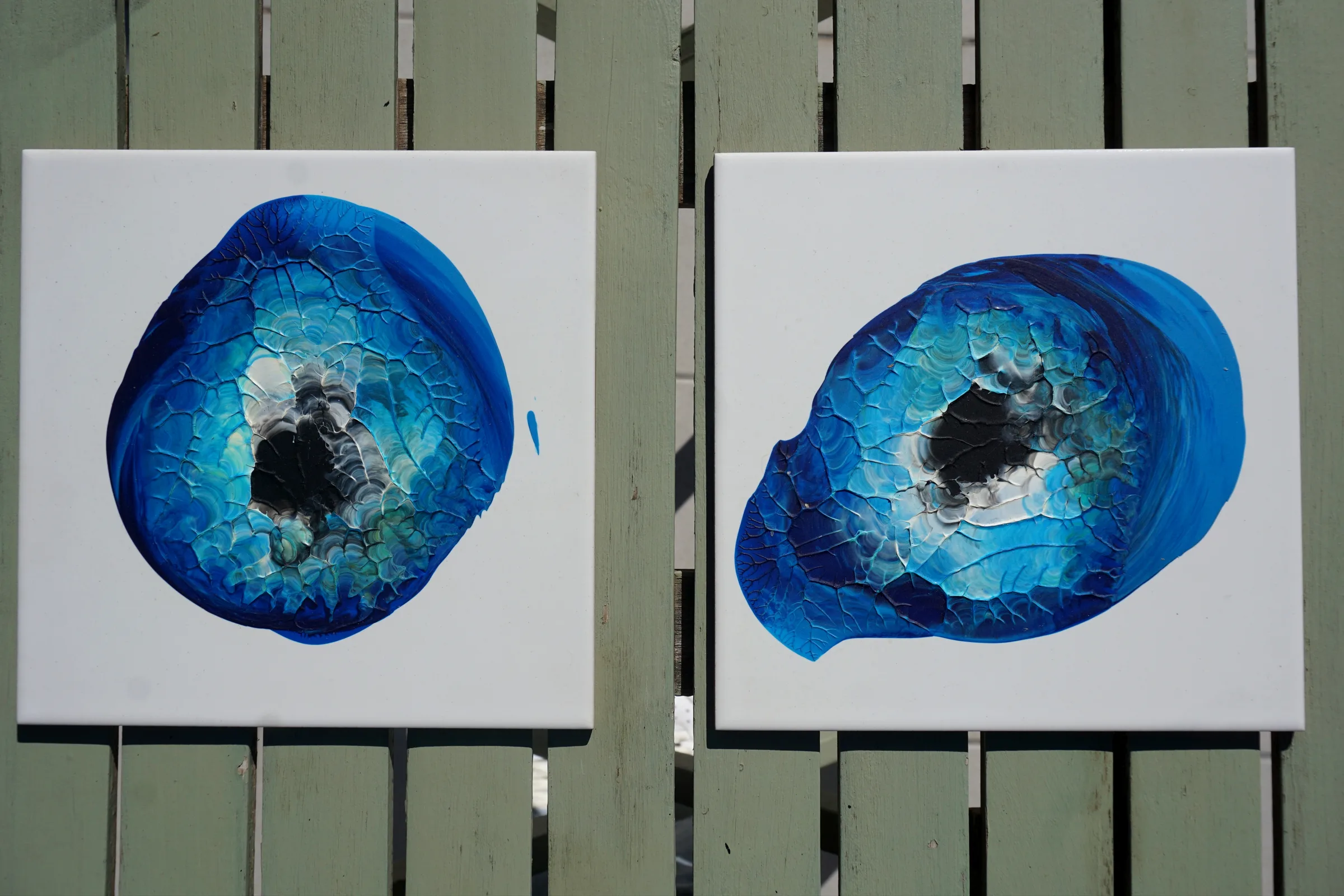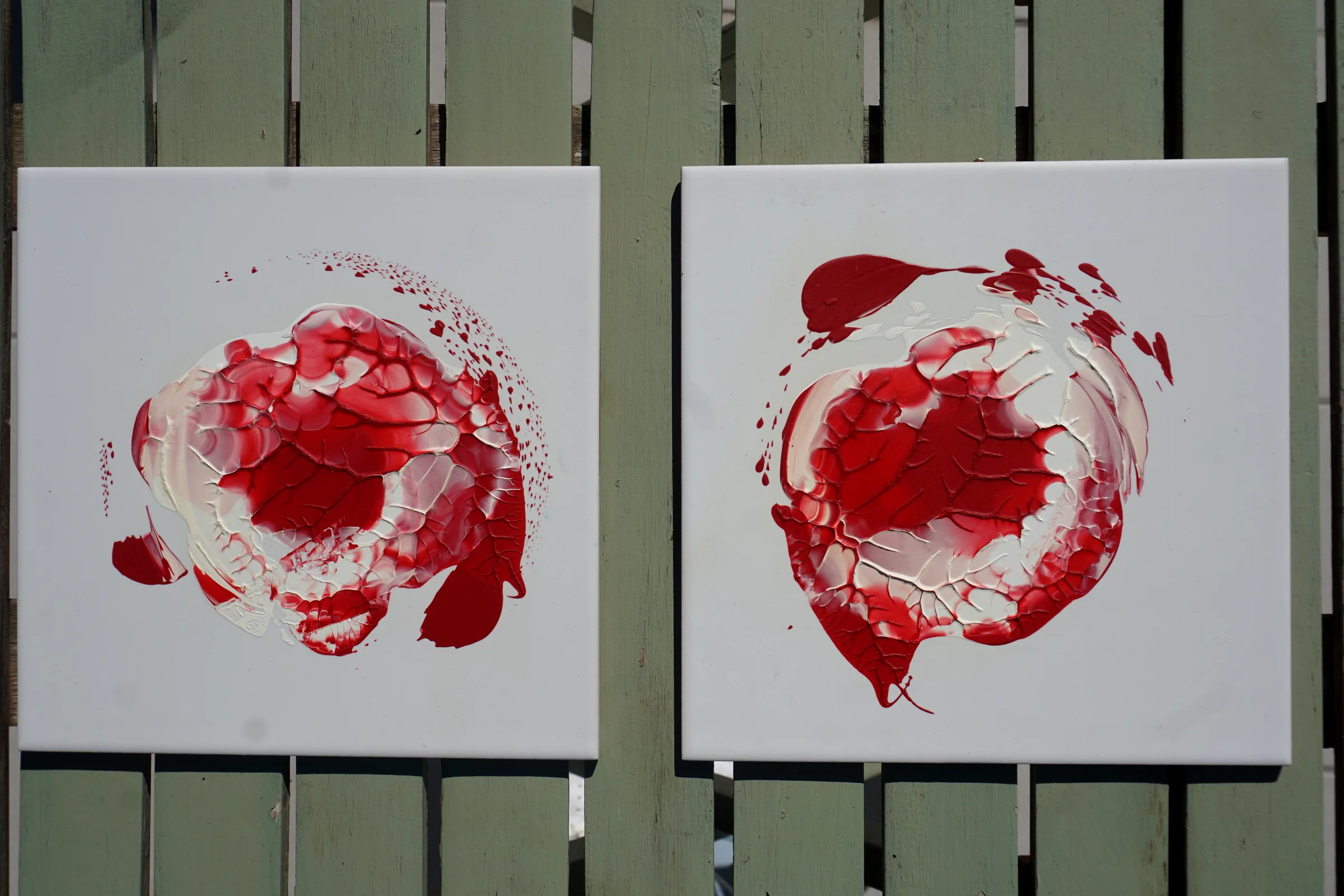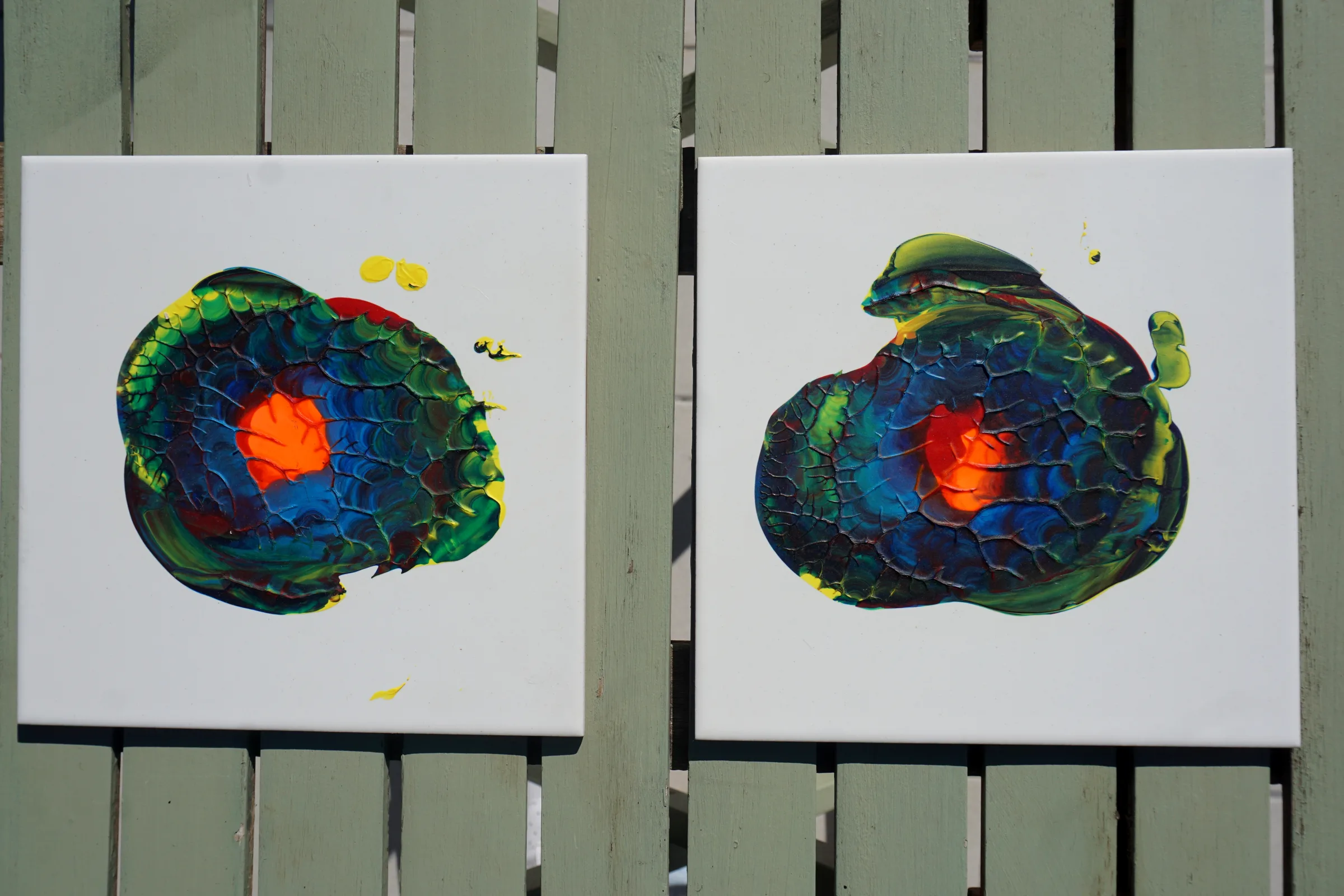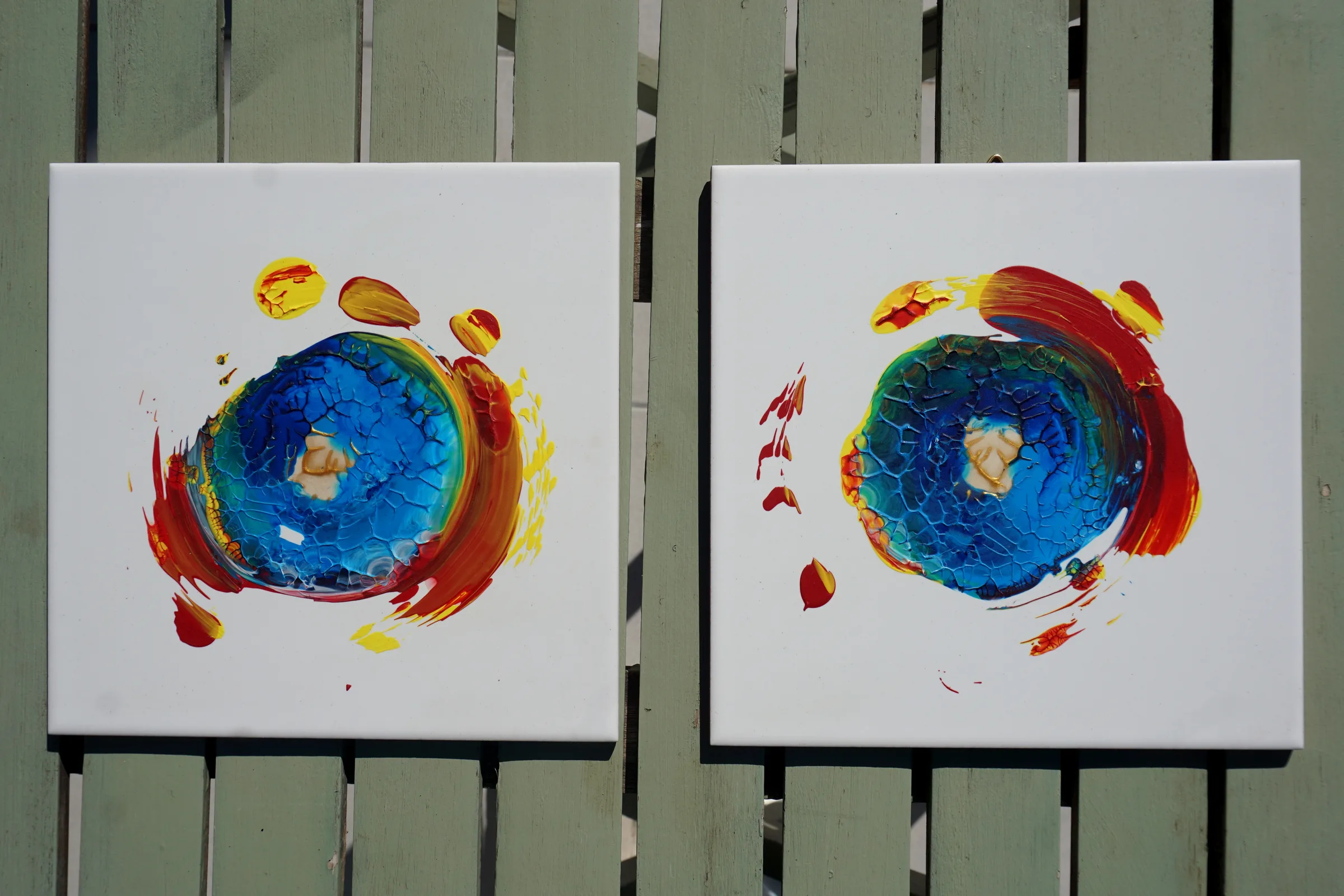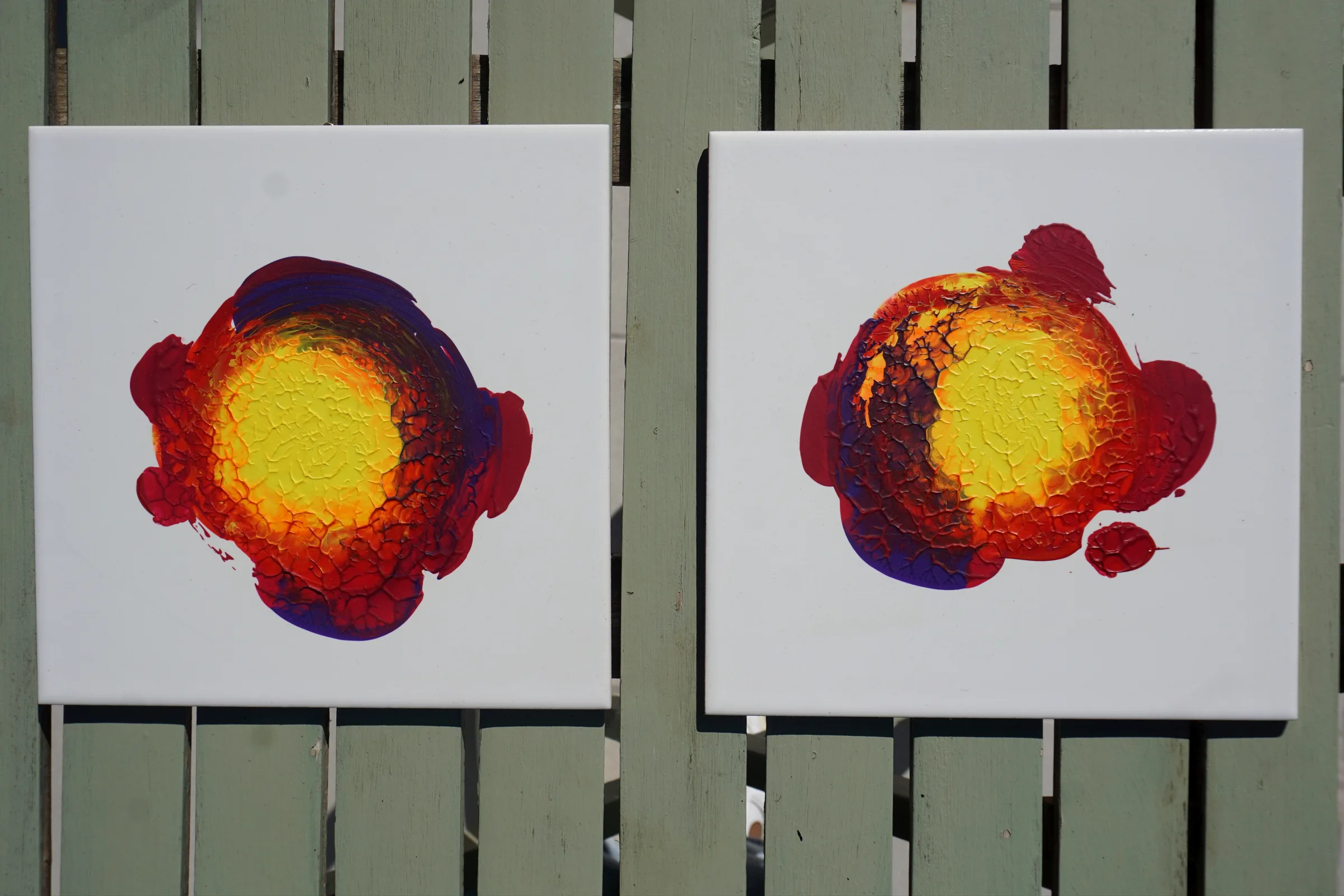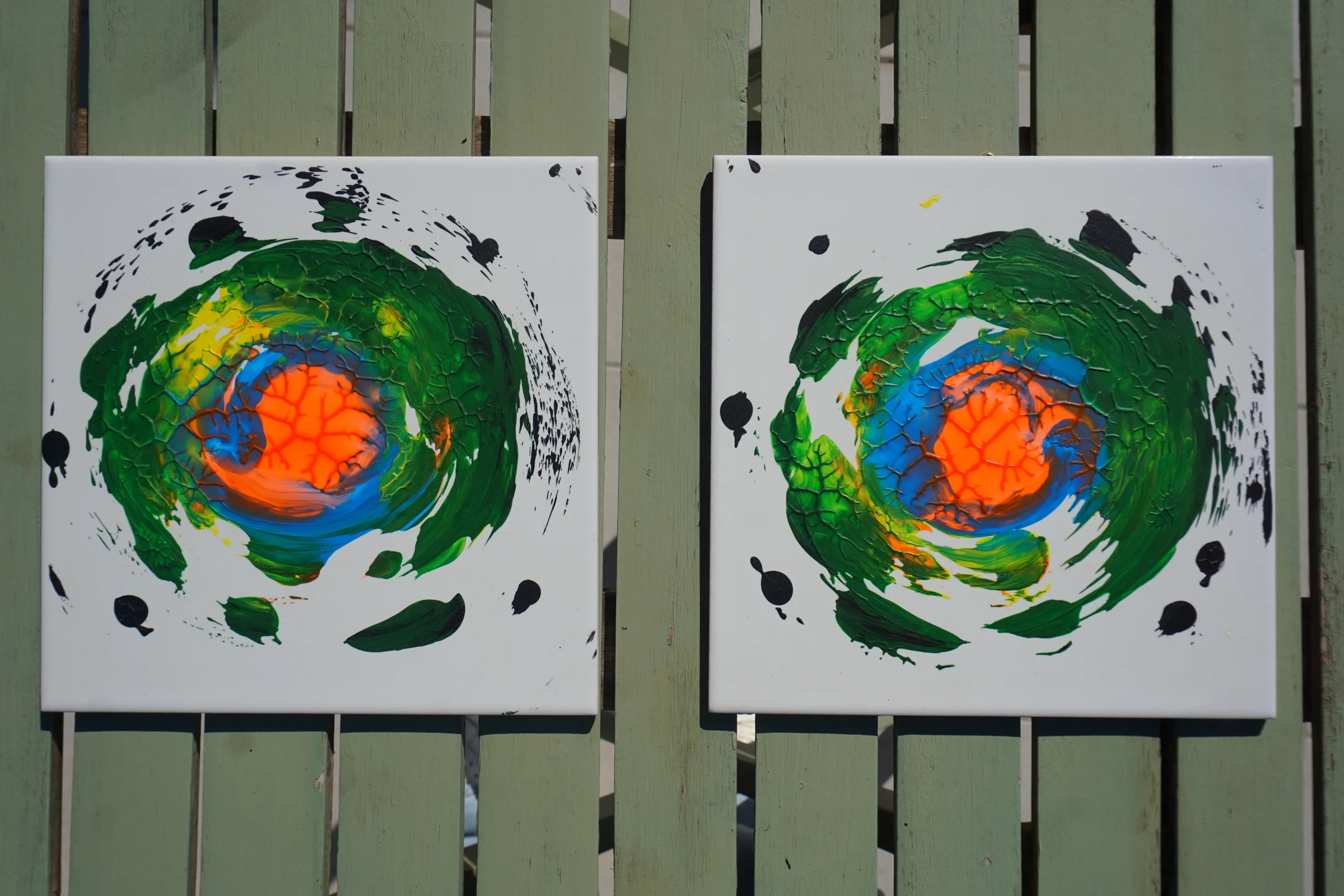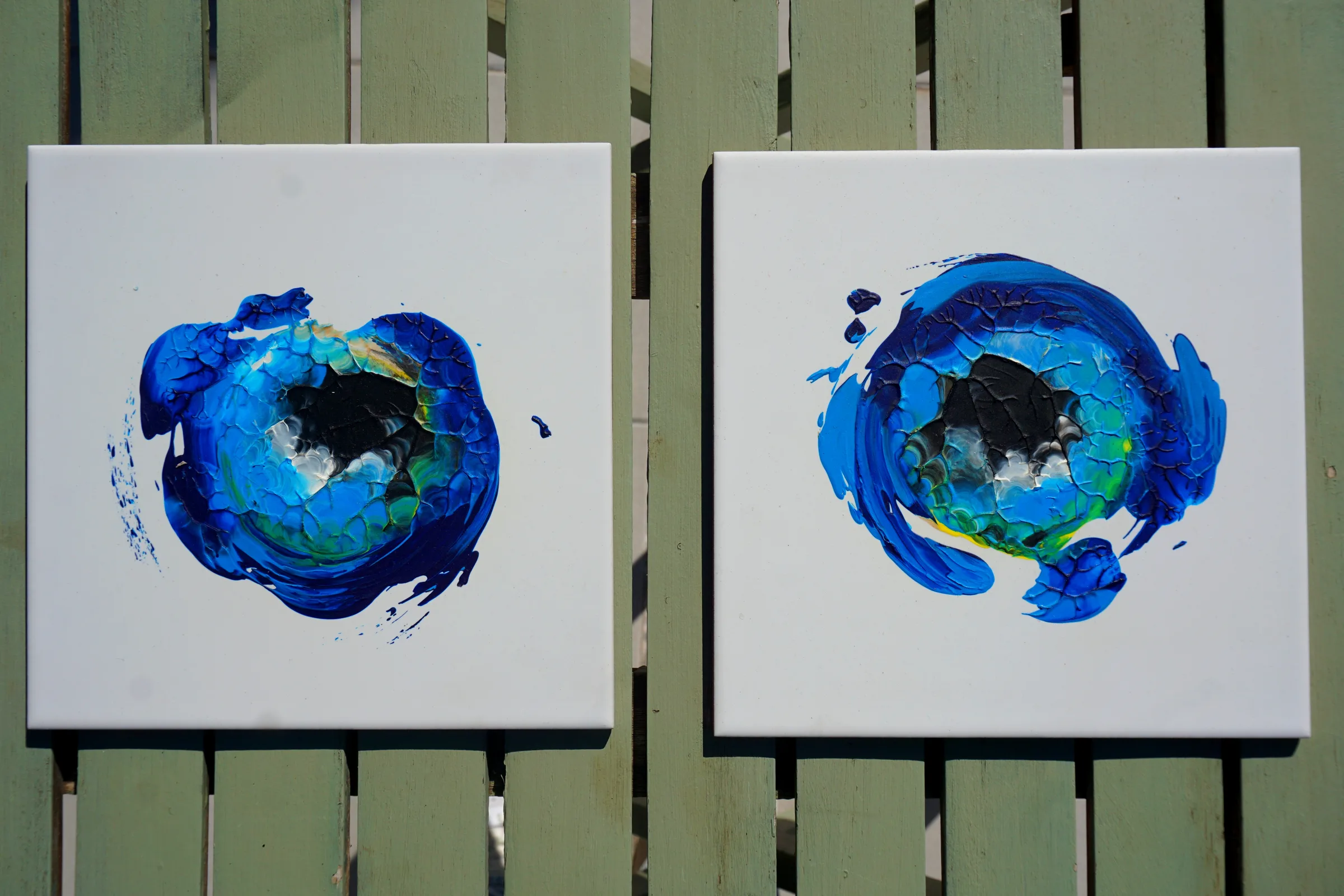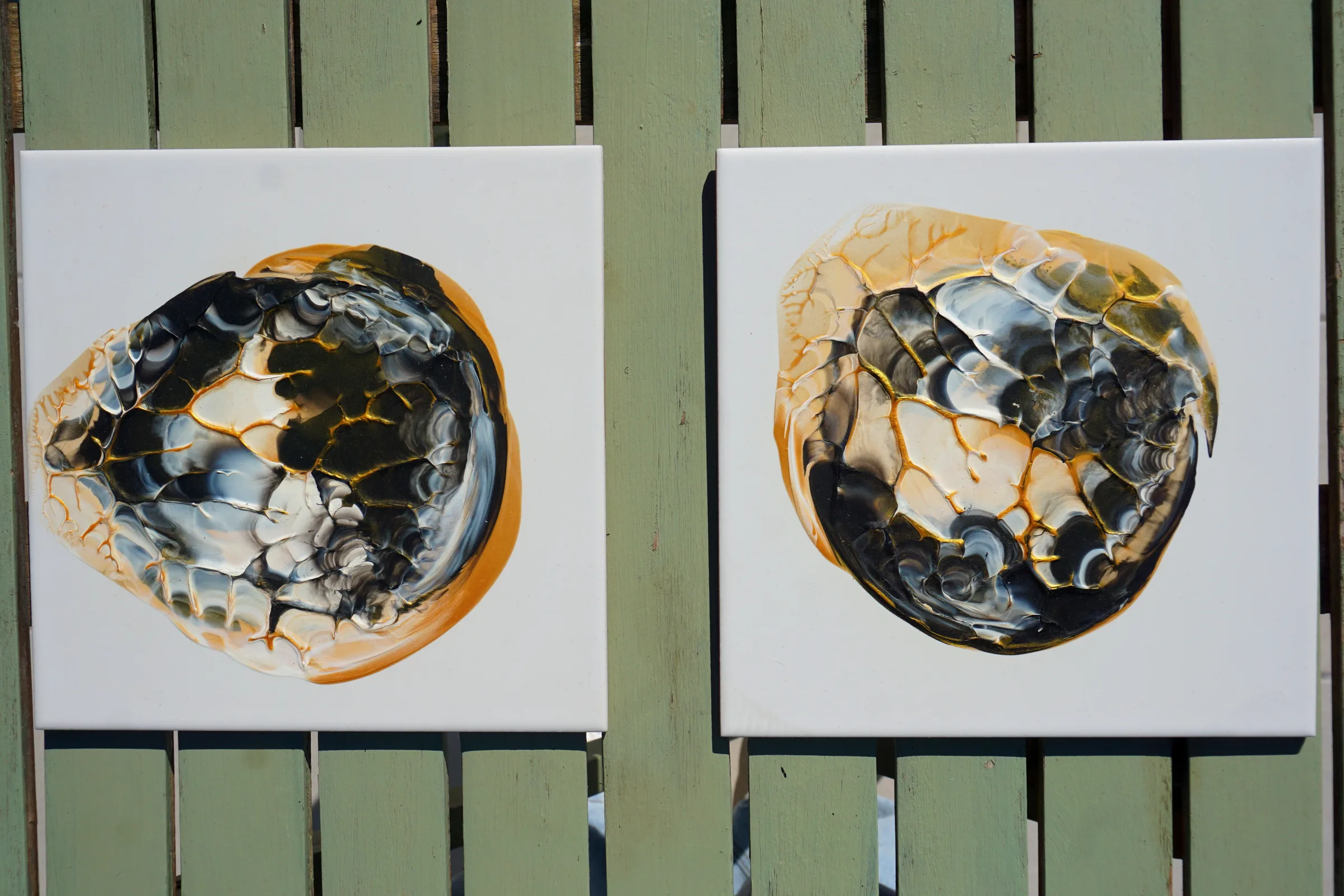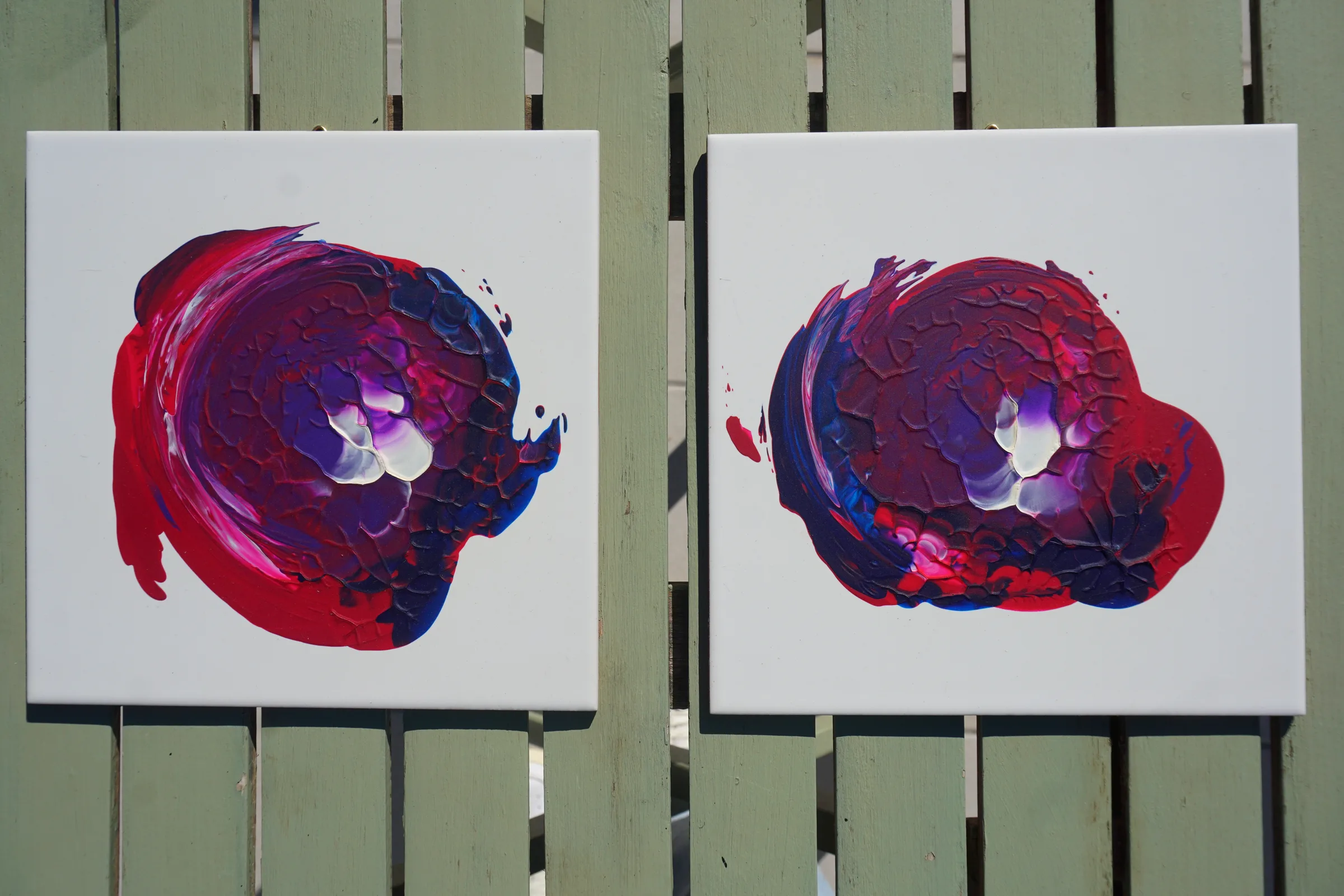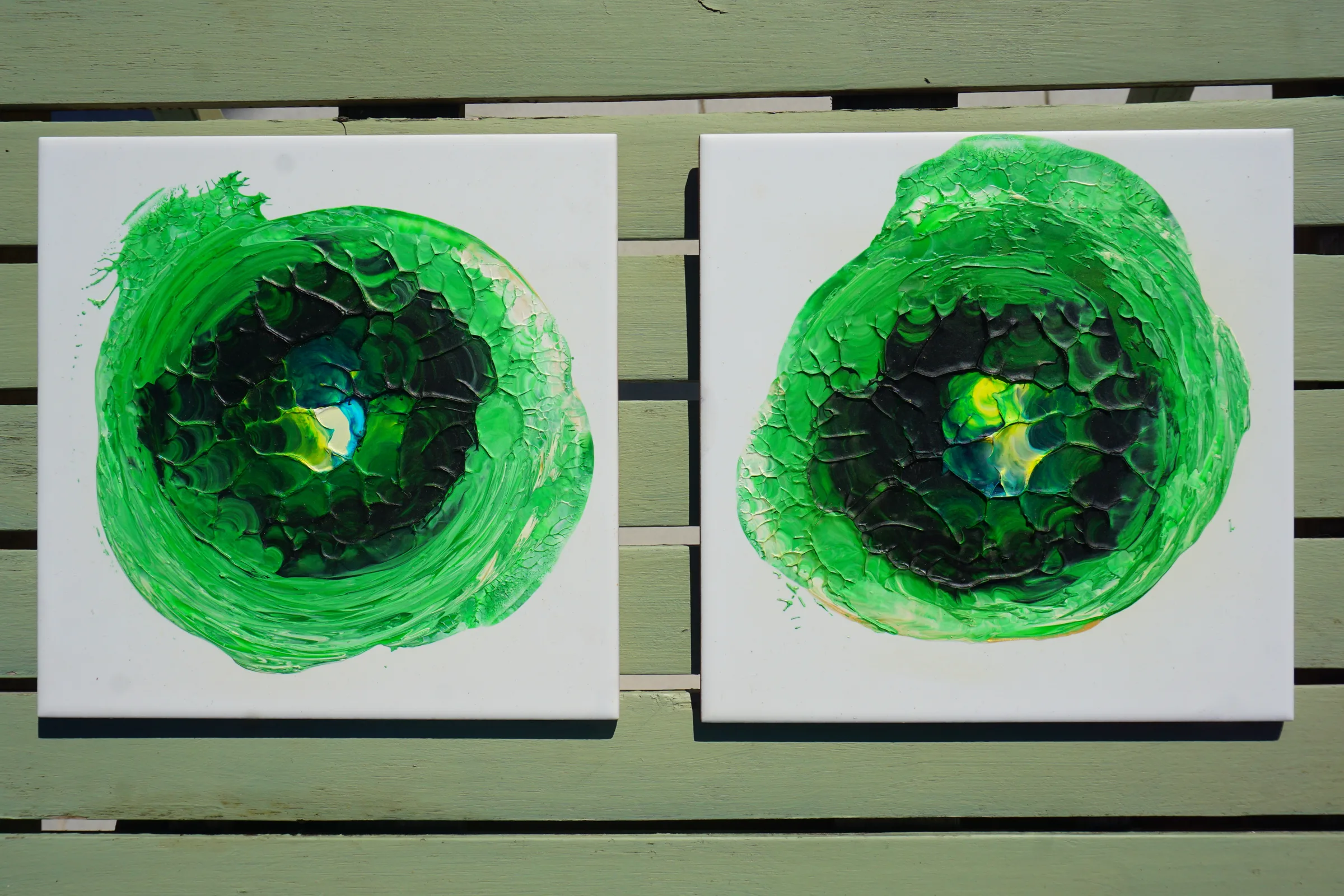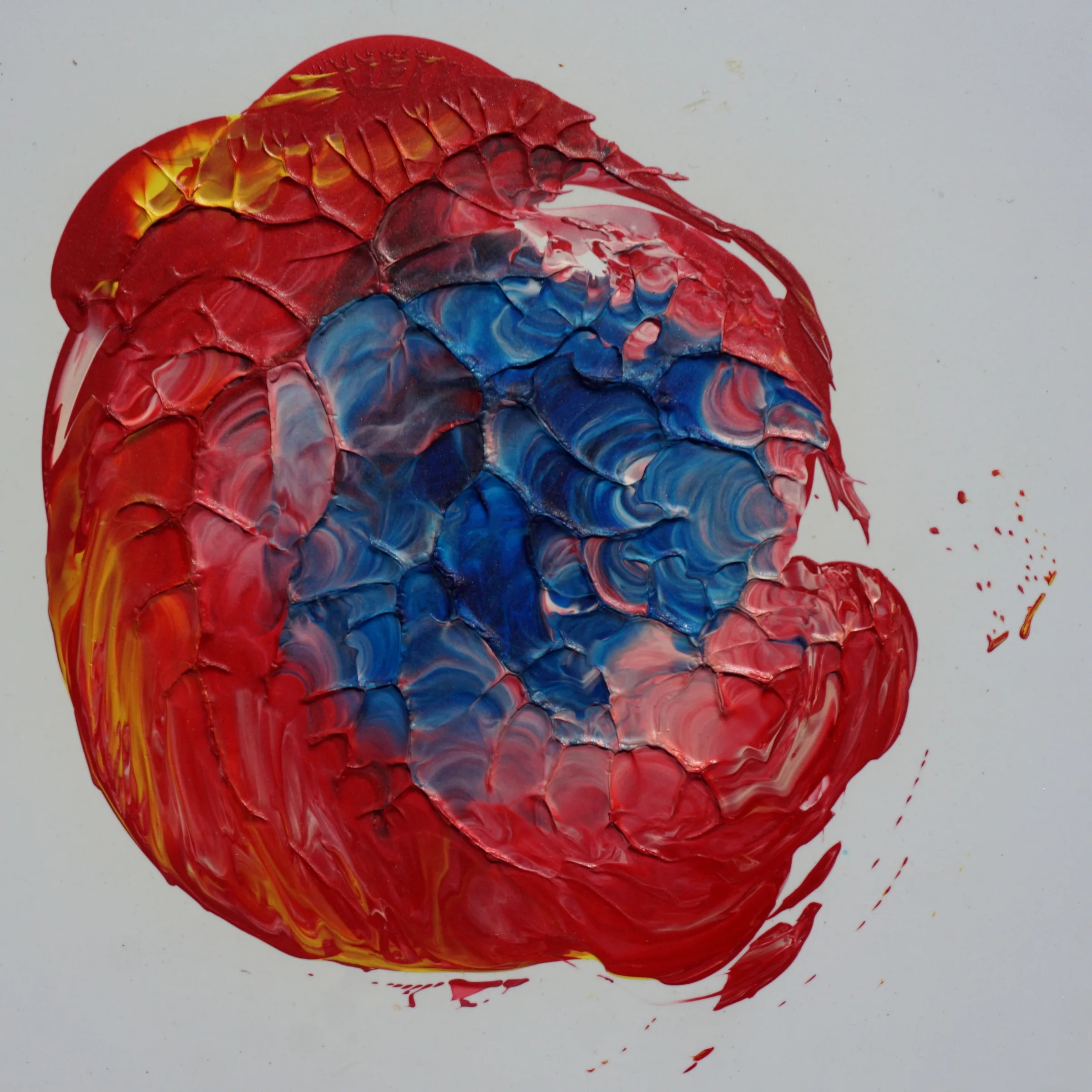
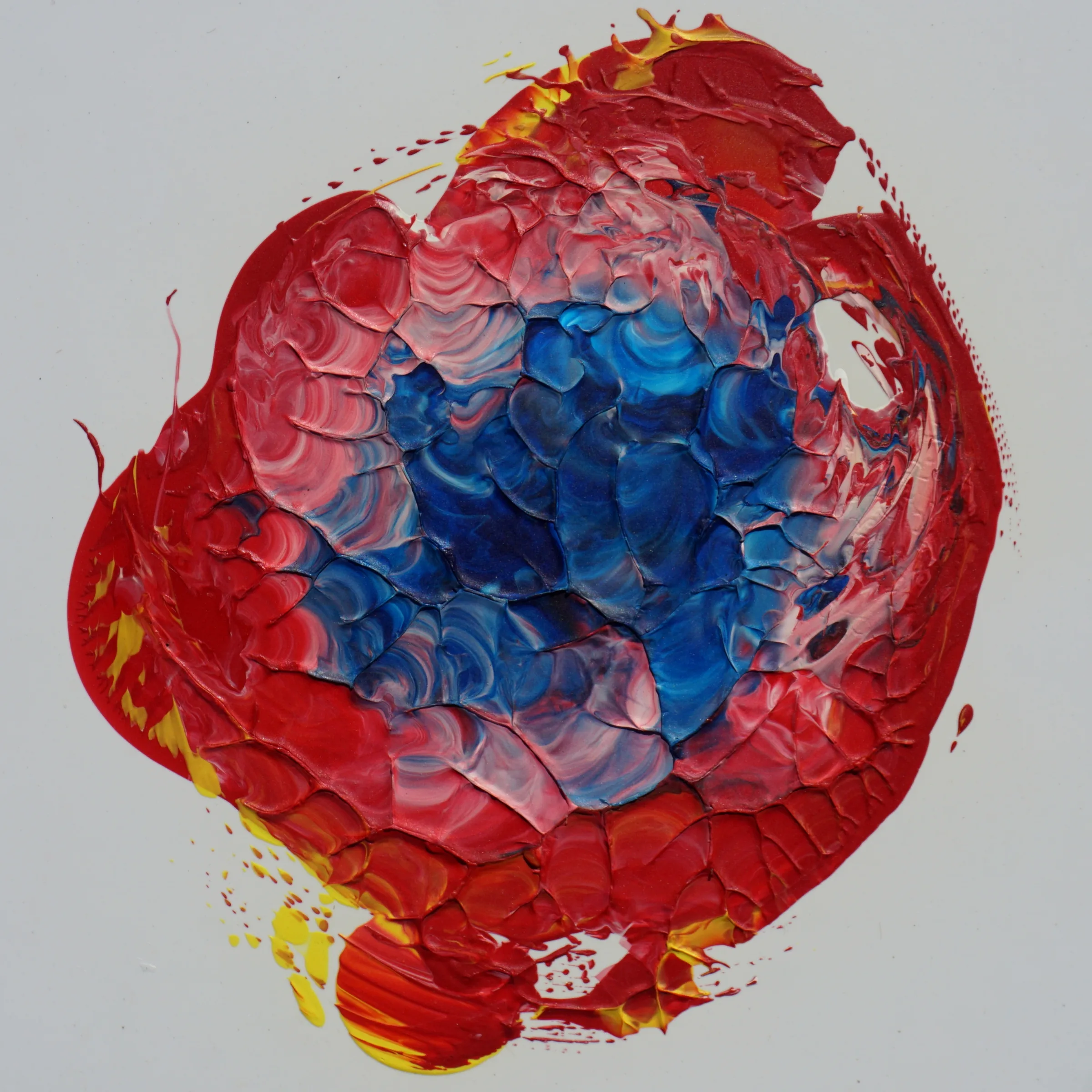
They came apart in one moment and the heat of that body is still here. Crimson pulp wrapped a blue it never entered — a harbour sitting at the same depth in both sisters, colder, closed. The relief is the map of that instant: cells, ridges, a coastline torn in two. Nothing of this was chosen.
Tile A kept the flame. Yellow still burns along its left-hand shore; the mass stayed round. Tile B is the spent form of the same weather — gold pooled at the foot, a white gap where the pigment failed to keep, the outline torn and spilled. Their blue cores sit at the same depth. The cellular field is the kinship: the same tear, two faces.
Around them the chalk bisque is the silence that entered when the sisters opened. They were one surface. They are still one object.
They were one
until they were not.
The red is pulp.
The blue is a harbour
that stayed cold
in both.
One sister kept the flame
along the left-hand shore.
The other kept the gold
that ran, and a white silence
where pigment failed to keep.
Between their faces
the relief is the tear:
cellular, scaled,
a coastline no one drew.
The bisque around them
is the room that entered
when they opened.
Harbour and Fire — Listen