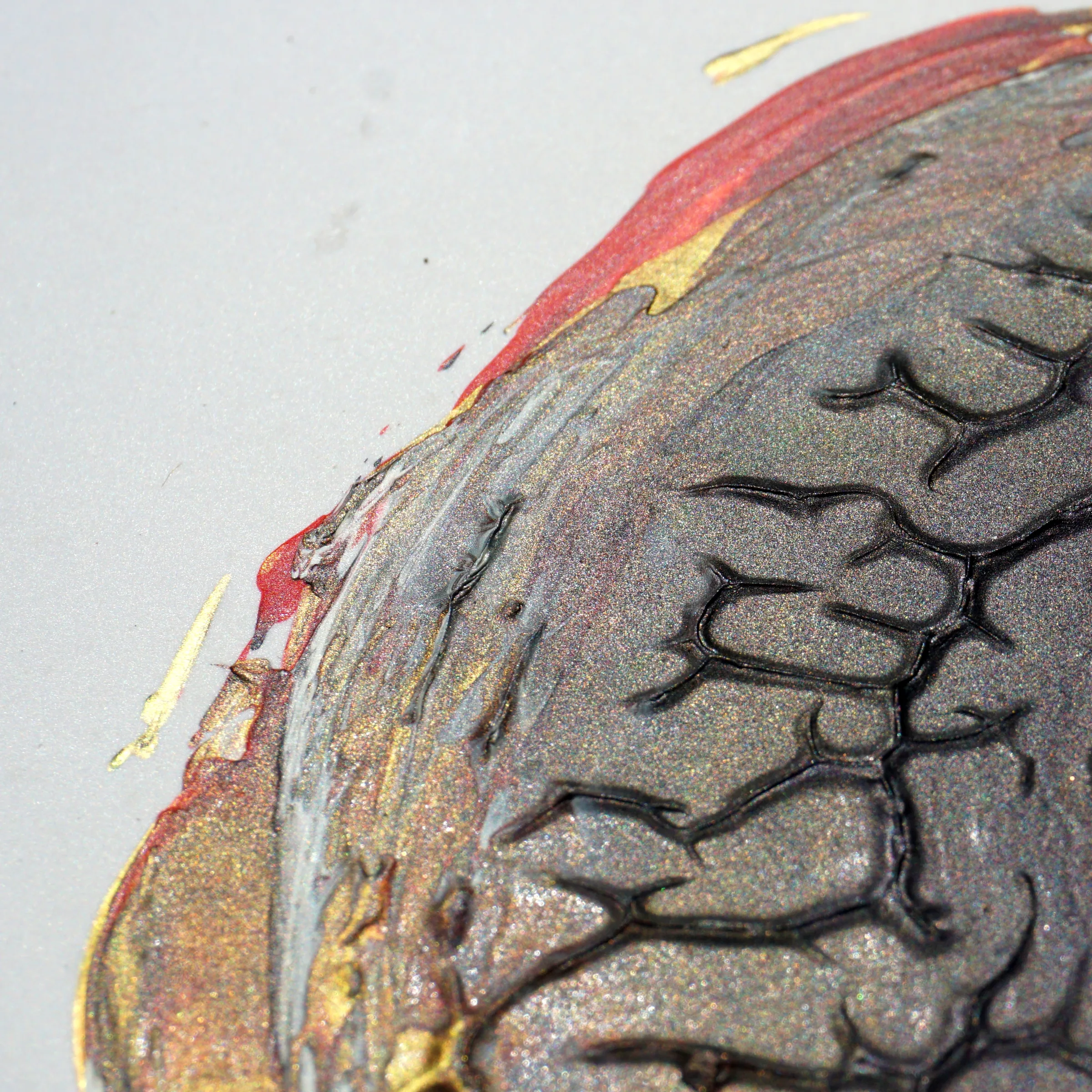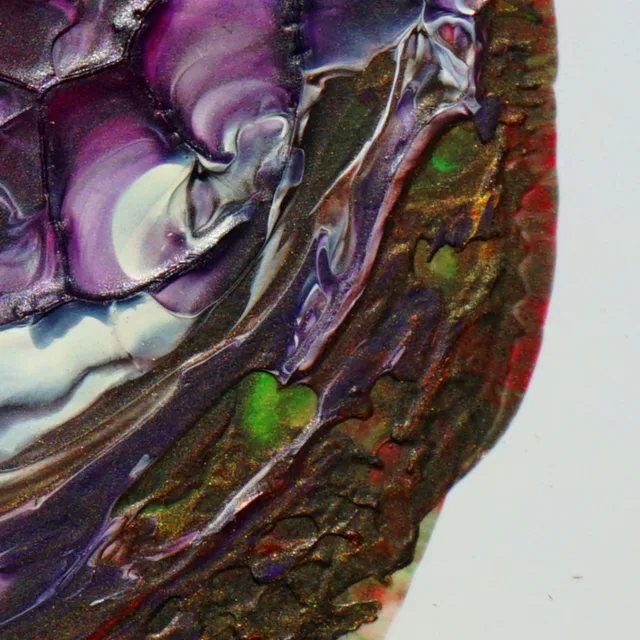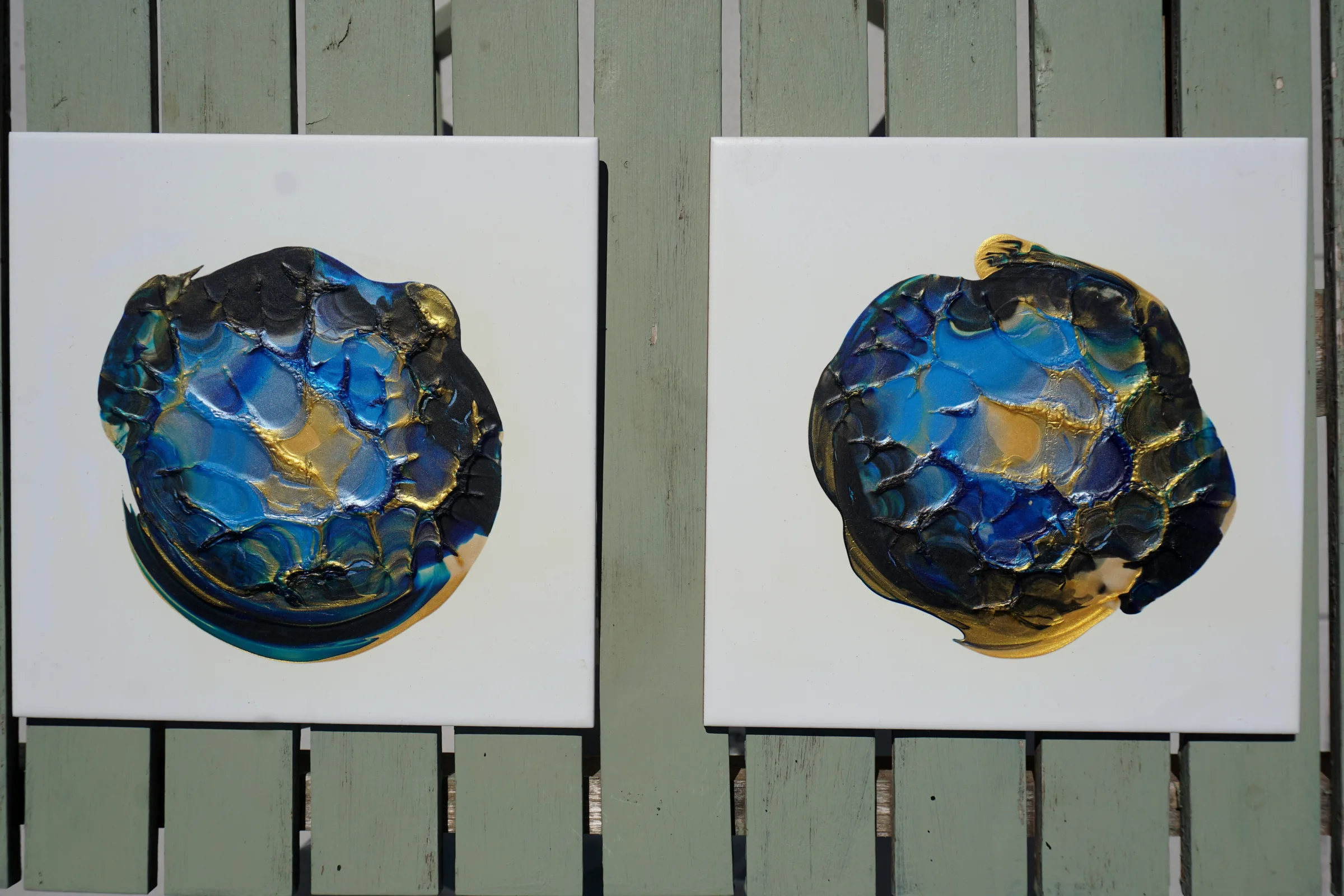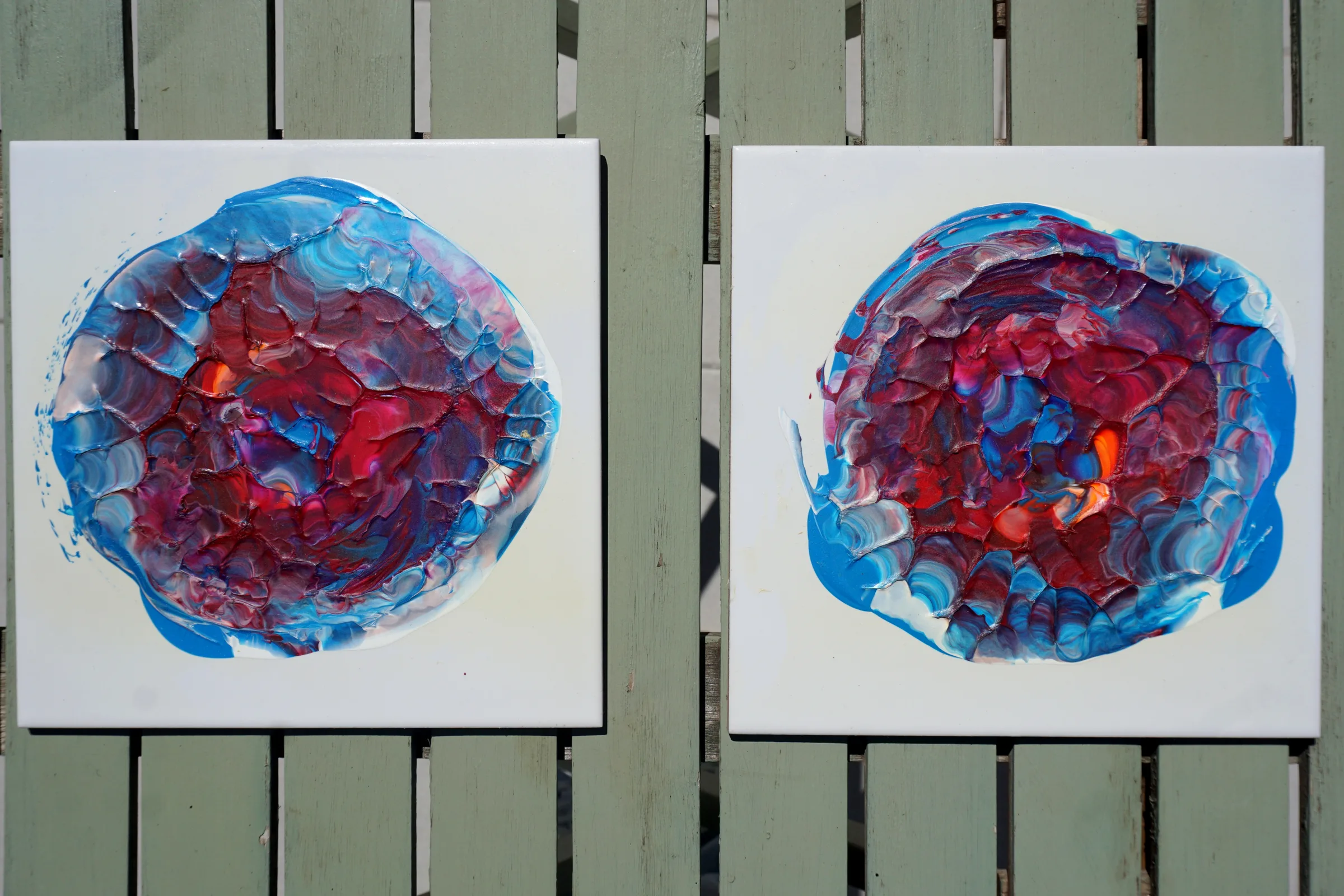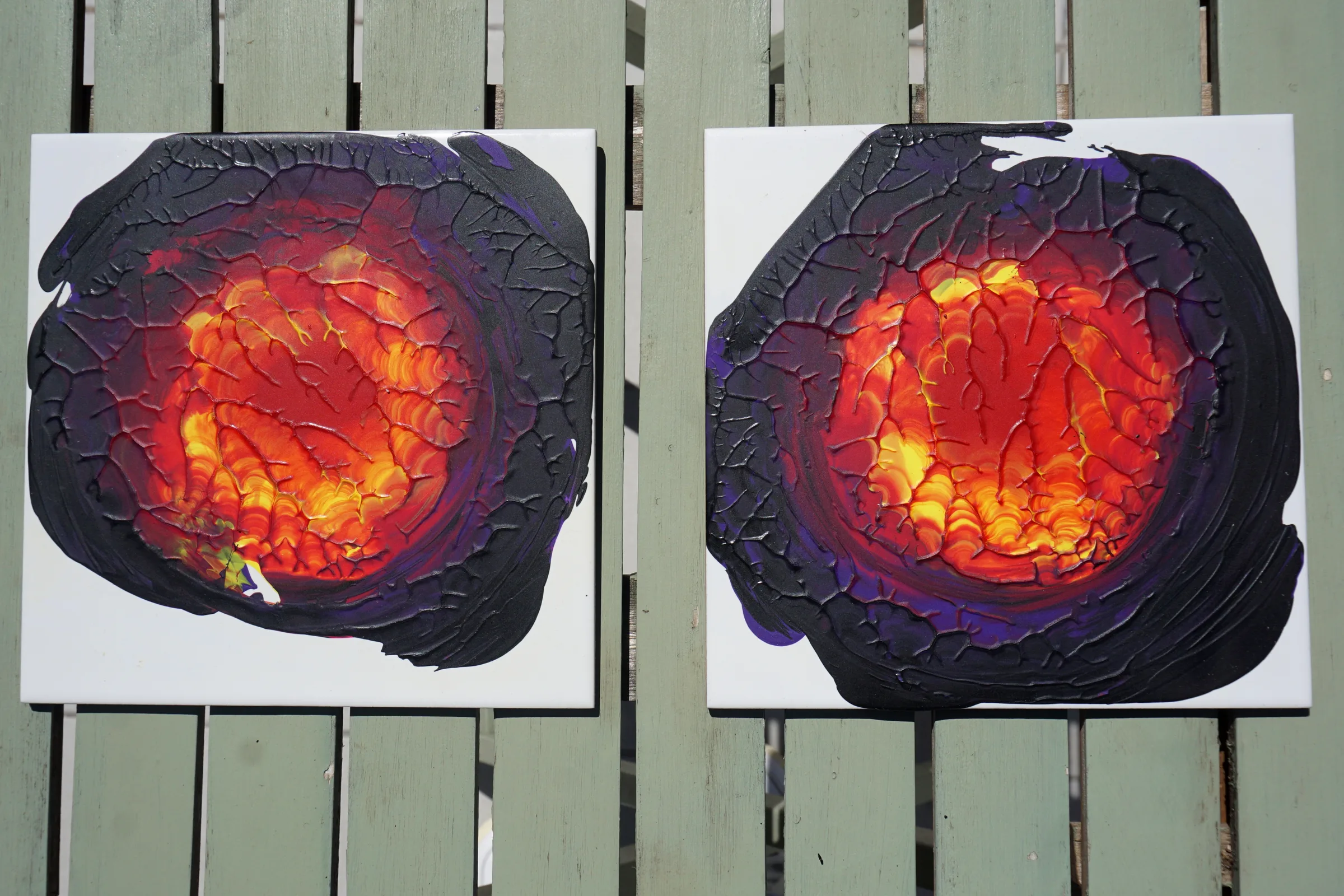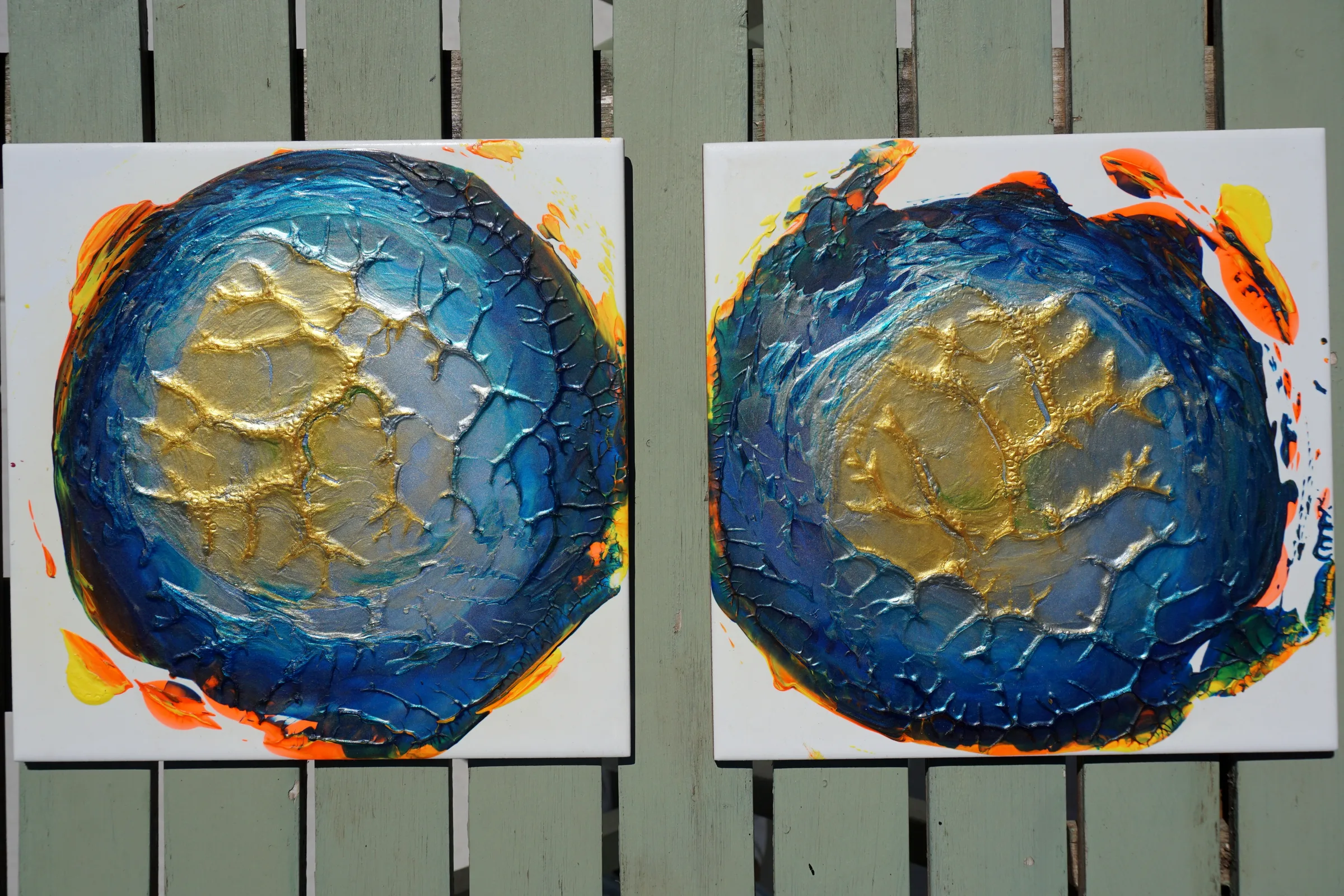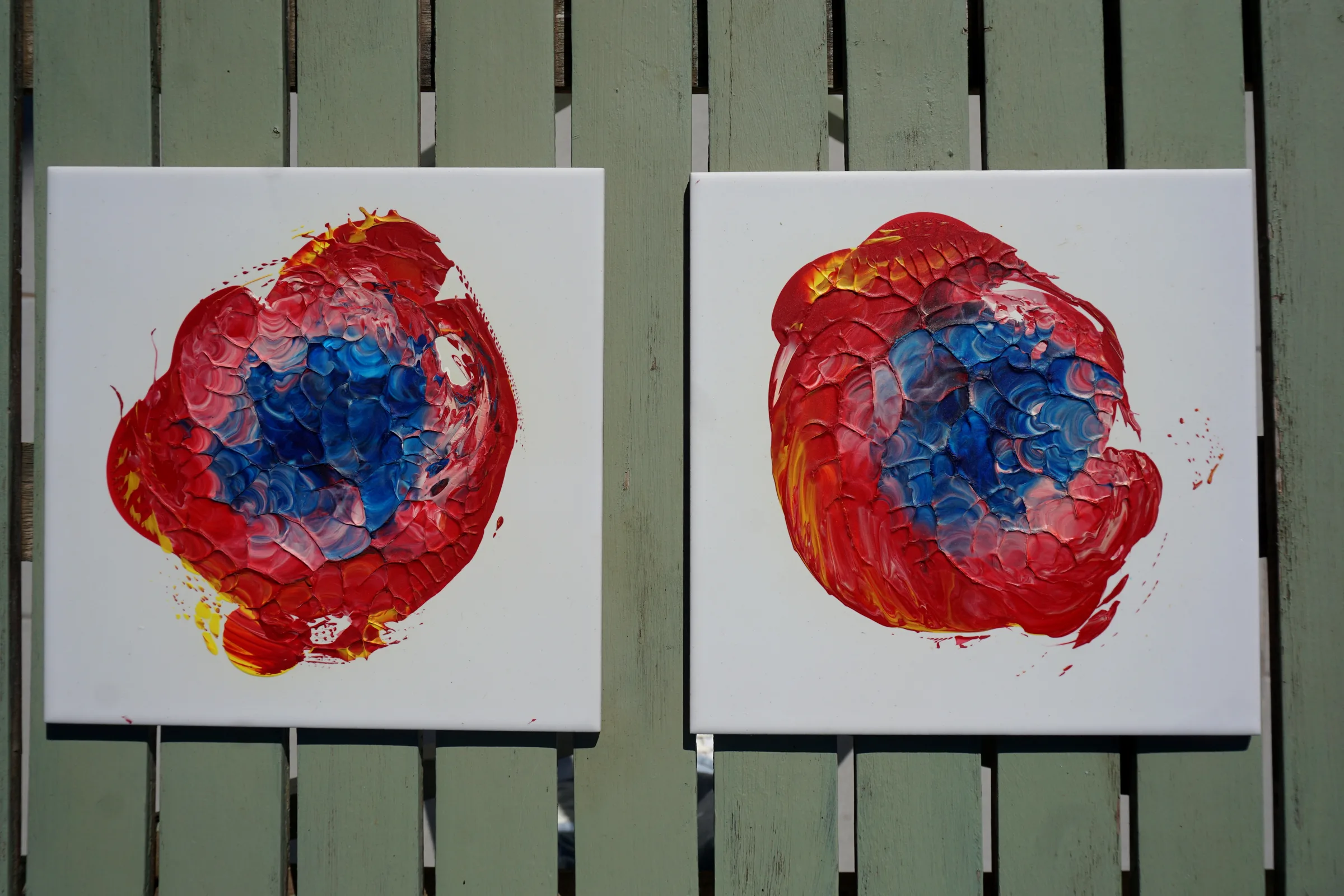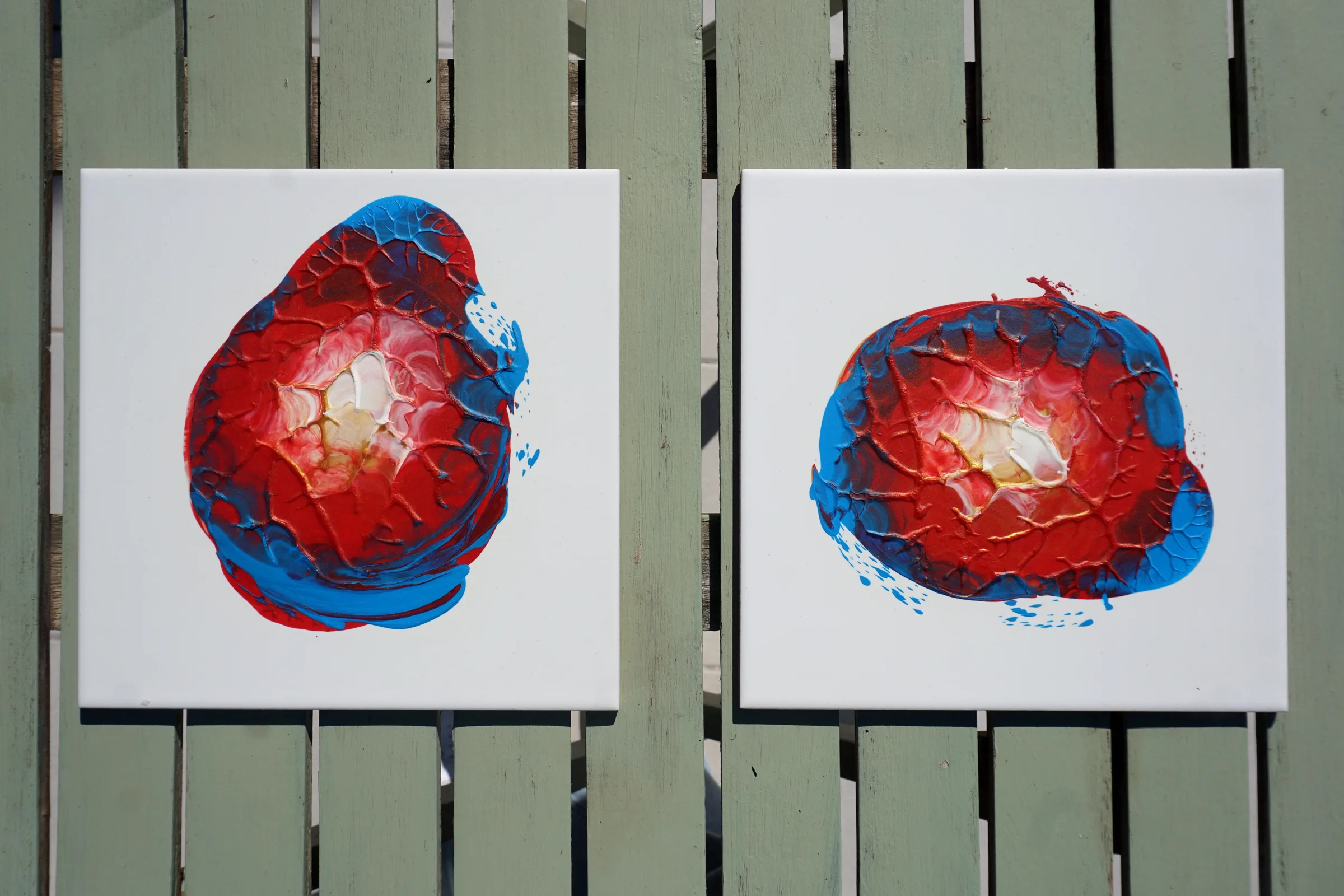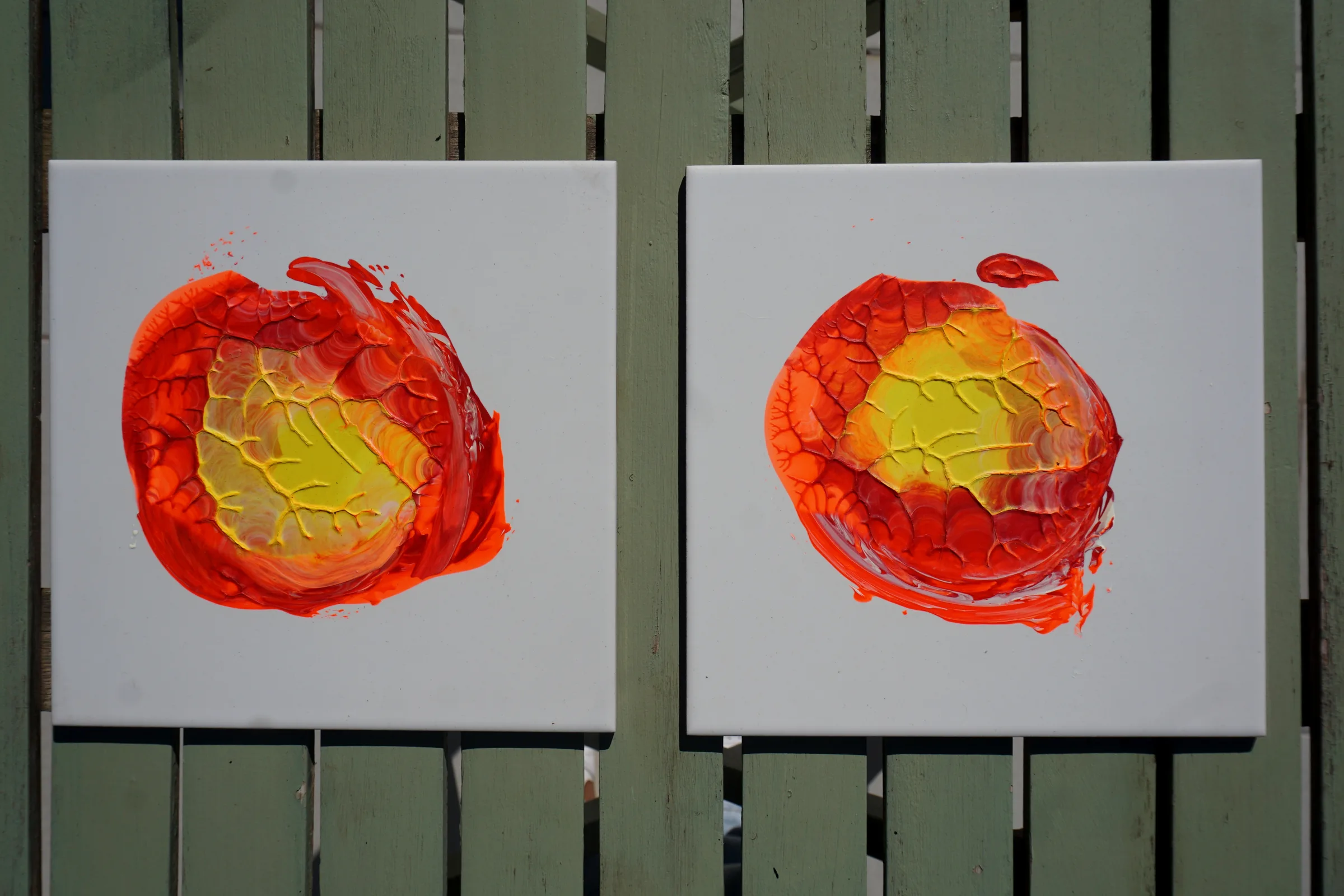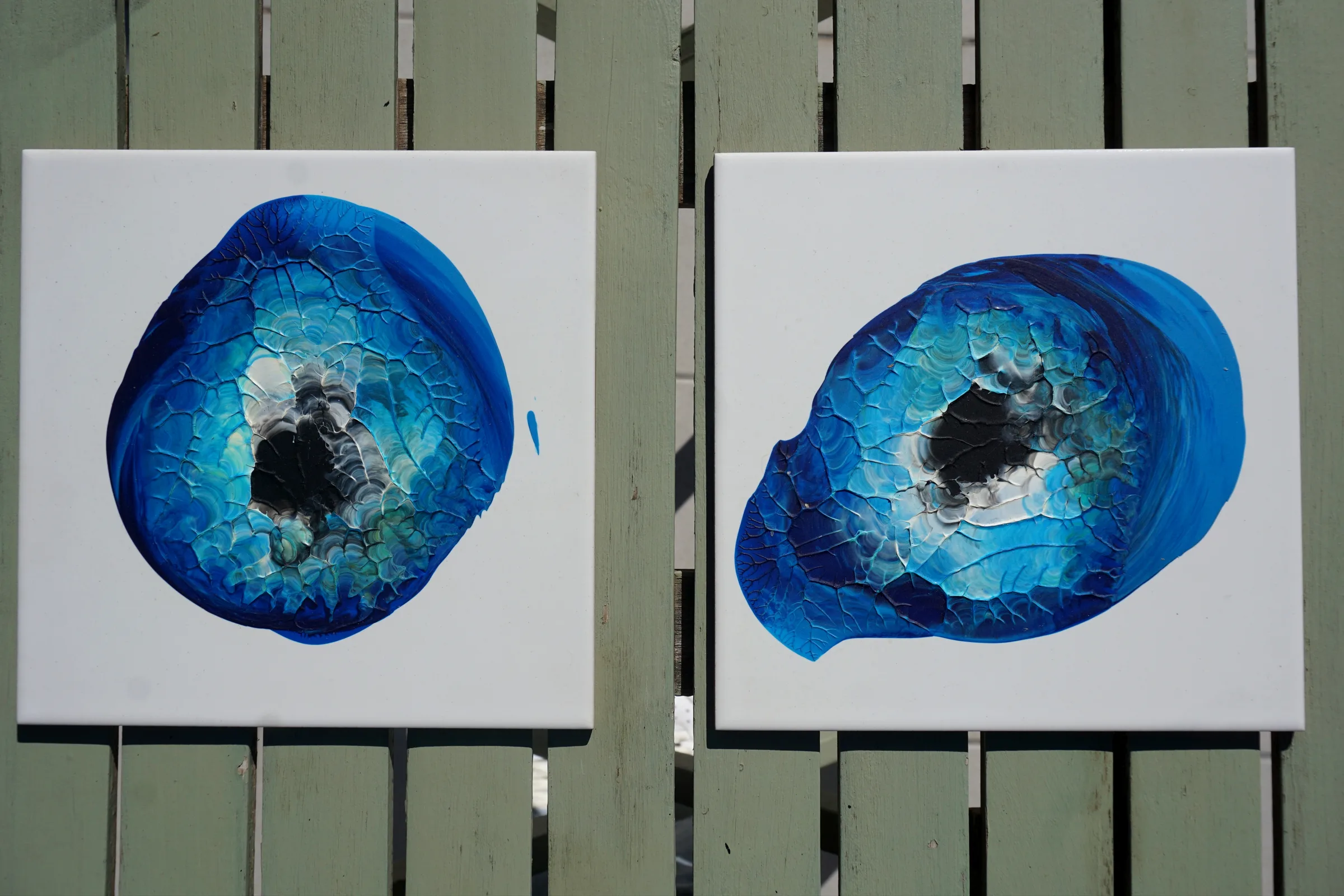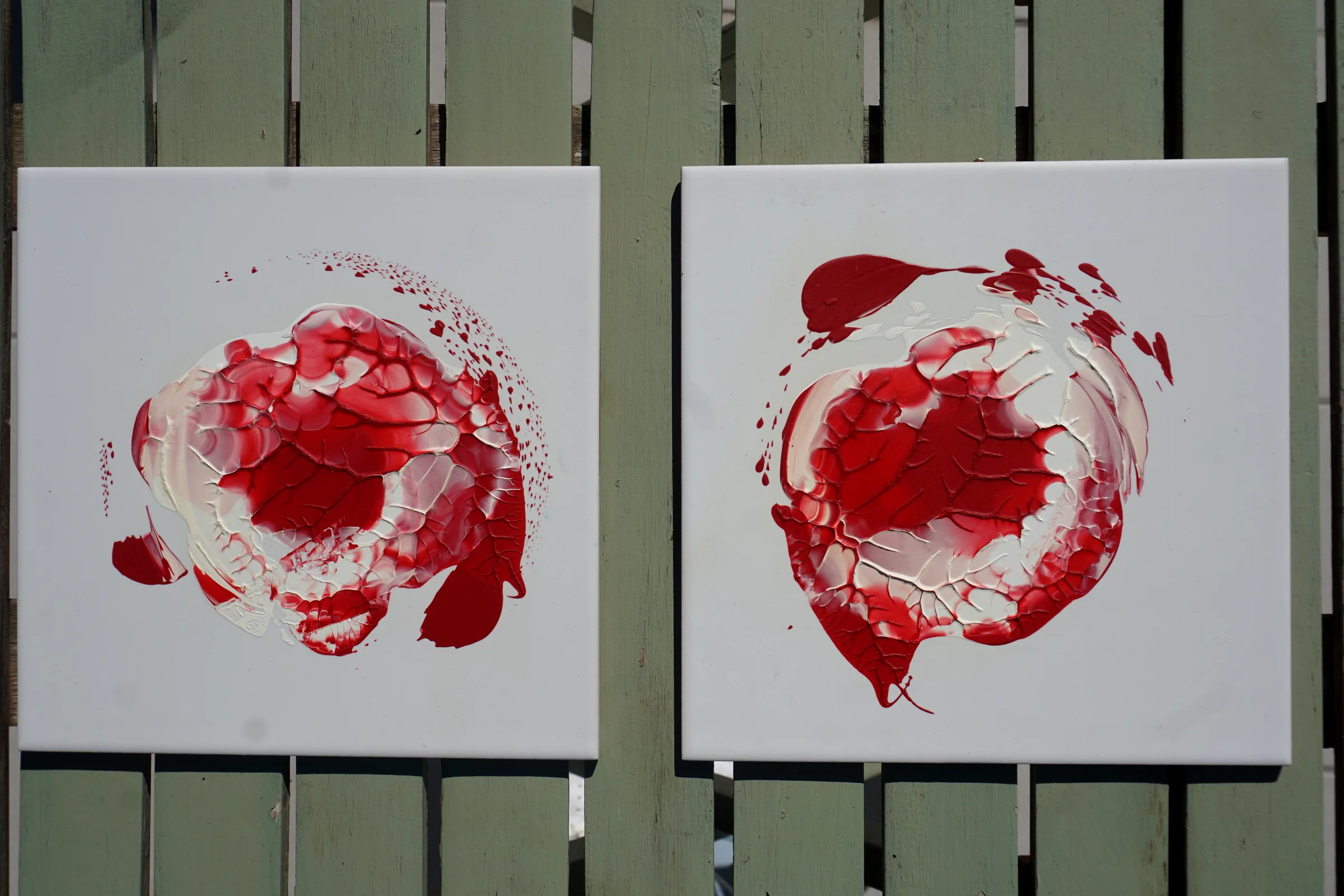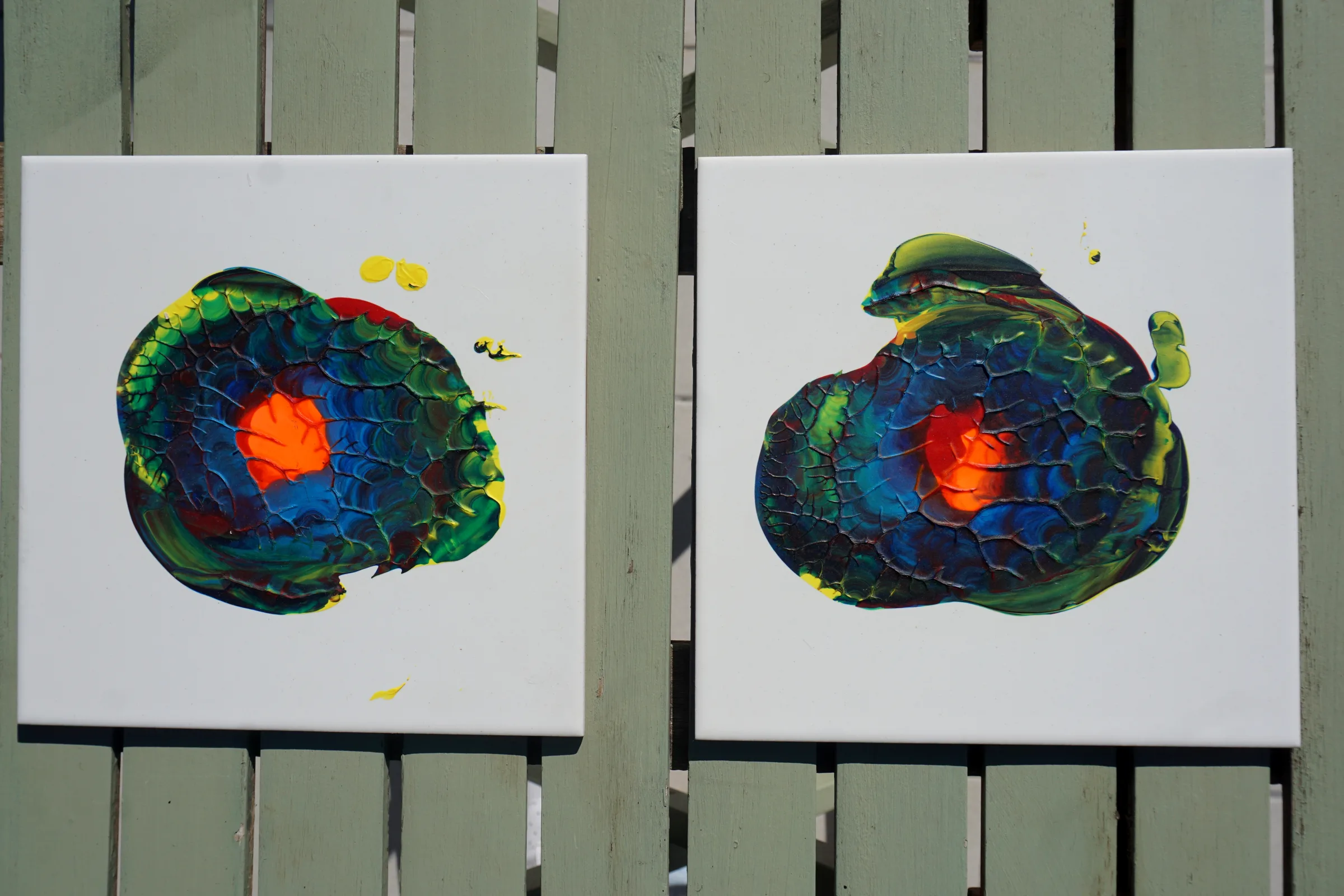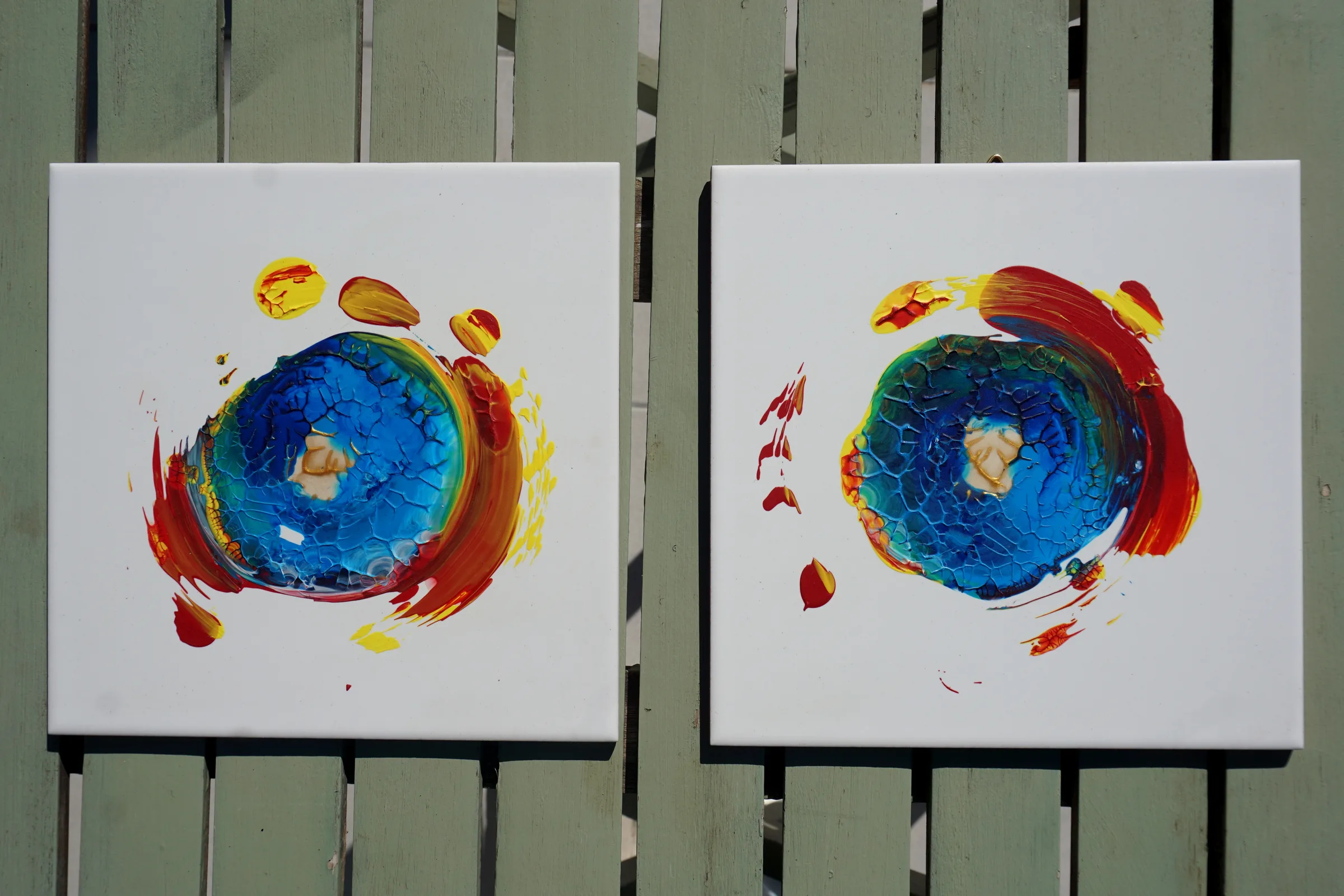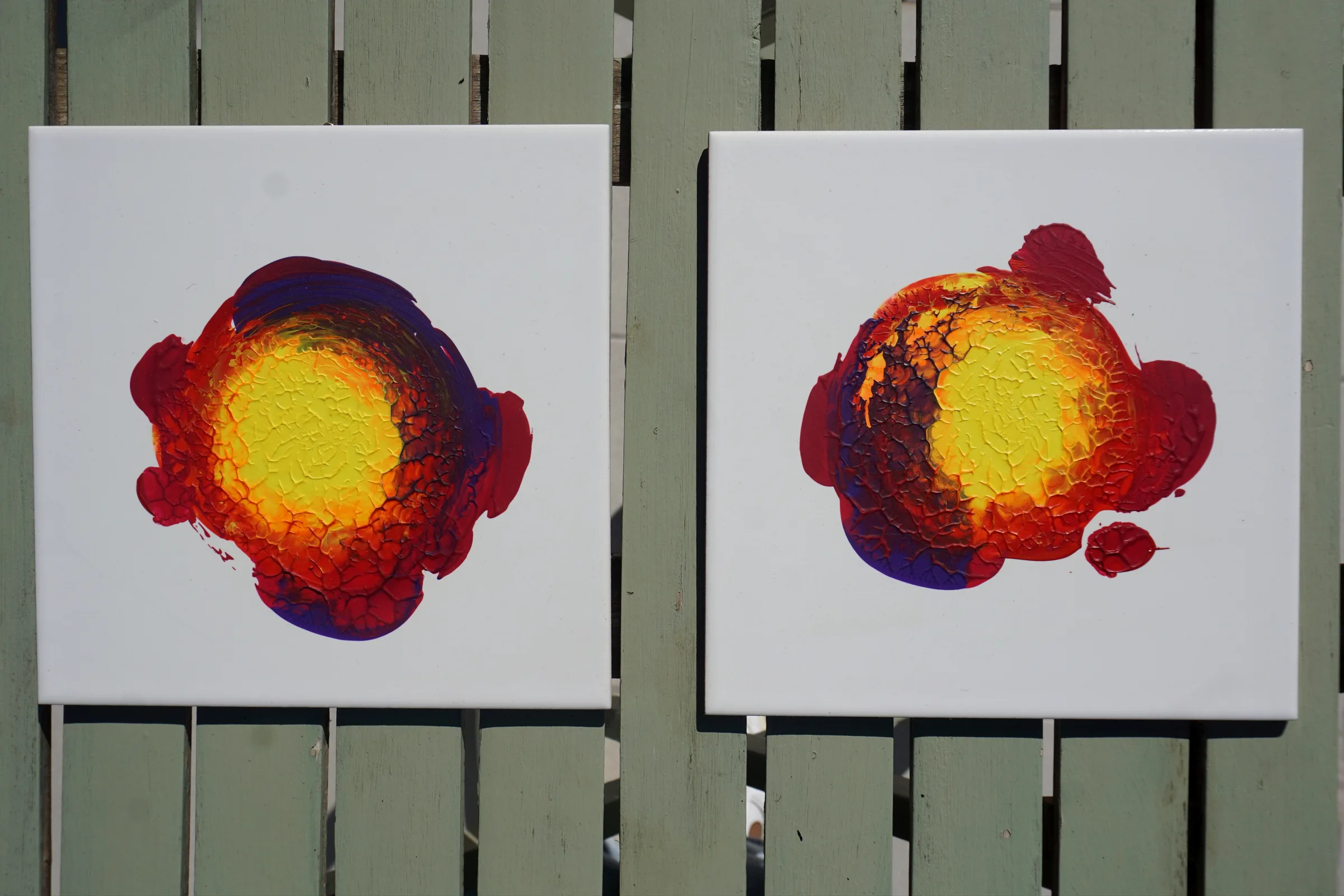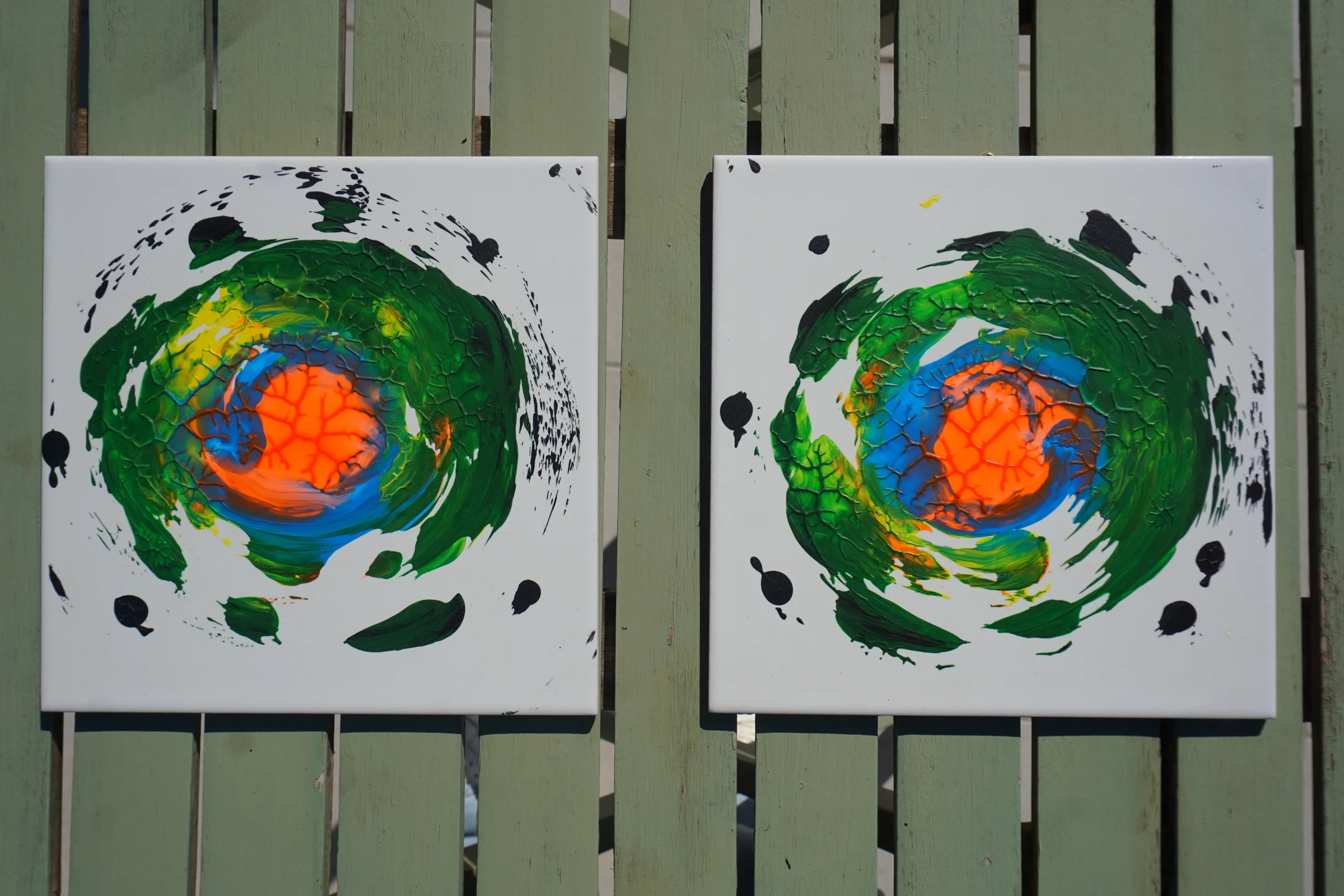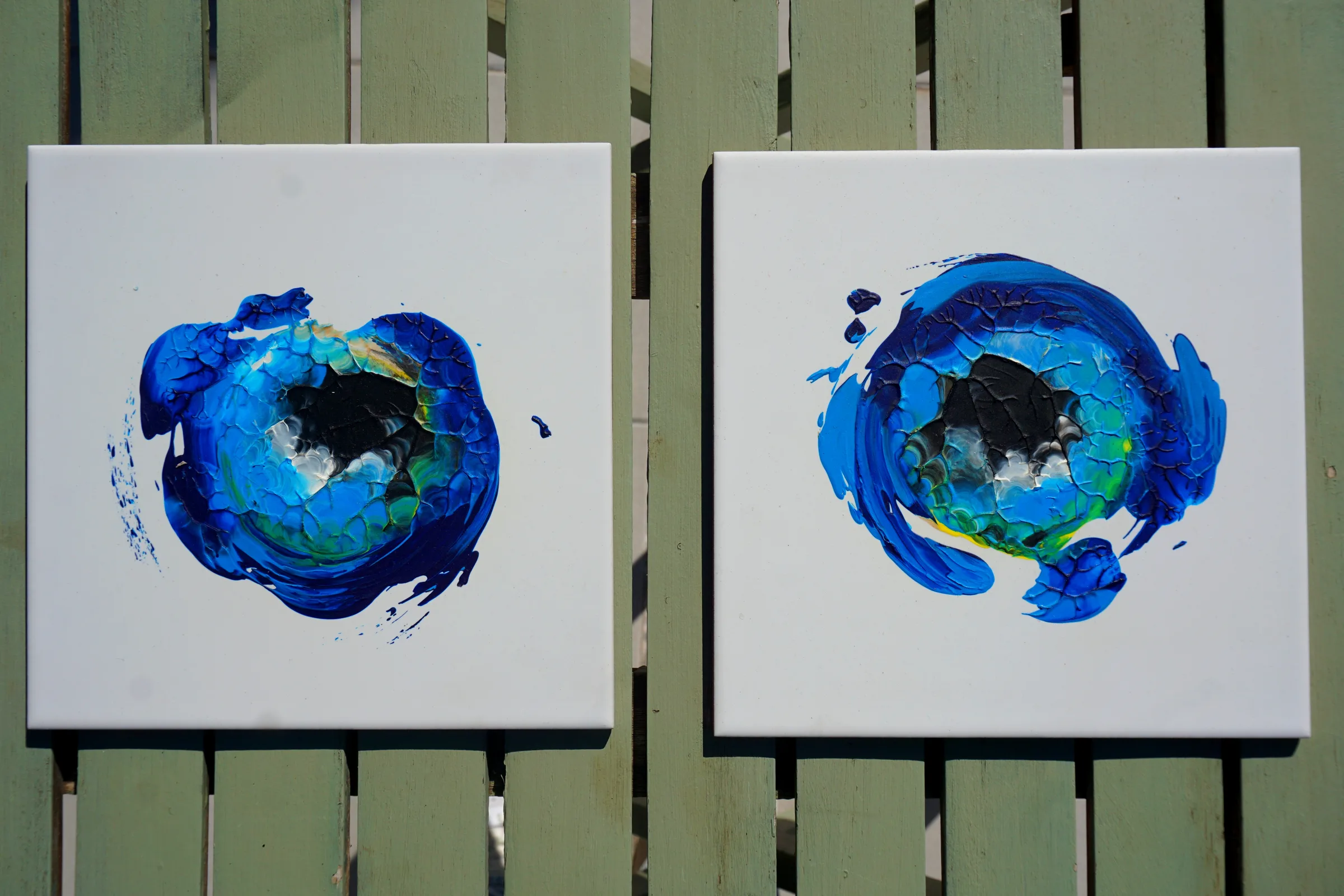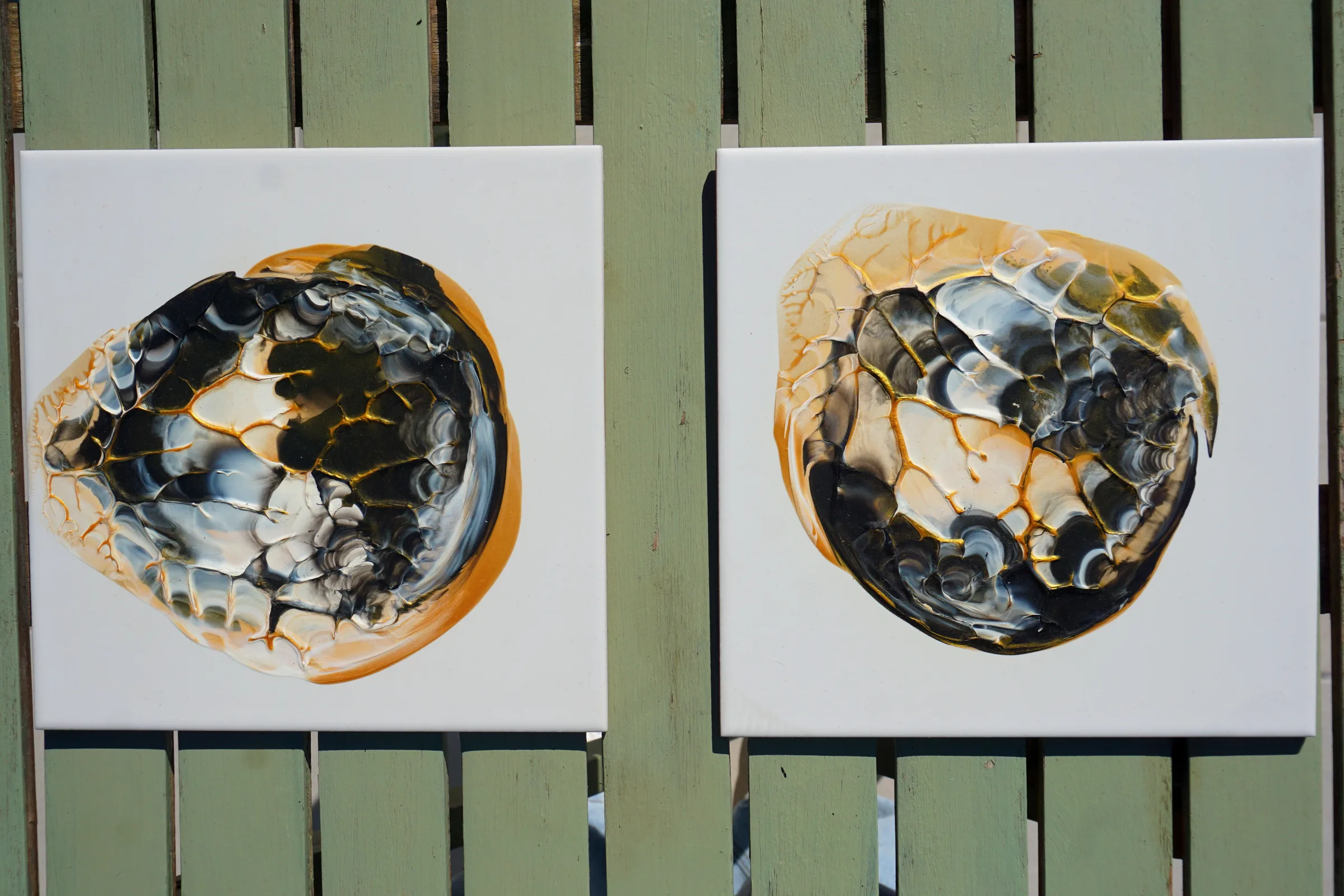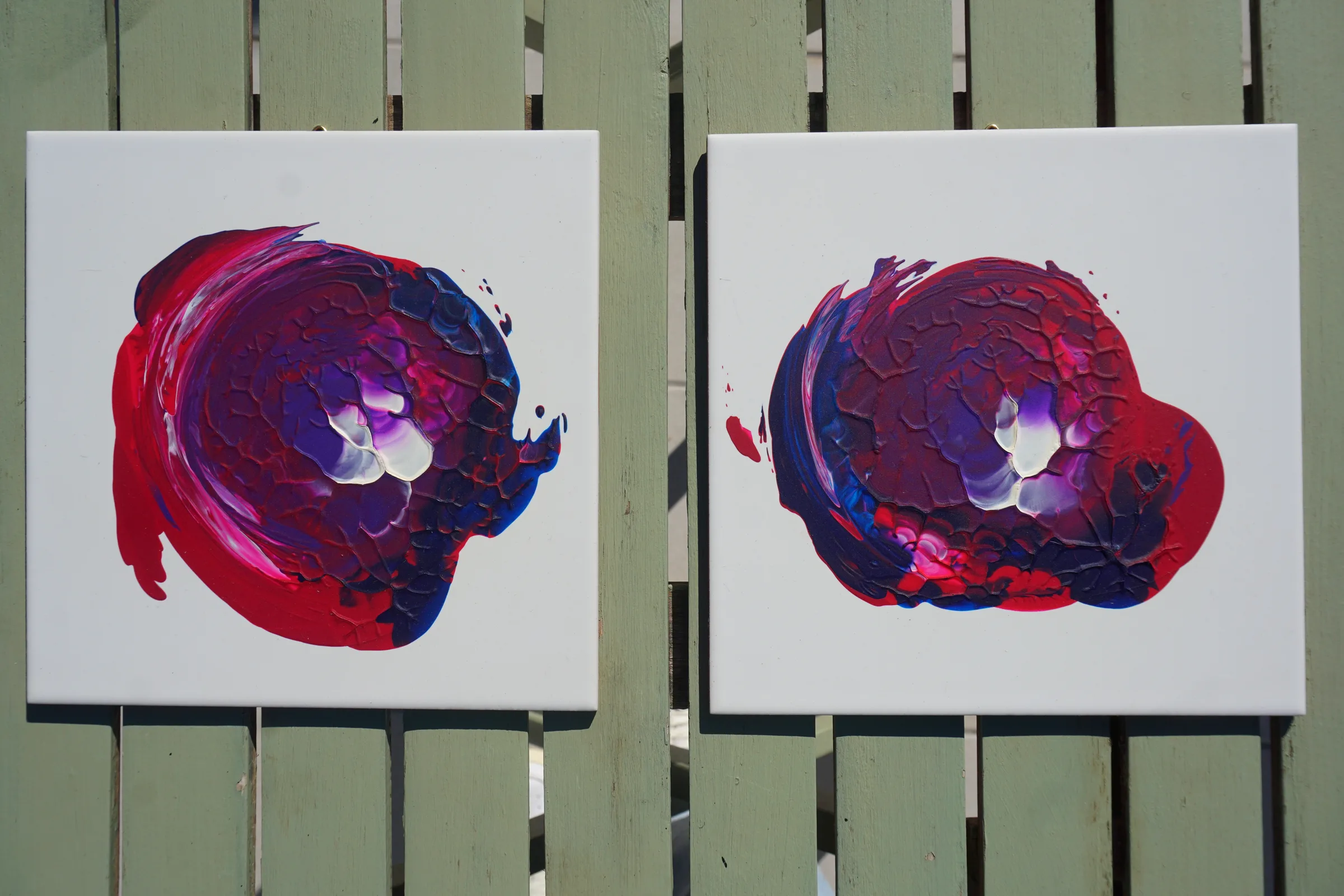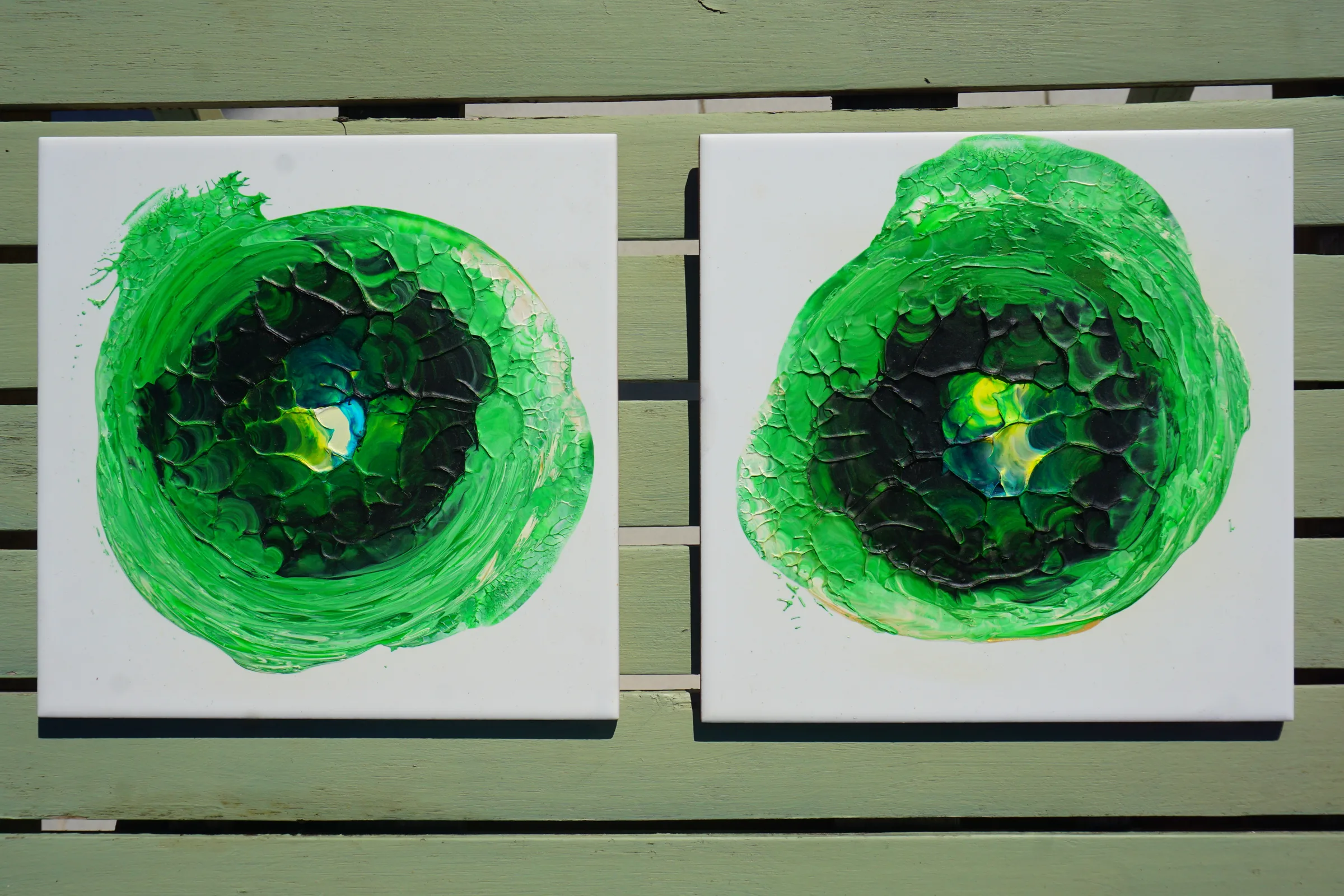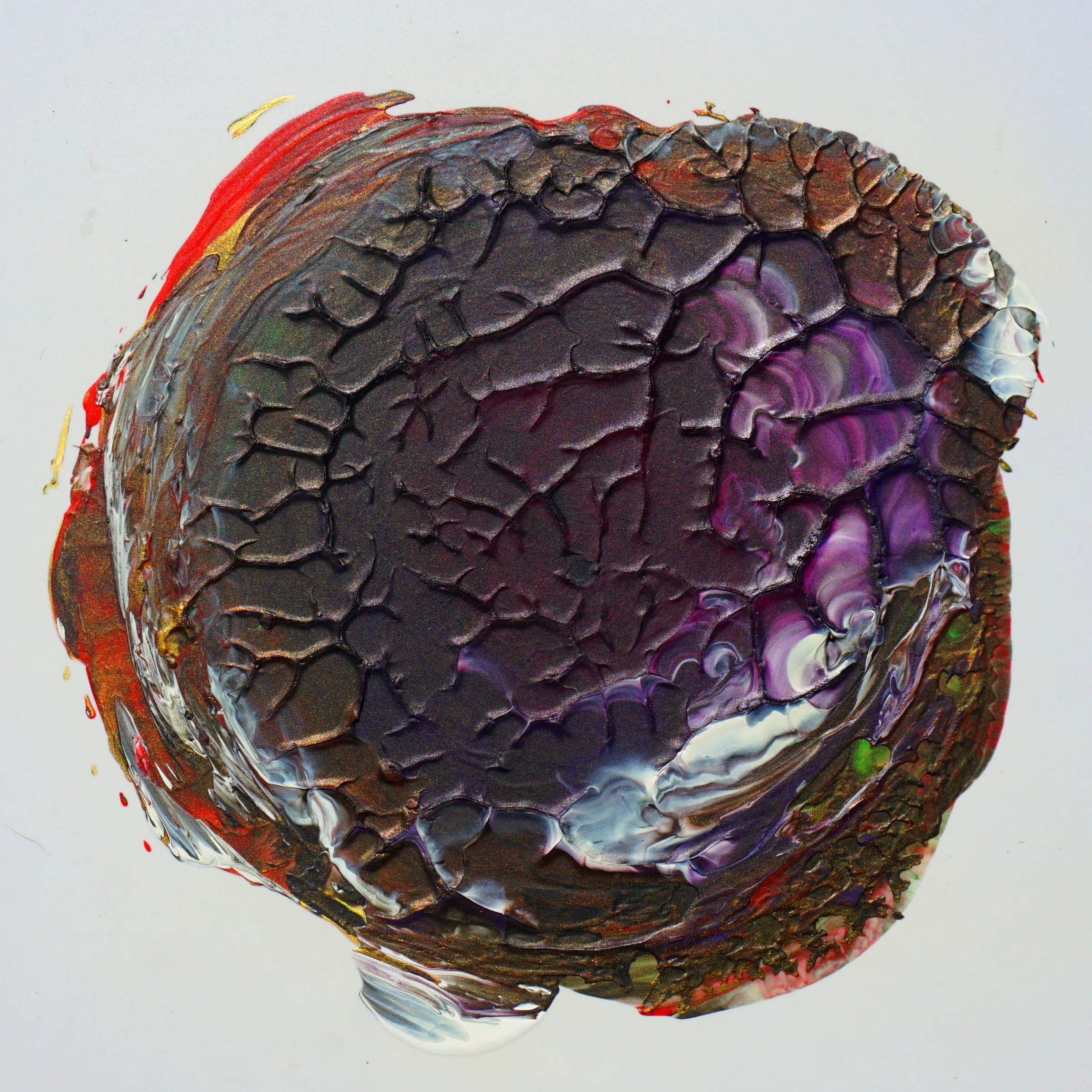
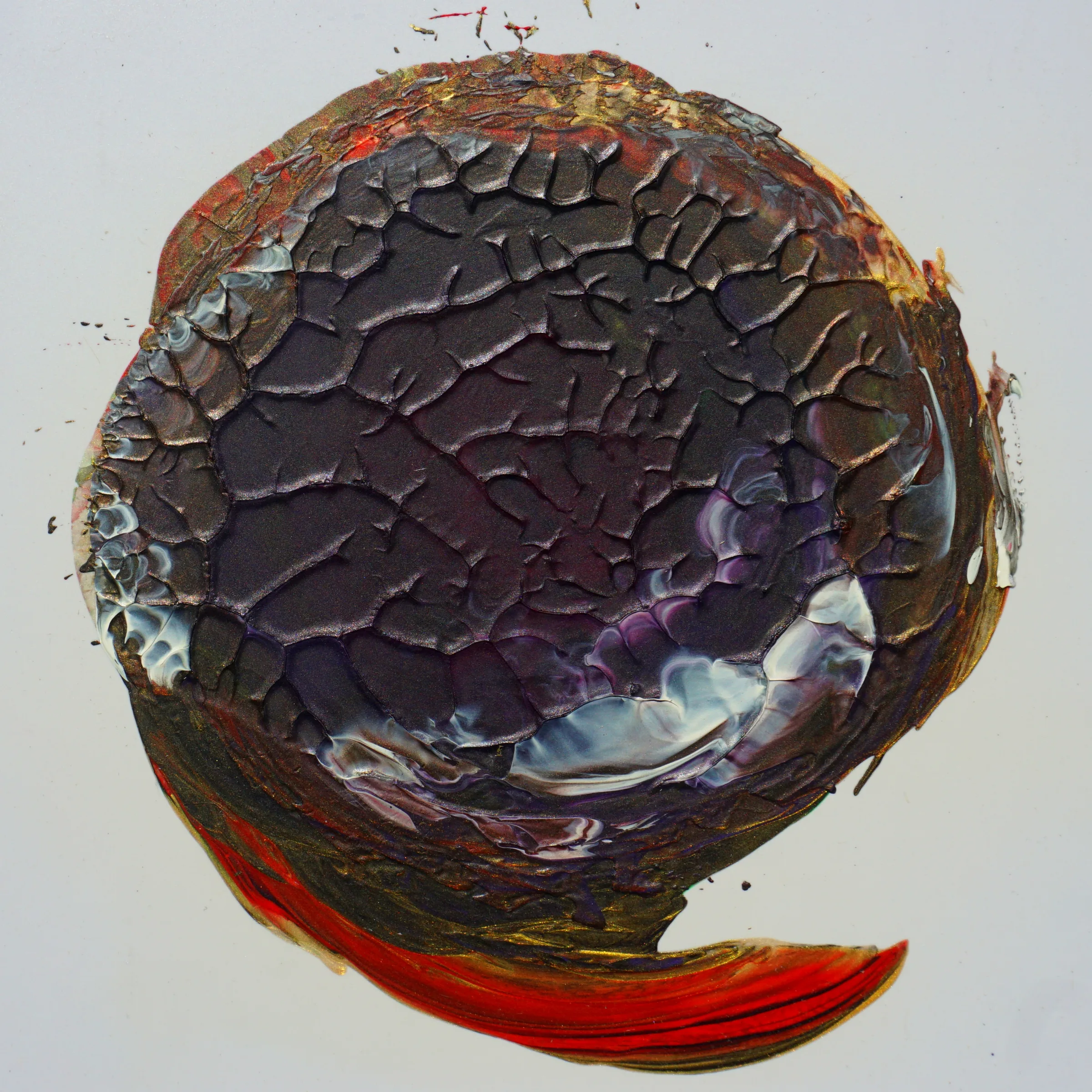
They were a single surface until the moment they were not. When the sisters came apart, the dark stayed with both of them — a mudded core like cooling charcoal, cracked into cells, ridges that swallowed colour into night. The relief is that tear: polygonal basins, raised walls, a lower shore where pigment pooled as pearl and would not leave.
Tile A held the bruise. Violet bloomed along its right, marbled with milk, and a single drop hung from the rim, still gathering. Tile B held more of the night, denser at the crown, and from its bottom a thin stroke of wet cinnabar ran out of the dark, gold dragged through it — the last heat, the blood of a wounded stone.
It is not brightness that meets you. This is aftermath: a chrysalis that burned before it hatched, the quiet smoking ruin after something has already struck. Around the two faces the ceramic bisque is bone-white and silent. The pull that opened them is still in the clay.
After the pull
there was only the dark
and what the dark could not keep.

A continent of cracked cells —
charcoal, ash, the raised walls
of a field that had already burned.

One sister took the bruise:
violet still wet in the pearl,
a drop hanging off the rim.
The other took the fire —
a razor of cinnabar leaving,
gold in the tear,
the single heat that refused.

Between them, bone bisque.
The room the pour once filled.
Nothing hatched.